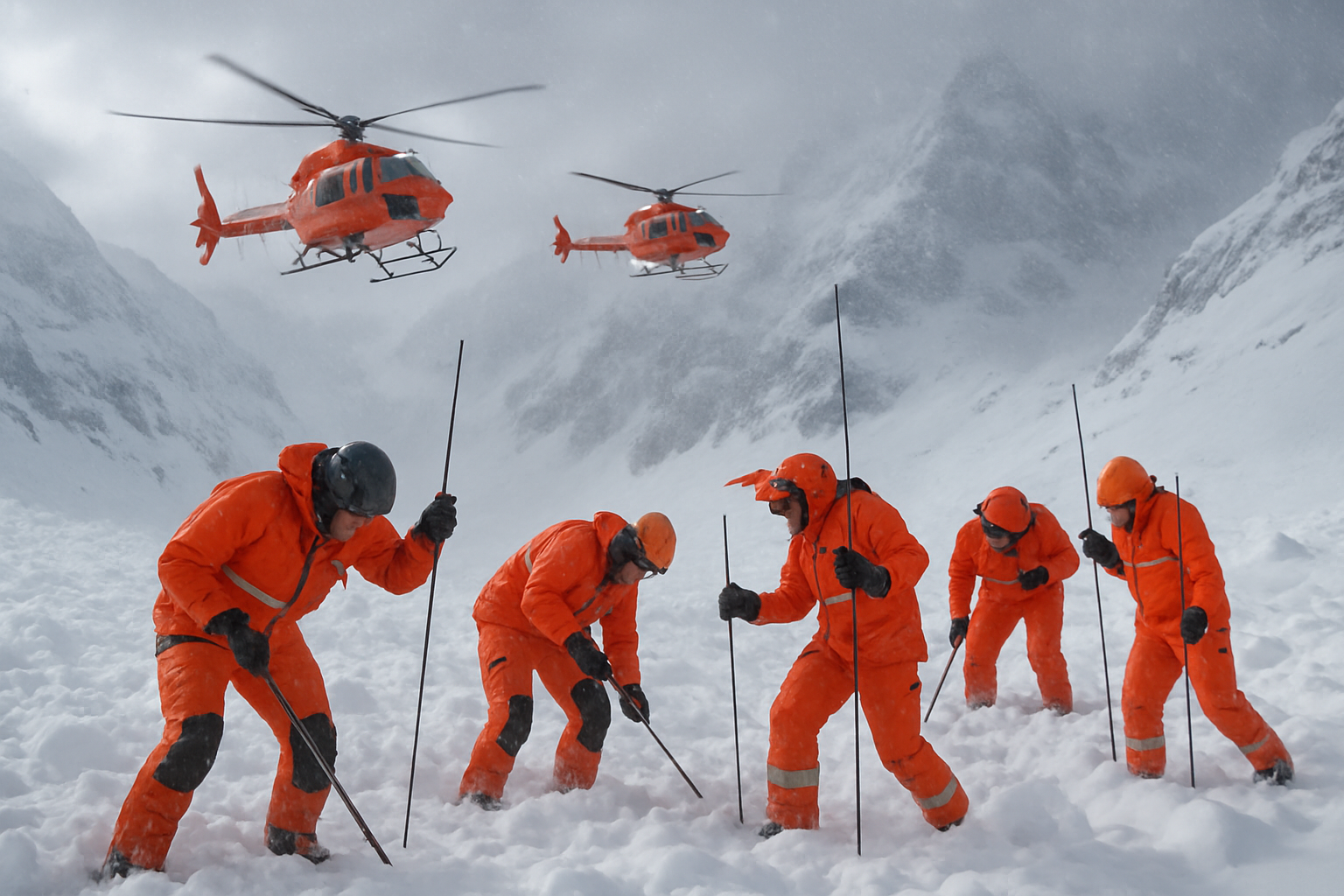
Search and rescue crews are racing against time to locate 10 backcountry skiers still missing after a massive avalanche struck the Castle Peak area northwest of Lake Tahoe on Tuesday, while six others from the original group of 16 have been found alive.
The avalanche occurred at Frog Lake in the Castle Peak wilderness area, a popular backcountry skiing destination in northern California, as a powerful winter storm system moved through the Sierra Nevada region. Emergency responders were immediately dispatched to the remote location, launching one of the largest mountain rescue operations in the region this winter.
Rescue Operations Underway
Search and rescue teams have been working around the clock since the avalanche was first reported Tuesday afternoon. The six surviving skiers were located and extracted from the avalanche debris field, though their current medical condition has not been disclosed by authorities.
The Castle Peak area, situated in the Tahoe National Forest approximately 10 miles northwest of the popular Lake Tahoe resort region, is known for its challenging backcountry terrain and steep mountain faces that can be prone to avalanche activity during heavy snowfall periods.
Rescue operations have been complicated by continuing severe weather conditions in the region, with the same storm system that likely triggered the avalanche continuing to bring heavy snow and high winds to the area. This has limited helicopter access and visibility for search teams working in the dangerous terrain.
Part of Broader Winter Emergency Pattern
This California avalanche emergency occurs amid an unprecedented global pattern of extreme winter weather and avalanche incidents that have claimed dozens of lives across multiple continents in February 2026. European Alpine regions have experienced a particularly devastating avalanche season, with over 60 deaths recorded across the European Alps this winter season alone.
Just days earlier, a tragic avalanche at the prestigious Val d'Isère ski resort in the French Alps killed three skiers, including two British nationals and one French citizen. That incident brought France's 2025-2026 winter season avalanche death toll to 25, part of what experts are calling one of the most dangerous Alpine winters in decades.
The European avalanche crisis has coincided with what meteorologists describe as Europe's harshest winter in decades, with temperatures reaching -30°C in some regions. These extreme conditions have created ideal snow conditions for winter sports but have also resulted in highly unstable avalanche conditions across mountainous regions.
Castle Peak Area Known for Avalanche Risk
The Castle Peak wilderness area where Tuesday's avalanche occurred is well-known among backcountry skiing enthusiasts for both its exceptional terrain and its inherent avalanche dangers. The area features steep mountain faces and open bowls that can accumulate large amounts of snow during winter storms, creating the potential for massive avalanche slides when conditions become unstable.
Local avalanche forecasters had issued warnings about dangerous snow conditions in the region leading up to the incident, though specific details about the avalanche bulletin status at the time of the accident have not been released by authorities.
The timing of this avalanche, occurring during a major winter storm system, follows a pattern seen in many of this winter's most deadly avalanche incidents. Storm cycles that bring rapid snow accumulation combined with wind loading create layered snow conditions that can become highly unstable and prone to catastrophic failure.
Rescue Resources Mobilized
The search for the 10 missing skiers has involved multiple agencies coordinating a complex rescue operation in challenging mountain terrain. Teams have been utilizing specialized avalanche rescue equipment including electronic transceivers, probe poles, and trained avalanche rescue dogs to systematically search the debris field.
Weather conditions have been a major factor complicating rescue efforts, with the same storm system that likely triggered the avalanche continuing to bring heavy snowfall and strong winds to the Castle Peak area. This has limited the use of helicopters for both personnel transport and aerial reconnaissance of the avalanche site.
Ground-based rescue teams have had to navigate treacherous terrain made even more dangerous by ongoing avalanche risks in the area. Fresh snow loading on already unstable slopes has forced rescue coordinators to carefully balance the urgent need to locate missing skiers with the safety of rescue personnel.
Avalanche Safety Concerns Mounting
This California incident adds to growing concerns about backcountry avalanche safety as winter sports enthusiasts increasingly venture into uncontrolled terrain. Backcountry skiing has seen explosive growth in popularity in recent years, particularly following the COVID-19 pandemic, leading to more people recreating in avalanche-prone terrain.
Avalanche safety experts consistently emphasize the importance of proper equipment, including avalanche transceivers, probes, and shovels, as well as formal avalanche safety education and professional guide services when venturing into backcountry terrain. However, even with proper precautions, the inherent risks of backcountry skiing in avalanche terrain cannot be completely eliminated.
The Castle Peak area incident serves as a stark reminder of these dangers, particularly during periods of active weather when avalanche conditions can change rapidly and become extremely hazardous.
Community Impact and Support
The Northern California outdoor community has rallied to support the ongoing rescue efforts and the families of those involved in the avalanche. Local ski resorts, mountain rescue organizations, and outdoor recreation groups have offered resources and assistance to aid in the search and rescue operations.
The incident has also prompted renewed discussions about avalanche safety education and the resources available for backcountry recreationists in the Sierra Nevada region. Mountain rescue organizations emphasize that proper avalanche education, equipment, and decision-making remain the most important tools for preventing such tragedies.
As search efforts continue for the 10 missing skiers, the outdoor recreation community is reminded of both the incredible rewards and inherent risks of pursuing adventure in the mountains during winter conditions.
Investigation and Ongoing Response
Authorities have not yet released details about what may have triggered Tuesday's avalanche or the specific conditions that led to the incident. A full investigation will likely be conducted once rescue operations are complete and all missing persons have been located.
The search and rescue operation continues with teams working in shifts to maintain continuous coverage of the avalanche debris field. Weather forecasts suggest that conditions may improve in the coming days, potentially allowing for increased helicopter support and expanded search capabilities.
This developing story represents one of the most significant avalanche rescue operations in California this winter season, highlighting both the inherent dangers of backcountry recreation and the dedication of rescue personnel who risk their own safety to locate and assist those in need in the mountains.