Rescue teams using skis and snowcats are battling severe blizzard conditions as they work to reach six backcountry skiers trapped but still alive following a powerful avalanche in Northern California's rugged Sierra Nevada mountains. Ten other skiers from the group of 16 remain missing, making this potentially one of the deadliest single avalanche incidents on record in the United States.
Emergency crews were dispatched to the Frog Lake area near Castle Peak, northwest of Lake Tahoe, after a 911 call at approximately 11:30 a.m. Pacific time on Tuesday reported multiple people buried by an avalanche during a major winter storm sweeping across the state. The incident occurred in the remote backcountry area about 10 miles north of Lake Tahoe, a popular destination for advanced skiers seeking challenging terrain.
Survivors Located But Remain Trapped
Ashley Quadros, spokesperson for the Nevada County Sheriff's Office, confirmed that six skiers were located hours after the avalanche and advised to shelter in place until rescuers could safely reach them. The survivors have been in contact with emergency services and are reported to be alive, though their exact condition remains unknown due to the challenging rescue conditions.
"It's going to be a slow, tedious process because they also have to be very careful accessing the area due to the fact that the avalanche danger is still very high," Captain Russell Greene of the Nevada County Sheriff's Office explained in an interview with Sacramento-based television station KCRA-TV.
The group was on the final day of a three-day backcountry skiing expedition involving overnight stays in remote mountain huts, according to Steve Reynaud, an avalanche forecaster with the Sierra Avalanche Center. The skiers were experienced backcountry enthusiasts familiar with the terrain and equipped with proper safety gear including avalanche transceivers.
Massive Search and Rescue Operation
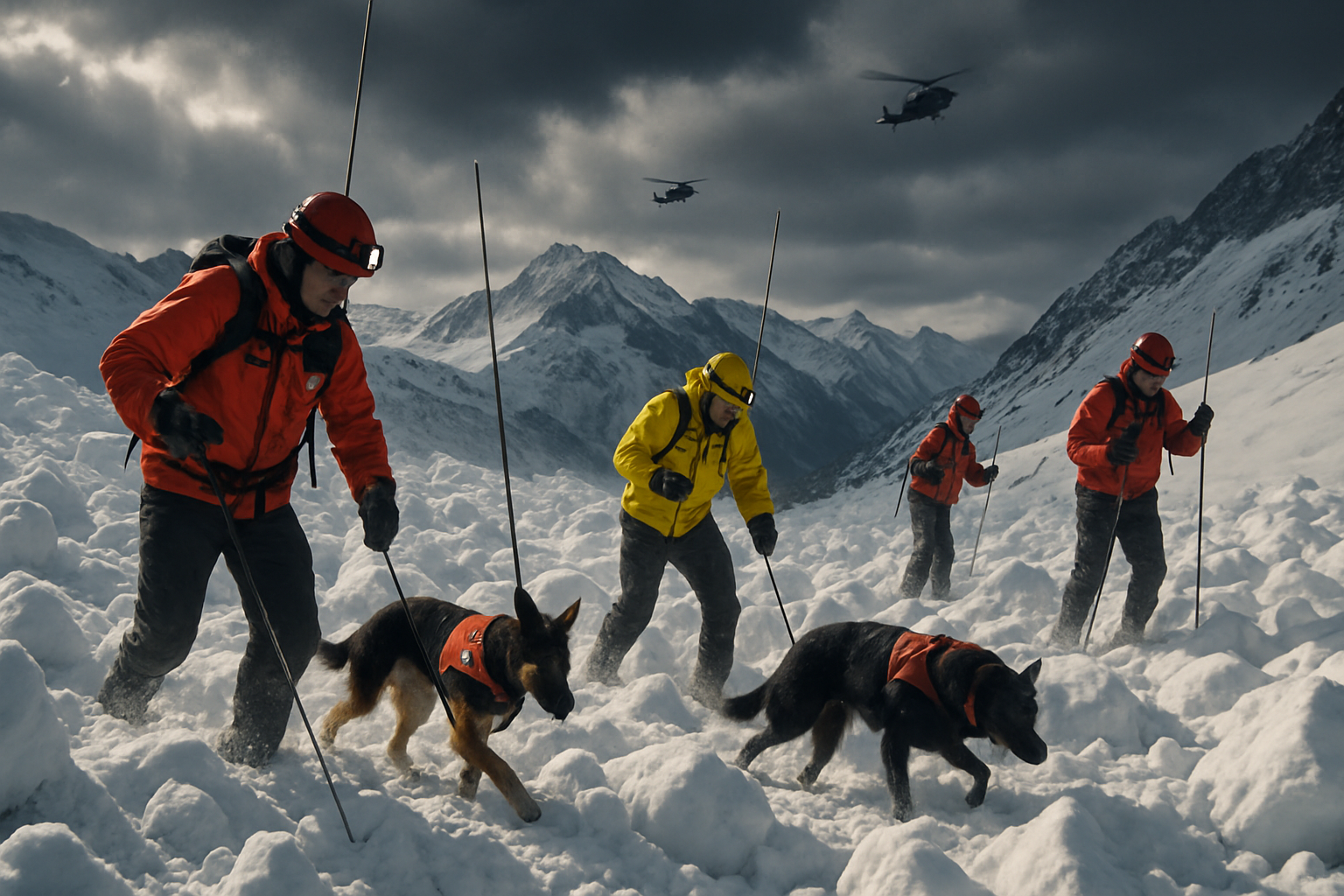
As darkness fell on Tuesday evening, rescue teams had yet to reach the avalanche site due to zero visibility conditions and the ongoing winter storm. The operation involves multiple agencies using specialized equipment including avalanche transceivers, probe poles, and trained rescue dogs to systematically search the debris field.
Weather complications from the same storm system that triggered the avalanche continue to hamper rescue efforts, with heavy snow and high winds limiting visibility and preventing helicopter operations. Ground teams are navigating extremely dangerous terrain amid continued avalanche risks from fresh snow loading on already unstable slopes.
The rescue operation represents one of the most significant mountain rescue efforts in Northern California this winter season, with crews working around the clock despite hazardous conditions that have forced closure of a nearby highway due to zero visibility.
Context of Broader Winter Crisis
The Castle Peak avalanche occurs against the backdrop of what experts are calling Europe's harshest winter in decades, with avalanche incidents claiming over 60 lives across the European Alps this winter season. Just days earlier, three skiers were killed in an off-piste avalanche at the prestigious Val d'Isère ski resort in France, bringing France's 2025-2026 season avalanche death toll to 25.
The incident highlights the growing popularity of backcountry skiing in the post-COVID era, which has increased exposure to avalanche terrain even as safety equipment and education have improved. Northern California's outdoor community is rallying support for the rescue efforts and affected families.
"If all 10 of the missing skiers should perish, the incident would rank among the deadliest single avalanches on record in the US."
— Emergency Services Assessment
The timing coincides with extreme weather conditions across multiple continents, with January 2026 confirmed as the hottest month on record globally for the 18th consecutive time, demonstrating climate volatility that can enable extreme regional events while overall warming trends continue.
Challenging Rescue Conditions
The avalanche swept through the Castle Peak area during ideal conditions for snow instability, with a major winter storm providing both the trigger mechanism and the ongoing complications for rescue efforts. The remote location, combined with continued avalanche danger and severe weather, has created one of the most challenging rescue scenarios faced by Northern California emergency services.
Rescue teams are proceeding with extreme caution, as the risk of additional avalanches remains high with continued snowfall and wind loading. The systematic search of the debris field requires careful coordination to avoid putting rescuers at risk while maximizing chances of finding survivors among the missing skiers.
The incident serves as a stark reminder of the inherent risks in backcountry skiing, even for experienced adventurers with proper safety equipment and education. Castle Peak is known for its challenging backcountry terrain and avalanche risks during periods of heavy snow loading.
Ongoing Investigation and Recovery Efforts
A full investigation into the circumstances surrounding the avalanche will be pending the completion of rescue operations. Authorities are examining weather conditions, terrain factors, and the group's safety procedures as part of the standard protocol following such incidents.
The rescue operation continues to involve ground teams navigating dangerous terrain while weather conditions remain challenging. Emergency services have emphasized that the search will continue until all missing persons are accounted for, though the extreme conditions are limiting the pace of operations.
This tragic incident represents one of the most significant avalanche emergencies in California this winter season, highlighting both the risks inherent in backcountry recreation and the dedication of rescue personnel who risk their own safety to save others in extreme mountain conditions.