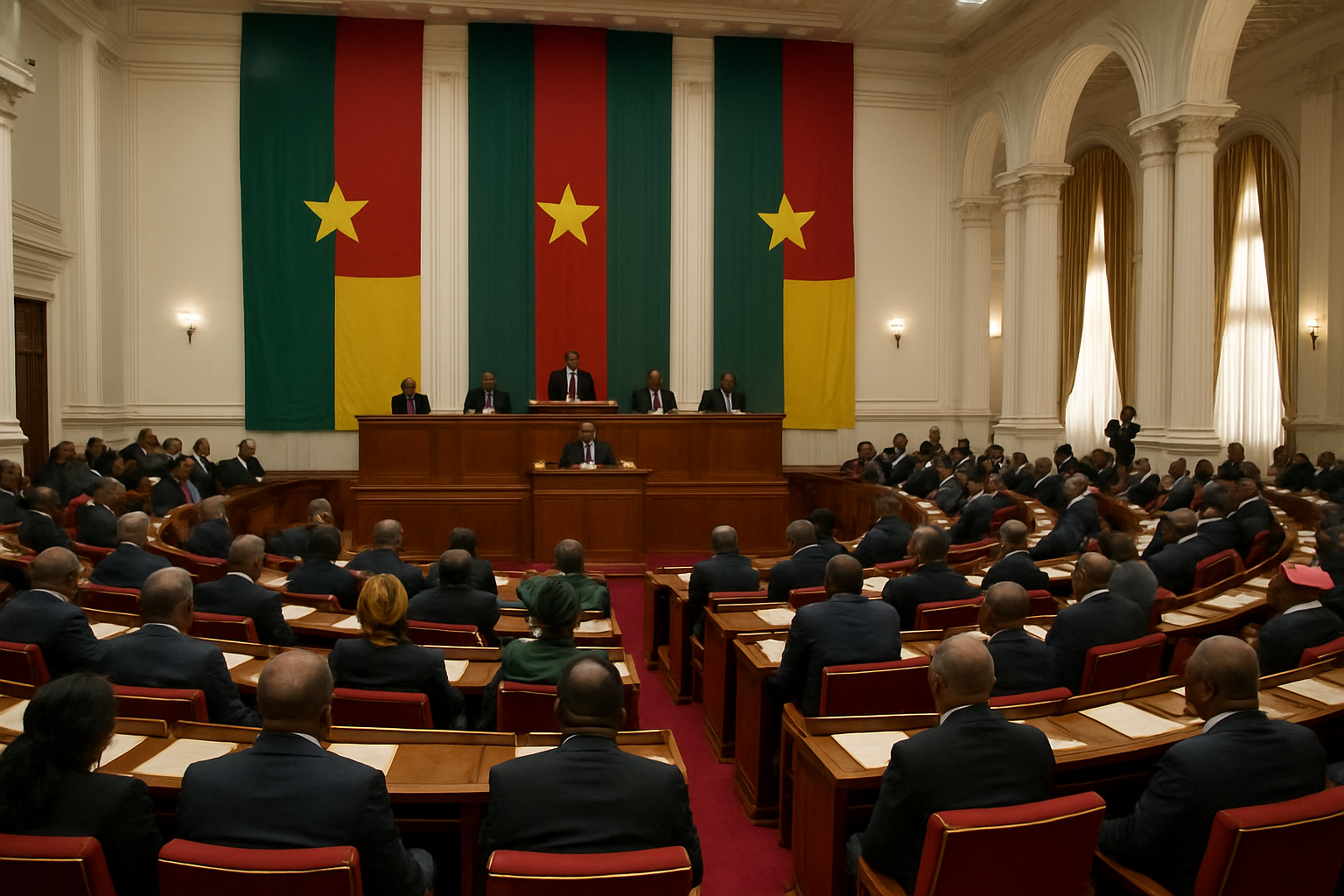
March 17, 2026, will be remembered as a watershed moment in Cameroon's parliamentary history, as Theodore Datouo was elected president of the National Assembly, bringing to a close Cavaye Yeguie Djibril's extraordinary 34-year reign as Speaker.
The 66-year-old Datouo, a deputy representing the Hauts-Plateaux constituency in the West Region, was formally elected in Yaoundé on Tuesday, succeeding the 86-year-old Cavaye Yeguie Djibril, who had held the position without interruption since 1992. This transition represents one of the most significant institutional changes in Cameroon's modern political landscape.
A Historic Transition
Datouo's election marks the end of what many consider the longest tenure of any parliament speaker in contemporary African politics. Cavaye Yeguie Djibril's 34 years at the helm of Cameroon's National Assembly spanned multiple decades of the country's democratic evolution, witnessing transitions from single-party rule to multiparty democracy.
Originally from Bangou in the West Region, Datouo previously served as Vice-President of the Assembly, positioning him as the natural successor to take over the institution's leadership. His elevation represents continuity within the ruling party structure while acknowledging the need for generational change in key institutional positions.
"This transition represents not just a change in leadership, but a historic moment that will shape the future direction of Cameroon's democratic institutions."
— Parliamentary Observer
Context of Unprecedented Longevity
Cavaye Yeguie Djibril's 34-year tenure as National Assembly President places him among the longest-serving parliamentary speakers in global history. His leadership spanned critical periods in Cameroon's political development, including the transition to multiparty democracy in the early 1990s, constitutional reforms, and numerous electoral cycles.
The outgoing Speaker's long tenure provided institutional stability during periods of political transition, though it also raised questions about democratic renewal and the importance of periodic leadership changes in maintaining institutional vitality.
Regional and International Significance
Multiple regional media outlets have covered this transition, with sources from Chad to São Tomé and Príncipe reporting on the significance of this change for Central African politics. The peaceful transfer of power within Cameroon's parliamentary leadership demonstrates the country's commitment to institutional continuity while allowing for democratic evolution.
African News described the transition as marking the end of a "34-year era," emphasizing the historic nature of this leadership change for the broader region. The transition occurs at a time when many African democracies are grappling with questions of institutional renewal and generational change in political leadership.
Datouo's Background and Political Journey
Theodore Datouo brings decades of parliamentary experience to his new role. As the former Vice-President of the National Assembly, he has been intimately involved in the institution's operations and legislative processes. His constituency in the Hauts-Plateaux region of the West has been a significant political stronghold, providing him with a solid electoral base.
The new Speaker's political trajectory reflects the broader patterns of political advancement within Cameroon's ruling party structure, where long service and institutional loyalty are often rewarded with higher positions of responsibility.
Implications for Cameroon's Democracy
This leadership transition comes at a crucial time for Cameroon's democratic institutions. The country faces numerous challenges, including regional security concerns, economic development needs, and ongoing efforts to strengthen democratic governance. Datouo's leadership will be tested as he navigates these complex issues while maintaining the Assembly's role as a key pillar of the country's democratic framework.
The peaceful nature of this transition, following established parliamentary procedures, reinforces Cameroon's commitment to institutional democracy and the rule of law. It demonstrates that even long-standing leadership positions can transition smoothly within the country's democratic framework.
Continuity and Change
While Datouo's election represents a significant change in parliamentary leadership, it also signals continuity in terms of the institutional approach and political orientation of the National Assembly. As a member of the same political formation that has dominated Cameroon's politics for decades, his leadership is expected to maintain the Assembly's traditional role while potentially bringing fresh perspectives to parliamentary operations.
The transition reflects broader trends across Africa, where long-serving political figures are gradually giving way to younger generations of leaders, though often within existing political structures rather than through wholesale political transformation.
Looking Forward
As Theodore Datouo assumes the presidency of Cameroon's National Assembly, he inherits both the legacy of his predecessor's long tenure and the responsibility of guiding the institution through contemporary challenges. His leadership will be crucial in determining how effectively the Assembly can address the nation's legislative priorities while maintaining its institutional integrity.
The successful completion of this leadership transition serves as a reminder of the importance of institutional continuity in democratic governance, even as it opens a new chapter in Cameroon's parliamentary history. The international attention this transition has received underscores its significance not just for Cameroon, but for the broader Central African region's democratic development.
March 17, 2026, thus marks not just the end of Cavaye Yeguie Djibril's remarkable 34-year tenure, but the beginning of a new era under Theodore Datouo's leadership, with implications that extend far beyond the walls of Cameroon's National Assembly chamber.