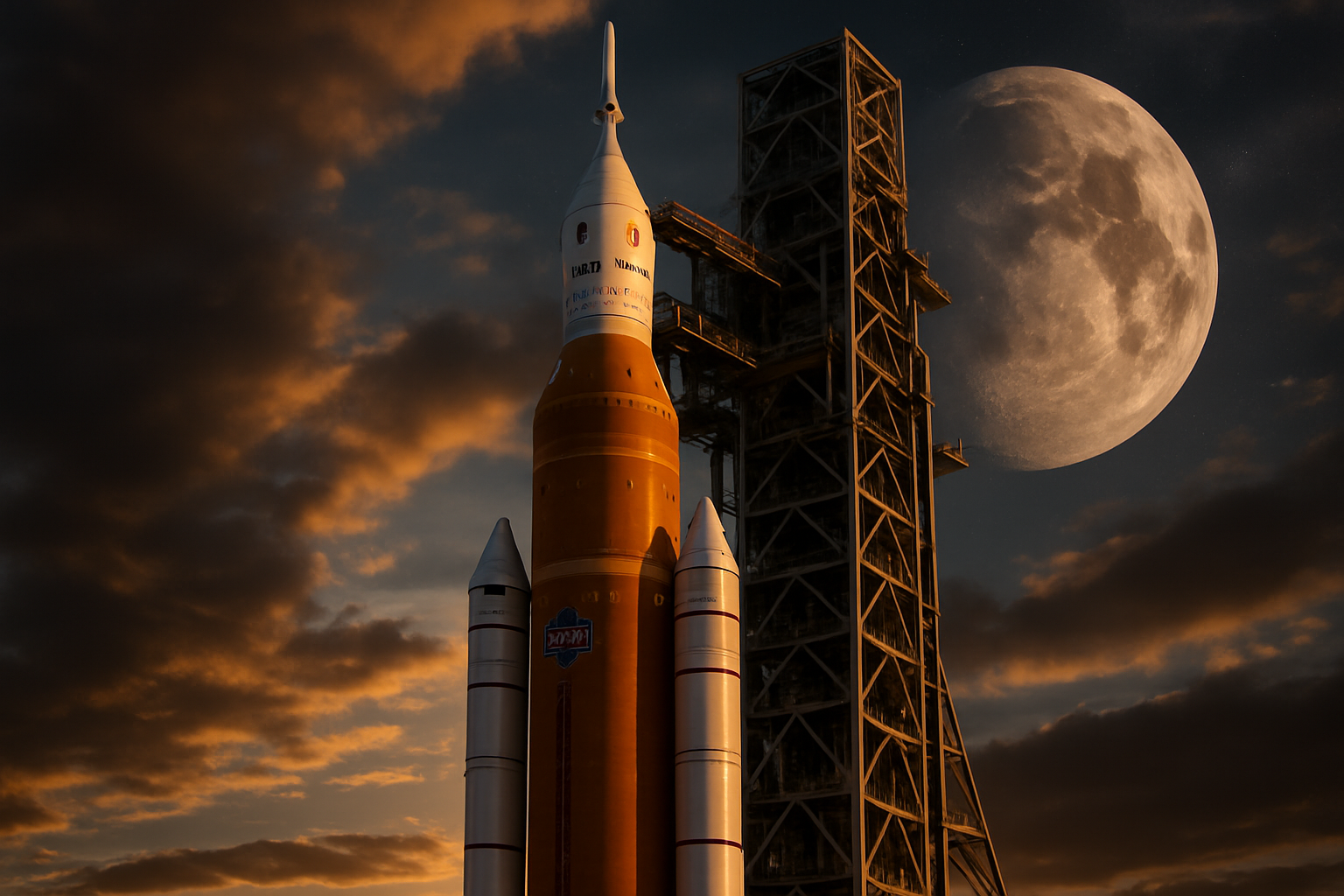
Canada is poised to achieve a historic milestone in space exploration as Canadian astronaut Jeremy Hansen prepares to become the first Canadian to venture beyond Earth orbit aboard NASA's Artemis II lunar flyby mission, now confirmed for April 1st launch after months of technical delays.
NASA Administrator Jared Isaacman officially announced the April 1st, 2026 target date after engineers successfully resolved critical helium system failures and persistent hydrogen leak problems that had plagued the Space Launch System (SLS) rocket throughout early 2026. The mission represents humanity's first crewed journey beyond Earth orbit since Apollo 17 in December 1972 – a remarkable 54-year gap in deep space human exploration.
International Crew Makes History
The four-astronaut international crew includes Canadian Space Agency's Jeremy Hansen alongside NASA Commander Reid Wiseman, Christina Koch, and Victor Glover. For Canada, Hansen's participation marks the nation's most significant human spaceflight contribution since the Space Shuttle era and validates Canada's essential role in the Artemis Accords framework for peaceful lunar exploration.
Calgary-born astronaut Jenni Gibbons serves as the mission's Earth voice link and backup to Hansen, demonstrating the depth of Canadian expertise contributing to this historic endeavor. The mission will cover approximately 600,000 miles during a 10-day lunar flyby, testing critical systems for future lunar landings and permanent settlements.
"We will only launch when we believe we are ready," emphasized Administrator Isaacman, reflecting NASA's safety-first approach that has guided the agency through multiple technical challenges.
— Jared Isaacman, NASA Administrator
Technical Triumph Over Adversity
The path to launch has been marked by methodical problem-solving that exemplifies modern space exploration's commitment to crew safety. Engineers successfully resolved helium system failures affecting the SLS rocket's upper stage – critical components responsible for engine purging and fuel tank pressurization. Additionally, hydrogen leak issues that emerged during wet dress rehearsal testing at T-minus 5 minutes in countdown simulations have been comprehensively addressed through detailed engineering analysis.
The SLS rocket itself represents a technological marvel: standing 322 feet tall, weighing 5.75 million pounds when fully fueled, and requiring over 700,000 gallons of liquid hydrogen and oxygen. NASA describes it as the most powerful rocket the agency has ever built, designed specifically for deep space missions beyond Earth's protective magnetic field.
Strategic Context and International Competition
The mission unfolds during what experts call the "space economy golden age," a period of unprecedented commercial space activity and international cooperation. However, this achievement occurs amid intensifying global competition, with China planning crewed lunar missions by 2030, and SpaceX preparing for a potential trillion-dollar IPO in June 2026.
The broader Artemis program has undergone significant restructuring, with NASA announcing a historic $20 billion commitment toward establishing a permanent lunar surface base by 2030 – the largest space infrastructure investment in the agency's history. This strategic pivot cancels the planned Lunar Gateway orbiting station, redirecting funds toward surface operations that will serve as humanity's stepping stone to Mars exploration.
Canadian Space Industry Implications
For Canada's space industry, the mission carries profound implications beyond Hansen's historic flight. The cancellation of the Lunar Gateway creates uncertainty for Canadian technologies like the Canadarm3 robotic arm, manufactured by MDA Systems in Brampton, Ontario. However, Canada's continued central role in Artemis missions demonstrates the nation's technological capabilities and international partnership value.
The mission validates decades of Canadian space expertise, from the original Canadarm that became synonymous with Space Shuttle operations to current ISS robotics systems. Hansen's flight represents the culmination of Canada's space program evolution and positions the nation as a key player in humanity's return to deep space exploration.
Scientific and Medical Research Priorities
Beyond its symbolic significance, Artemis II serves crucial scientific purposes. The mission will validate deep space life support systems, radiation protection capabilities, and navigation technologies essential for sustained lunar presence. Crew members will conduct experiments examining human adaptation to the deep space environment, including radiation exposure effects and long-duration spaceflight challenges.
This research builds on ongoing International Space Station studies, including French astronaut Sophie Adenot's record eight-month mission focusing on lung tissue cultivation and Space-Associated Neuro-Ocular Syndrome (SANS) research. These investigations directly inform medical protocols for future lunar bases and Mars expeditions where astronauts may spend years without Earth medical evacuation possibilities.
Looking Toward the Future
Artemis II represents more than a single mission – it marks humanity's renewed commitment to becoming a spacefaring civilization. Success will validate systems essential for permanent lunar settlements and serve as the foundation for eventual Mars exploration. The mission tests technologies and procedures that will enable sustained human presence beyond Earth, transforming space exploration from brief visits to permanent expansion.
The international cooperation demonstrated through Canadian participation, alongside partnerships with European and other allies, provides a model for future deep space missions requiring diverse expertise and sustained collaboration. As nations invest billions in space infrastructure and prepare for unprecedented expansion of human presence beyond Earth, Artemis II stands as a pivotal moment determining humanity's cosmic trajectory.
With technical challenges resolved and the crew preparing for their historic journey, Canada stands on the threshold of its greatest space exploration achievement, ready to help write the next chapter of human space exploration that could define our species' future among the stars.