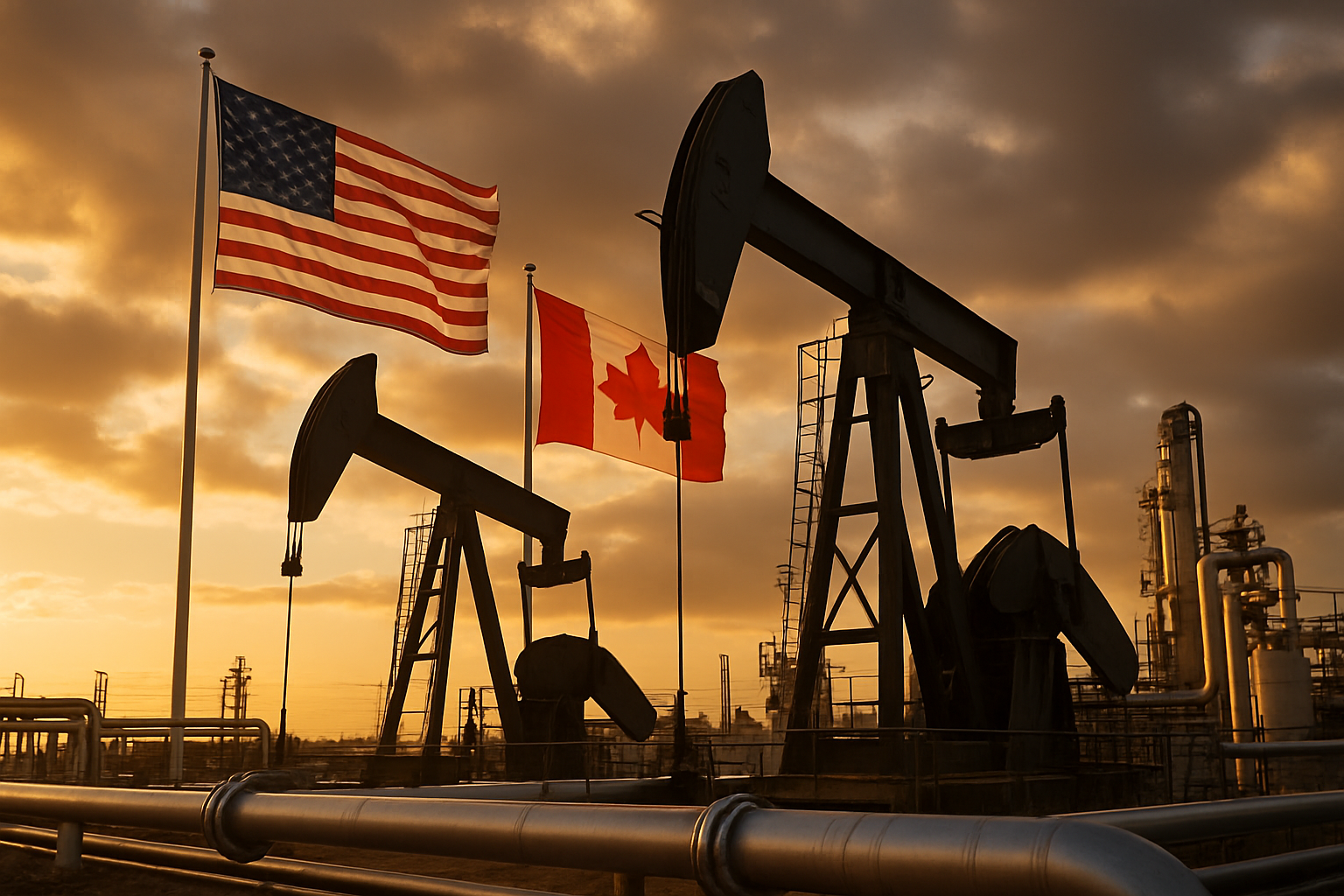
Canada is contemplating a significant shift in its energy relationship with the United States, considering offering stronger energy rights guarantees in a new Canada-United States-Mexico Agreement (CUSMA) as global energy security takes center stage amid ongoing Middle East conflicts that have disrupted 40% of global oil transit.
The potential policy change comes as the Iran war crisis continues to highlight the vulnerability of global energy supply chains, creating what industry experts describe as a "silver lining" opportunity for Canadian oil and gas producers. The March 2026 energy crisis, which saw oil prices surge to $119.50 per barrel and triggered the largest strategic petroleum reserve release in 50 years, has fundamentally altered the calculus around North American energy security.
Historical Context: From NAFTA to CUSMA
Under the original North American Free Trade Agreement (NAFTA), Canada was bound by the controversial "proportionality clause" that restricted the country's ability to cut energy shipments to the United States during supply shortages. This clause required Canada to maintain the same proportion of energy exports to the U.S. as during the previous three years, effectively limiting Canadian sovereignty over its natural resources during crises.
The 2020 CUSMA renegotiation eliminated this proportionality requirement, giving Canada greater flexibility to manage its energy exports according to domestic needs. However, the recent global energy turmoil has renewed discussions about energy security cooperation between the North American partners.
"The Iran war ceasefire, if it holds, presents unique opportunities for Canadian energy producers who can offer stable, secure supply alternatives to volatile Middle Eastern sources."
— Energy Industry Analyst
The Iran Crisis and Energy Market Transformation
The ongoing Middle East crisis has exposed critical vulnerabilities in global energy infrastructure. Iran's Revolutionary Guard closure of the Strait of Hormuz in March 2026 blocked 40% of global seaborne oil transit, triggering:
- Oil price spikes reaching $119.50 per barrel for Brent crude
- Cancellation of 18,000+ flights worldwide
- Emergency deployment of 400 million barrels from strategic petroleum reserves
- Natural gas price increases of 24% in Europe and 78% in the United States
These disruptions have intensified focus on secure, stable energy partnerships. Canada's geographic proximity and political stability make it an attractive alternative to unstable Middle Eastern suppliers, potentially creating leverage in future trade negotiations.
Potential Benefits for Canadian Oil and Gas
The global energy crisis has highlighted several potential advantages for Canadian energy producers:
Market Access: Enhanced energy cooperation could provide preferential access to U.S. markets, particularly as American policymakers prioritize energy security from allied nations over potentially unreliable foreign sources.
Infrastructure Investment: Stronger energy partnerships could justify expanded pipeline and transportation infrastructure investments, reducing the current bottlenecks that limit Canadian energy exports.
Price Premiums: Secure, stable supply from a democratic ally typically commands premium pricing over energy from politically volatile regions, particularly during crisis periods.
Sovereignty Concerns and Political Opposition
Despite potential economic benefits, any return to enhanced energy commitments faces significant political hurdles within Canada. Critics argue that binding energy export guarantees could:
- Limit Canada's ability to prioritize domestic energy security during shortages
- Reduce policy flexibility during environmental transitions
- Create dependency relationships that could be exploited during trade disputes
The elimination of NAFTA's proportionality clause was viewed as a sovereignty victory by many Canadians, making any perceived reversal politically sensitive. Prime Minister Mark Carney's government would need to carefully balance economic opportunities against public concerns about energy independence.
Global Context and Strategic Implications
The consideration of enhanced energy rights occurs against a backdrop of unprecedented global energy insecurity. The March 2026 crisis demonstrated how quickly geopolitical conflicts can disrupt global energy supplies, making secure North American energy partnerships increasingly valuable.
Key factors driving the discussion include:
Nuclear Diplomacy Failures: The complete collapse of US-Iran nuclear talks, despite achieving "broad agreement on guiding principles," has eliminated prospects for normalized Middle Eastern energy trade in the near term.
Supply Chain Vulnerabilities: The crisis exposed dangerous over-dependence on single-point failures like the 21-mile Strait of Hormuz, necessitating supply diversification.
Energy Architecture Transformation: Global experts now recognize the need for fundamental restructuring to reduce dependence on volatile geopolitical regions.
Economic Analysis and Market Response
Financial markets have responded positively to prospects of enhanced North American energy cooperation. The March crisis saw catastrophic market disruptions including:
- Pakistan's KSE-100 suffering its largest single-day decline (-8.97%)
- South Korea's KOSPI dropping 12% with circuit breakers activated
- Central bank emergency liquidity interventions across multiple countries
These market reactions underscore the premium investors place on stable energy partnerships during periods of global uncertainty.

Industry Perspectives and Future Outlook
Energy industry leaders view the current moment as potentially transformative for Canadian-American energy relations. The March crisis, described by expert Samuel Ciszuk as the "most severe energy security crisis in decades," has fundamentally altered strategic thinking about energy partnerships.
Qatar Energy Minister Saad Al Kaabi's warning that oil prices approaching $150 per barrel could "bring down economies of the world" during the March crisis highlighted the critical importance of stable supply relationships.
"The situation is going longer than initially thought, with financial markets serving as the ultimate constraint on prolonged conflict."
— Portfolio Strategist Damien Boey
Policy Considerations and Next Steps
As Canada weighs its options for future CUSMA negotiations, policymakers must balance multiple competing interests:
Economic Opportunity: Enhanced energy cooperation could provide significant economic benefits for Canadian producers while strengthening bilateral relationships during a period of global uncertainty.
Sovereignty Concerns: Any agreements must preserve Canada's ability to manage its energy resources in accordance with national interests and environmental commitments.
Strategic Flexibility: Future agreements should provide mechanisms for adaptation as global energy markets continue evolving toward renewable alternatives.
Regional and Global Implications
The Canadian decision on energy rights occurs within a broader context of global energy architecture transformation. The March 2026 crisis, characterized by UN Secretary-General António Guterres as the "greatest test of multilateral cooperation in the modern era," has accelerated discussions about energy security frameworks worldwide.
Success in creating stable North American energy partnerships could provide a template for other regions seeking to reduce dependence on volatile suppliers. Conversely, failure to capitalize on current opportunities might leave Canada disadvantaged as global energy relationships realign.
Conclusion: Balancing Opportunity and Sovereignty
Canada's consideration of enhanced energy rights in a new CUSMA agreement represents a critical juncture in North American energy policy. The global crisis has created unprecedented opportunities for Canadian energy producers while highlighting the strategic importance of secure continental partnerships.
The ultimate decision will likely depend on the government's ability to craft agreements that capture economic benefits while preserving essential sovereignty over natural resources. As global energy markets continue adapting to new realities, Canada's choice may well determine its role in the emerging energy security architecture of the 21st century.
The ongoing global energy transformation, accelerated by the March 2026 crisis, suggests that decisions made in the coming months will have implications extending decades beyond current events. For Canada, the question is not whether to engage with these global changes, but how to do so while maintaining the flexibility needed to serve Canadian interests in an increasingly volatile world.