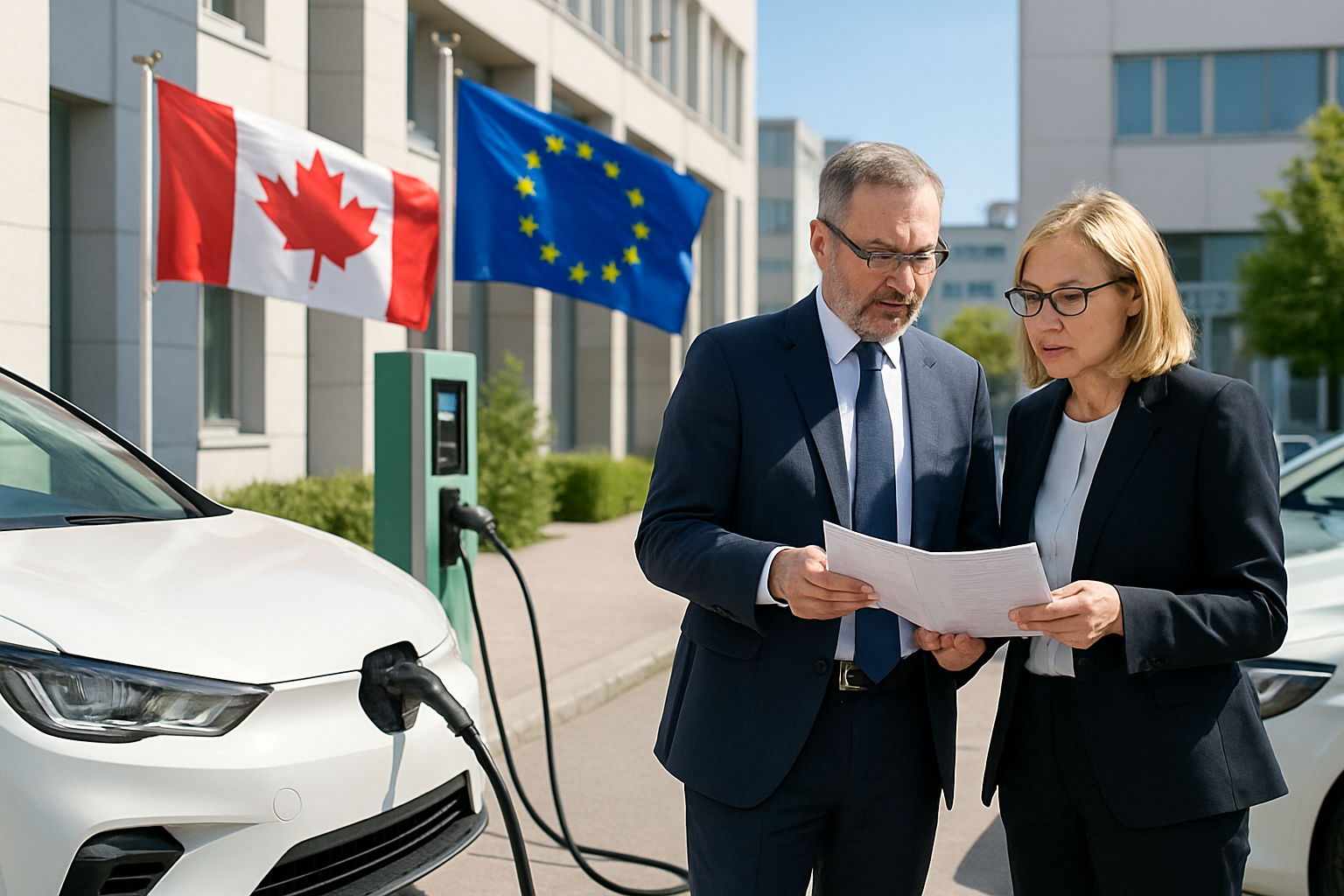
Canada announced the return of electric vehicle consumer incentives as part of a comprehensive national auto industry strategy, while major European automakers intensify calls for domestic production support, highlighting the global struggle to maintain competitiveness in the rapidly evolving electric mobility sector.
Prime Minister Mark Carney unveiled the new incentive program on Thursday during a significant policy announcement focused on making electric vehicles "more affordable and reliable for Canadians." The decision represents a strategic reversal after previous incentive programs were phased out, acknowledging the critical role government support plays in accelerating EV adoption across the nation.
Canada's Renewed EV Strategy
The Canadian announcement comes as part of a broader $9.7 billion national auto industry strategy designed to position the country as a competitive force in the global electric vehicle market. Speaking to auto workers, Prime Minister Carney emphasized the government's commitment to supporting both consumers and the domestic automotive manufacturing sector through this transition period.
The timing of Canada's announcement reflects growing recognition that government intervention remains essential for EV market development. Industry analysts note that consumer incentives have proven critical in markets where electric vehicles face price competition with traditional internal combustion engine vehicles, particularly as global supply chain pressures continue to affect manufacturing costs.
Canada's approach represents a comprehensive strategy addressing multiple aspects of the EV ecosystem, from consumer affordability to manufacturing competitiveness. The program aims to reduce the price gap that often deters consumers from making the switch to electric mobility, while simultaneously supporting domestic production capabilities.
European Automakers Push for Production Support
Simultaneously across the Atlantic, Europe's largest automakers are intensifying pressure on Brussels for financial incentives and subsidies specifically targeting electric vehicles manufactured within European borders. Volkswagen and Stellantis have emerged as leading voices calling for stronger domestic production support measures.
The European push comes amid increasing concerns about competitive pressures from international manufacturers, particularly those benefiting from substantial government subsidies in their home markets. European automakers argue that without similar support, domestic production faces significant disadvantages that could undermine the continent's automotive manufacturing base.
This call for support reflects broader European Union struggles with maintaining industrial competitiveness while pursuing aggressive climate goals. Recent EU auditor warnings about critical raw materials shortages and dangerous dependence on China have added urgency to discussions about strategic automotive sector support.
Global Context and Market Pressures
These parallel developments in Canada and Europe occur against a backdrop of intensifying global competition in the electric vehicle sector. China's dominance in critical materials - controlling 60% of global production and 90% of refining capacity for essential EV components - has created supply chain vulnerabilities that governments are increasingly addressing through strategic partnerships and domestic support measures.
The memory of recent supply chain disruptions and geopolitical tensions has reinforced the importance of domestic manufacturing capabilities and regional supply chain resilience. Both Canadian and European approaches reflect recognition that electric vehicle transition requires coordinated government support across the entire value chain, from raw materials processing to final vehicle assembly.
Market analysts note that the current phase of EV development remains heavily dependent on government support mechanisms. Unlike mature automotive markets where competition primarily occurs on cost and features, the electric vehicle sector continues to require policy intervention to overcome technological barriers, infrastructure limitations, and cost competitiveness challenges.
Expanding Global Electric Mobility
Meanwhile, electric mobility initiatives are expanding beyond traditional automotive markets. In Uganda, the United Boda-Boda Riders Cooperative Union announced plans to extend its electric mobility financing model from motorcycle taxis into the country's taxi and bus sectors, following a strategic leadership retreat in Dubai.
The Uganda initiative demonstrates how electric mobility solutions are adapting to diverse transportation needs across different economic contexts. The cooperative's expansion plans represent an innovative approach to electric vehicle adoption that addresses specific regional transportation patterns while building sustainable financing models for electric mobility infrastructure.
This development highlights the global nature of electric vehicle adoption, with solutions emerging across different transportation modes and economic development levels. The Uganda model of cooperative financing and gradual sector expansion offers insights for other developing markets seeking to accelerate electric mobility adoption.
Industry Adaptation and Future Outlook
The simultaneous moves by Canada and European automakers reflect broader industry recognition that the electric vehicle transition requires sustained government support during this critical development phase. Unlike previous automotive technology transitions that occurred primarily through market mechanisms, electric vehicle adoption involves infrastructure development, supply chain transformation, and consumer behavior changes that benefit from coordinated policy support.
Recent corporate earnings reports from major automakers show mixed results, with electric vehicle segments showing growth potential but traditional segments facing pressure from transition costs and market uncertainty. This financial context reinforces the importance of government support in maintaining industry stability during the transition period.
Looking ahead, the success of these initiatives will likely influence broader international approaches to electric vehicle policy. Canada's renewed incentive program and European calls for production support represent test cases for how developed economies can maintain automotive sector competitiveness while accelerating electric mobility adoption.
The convergence of consumer incentives, production support, and international cooperation initiatives suggests that 2026 may mark a turning point in global electric vehicle policy coordination. As governments balance climate goals with economic competitiveness concerns, the combination of consumer-focused and production-focused support measures offers a comprehensive approach to electric vehicle market development that addresses both supply and demand side challenges.