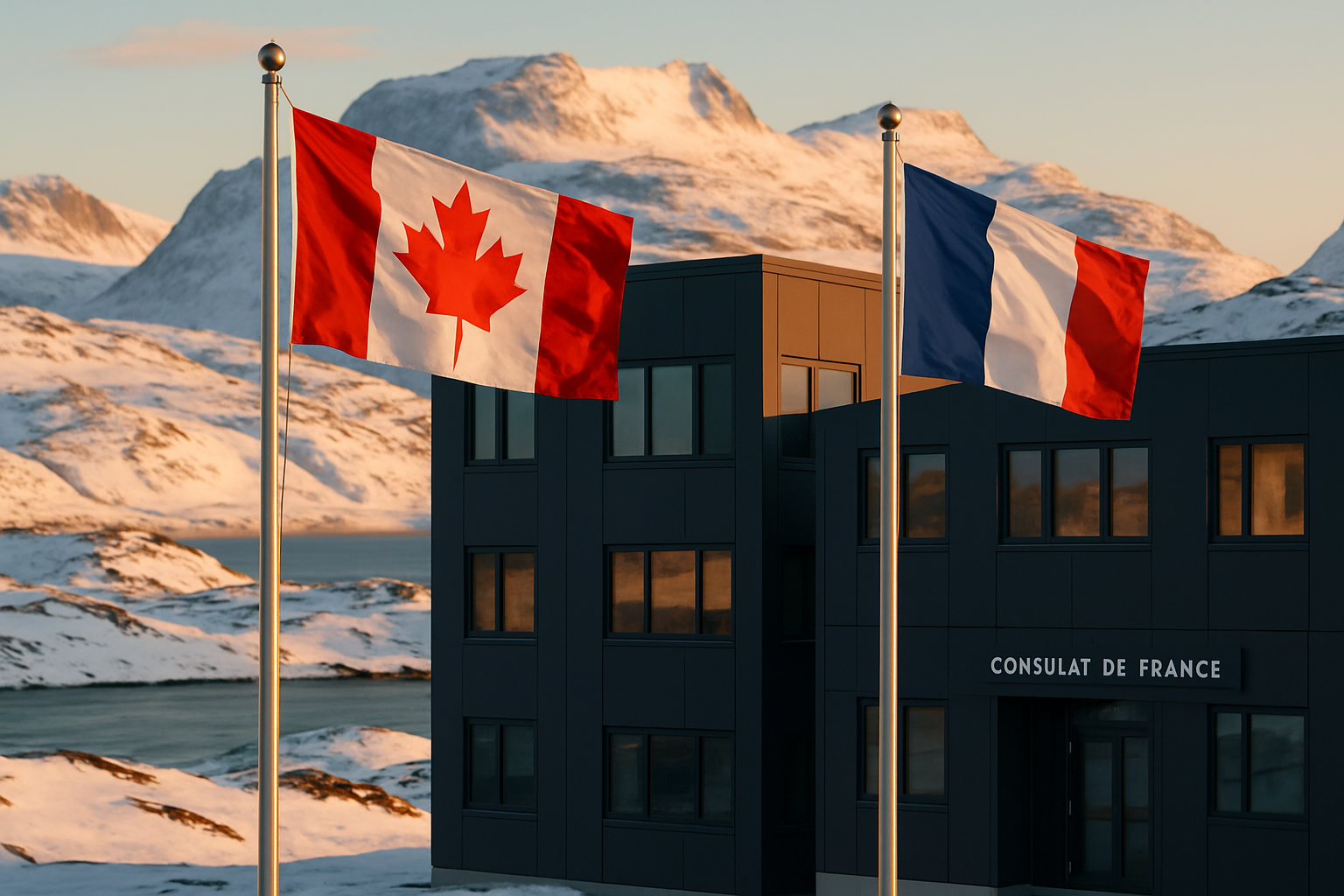
Canada and France officially opened their first consulates in Nuuk, Greenland's capital, on February 6, 2026, in a coordinated diplomatic move designed to demonstrate international support for Danish sovereignty over the Arctic territory as President Trump continues pursuing territorial claims.
The simultaneous opening of both consular missions represents an unprecedented show of solidarity with Denmark and Greenland amid escalating tensions with the Trump administration, which has repeatedly expressed interest in acquiring or controlling the strategically important island.
Diplomatic Solidarity Against US Pressure
The timing of the consular openings was deliberately coordinated, according to diplomatic sources, as both Canada and France "adamantly oppose Donald Trump's wish to control Greenland." The move sends a clear message that key Western allies stand firmly behind Denmark's sovereignty over its autonomous territory.
An Inuit delegation from Canada was present for the consulate opening, with passengers on Air Inuit flying from Montreal to Nuuk carrying Canadian flags in a show of cultural and political solidarity. The delegation's message was unambiguous: "Back off," directed at Trump's continued territorial ambitions.
Historical Context of US-Greenland Tensions
Trump's interest in Greenland dates back to his first presidency when he proposed purchasing the island from Denmark in 2019, a suggestion that was firmly rejected. During his current term, the territorial ambitions have intensified, with working group meetings beginning January 28, 2026, between US and Greenlandic representatives in Washington.
Greenland's Prime Minister Jens-Frederik Nielsen has consistently maintained that "Greenland is neither for sale nor for purchase," while expressing cautious optimism about dialogue with the United States. However, Nielsen warned parliament that the Trump administration still actively pursues territorial control despite previous rejections.
"Greenland is neither for sale nor for purchase. We remain committed to our partnership with Denmark while engaging constructively with all nations."
— Jens-Frederik Nielsen, Prime Minister of Greenland
Strategic Importance of Greenland
Greenland's strategic significance has grown dramatically in recent years due to several factors. The island sits at a crucial geopolitical crossroads between North America and Europe, controlling key Arctic shipping routes that are becoming increasingly accessible due to climate change.
The territory is also rich in rare earth minerals and other natural resources essential for modern technology and defense applications. Additionally, Greenland's location provides vital strategic military positioning in the Arctic region, an area of growing international competition.
Denmark and Greenland share security concerns about maintaining sovereignty while managing relationships with major powers, but both firmly reject any loss of territorial control to the United States or other nations.
European and Canadian Opposition
The consulate openings demonstrate broader European and Canadian opposition to Trump's pressure tactics regarding Greenland. French and Canadian officials view the territorial claims as destabilizing to established international law and sovereignty principles.
The coordinated diplomatic response reflects growing concern among traditional US allies about unilateral American actions that disregard established territorial boundaries and sovereignty rights of NATO partners.
Both nations have emphasized their commitment to supporting democratic self-determination and existing territorial arrangements within the Western alliance framework.
Economic and Cultural Connections
Beyond the political symbolism, the new consulates will facilitate increased economic and cultural exchanges between Greenland and both Canada and France. Canada, in particular, shares Arctic experiences and Indigenous connections with Greenland that provide natural foundations for deeper cooperation.
The Inuit populations of Canada and Greenland have historical and cultural ties that transcend national boundaries, making Canadian support particularly meaningful to Greenlandic self-determination efforts.
France's involvement reflects broader European Union support for maintaining existing sovereignty arrangements and opposition to any forced territorial changes through external pressure.
International Law and Sovereignty Principles
The consular openings reinforce fundamental principles of international law regarding territorial sovereignty and self-determination. Legal experts view the coordinated response as an important precedent for defending smaller nations' sovereignty rights against pressure from major powers.
The diplomatic initiative demonstrates that traditional allies will actively support each other when facing threats to established territorial arrangements, even when the pressure comes from within the Western alliance system.
Implications for Arctic Governance
The Greenland consulate crisis highlights broader tensions over Arctic governance and resource control as climate change opens new possibilities for economic exploitation and military positioning in the region.
Canada and France's actions establish a precedent for collective response to unilateral territorial claims in the Arctic, potentially influencing future disputes over Arctic territories and resources as the region becomes increasingly accessible and strategically important.
The coordinated diplomatic response may serve as a model for addressing similar territorial pressures in other strategic regions where major powers seek to alter established boundaries through political and economic leverage rather than military force.
As international attention focuses on the Arctic's growing strategic importance, the solidarity shown by Canada and France in opening Greenland consulates represents a significant diplomatic statement about preserving sovereignty principles and collective defense of smaller nations' territorial rights within the established international order.