Canada rolled out significant immigration policy updates while simultaneously confronting escalating pressure from the Trump administration over bridge infrastructure ownership and domestic efforts to eliminate trade barriers between provinces.
The Canadian government introduced new immigration priority categories on Wednesday to bring in skilled workers in fields ranging from research and healthcare to aviation, and to include certain military roles. The Express Entry system revisions represent a strategic shift toward addressing critical labor shortages across key sectors of the Canadian economy.
Express Entry System Overhaul
The updated Express Entry immigration rules add new priority categories specifically targeting skilled workers in research, healthcare, aviation, and military sectors. This expansion comes as Canada faces acute labor shortages in these critical areas, with the government seeking to attract international talent to fill gaps that have persisted since the pandemic.
The new military category is particularly notable, as it opens pathways for foreign military personnel with specialized skills to contribute to Canada's defense capabilities. Healthcare and research categories have been expanded to include more specialized roles, reflecting Canada's ongoing need for medical professionals and researchers in emerging technologies.
US Bridge Infrastructure Threats Intensify
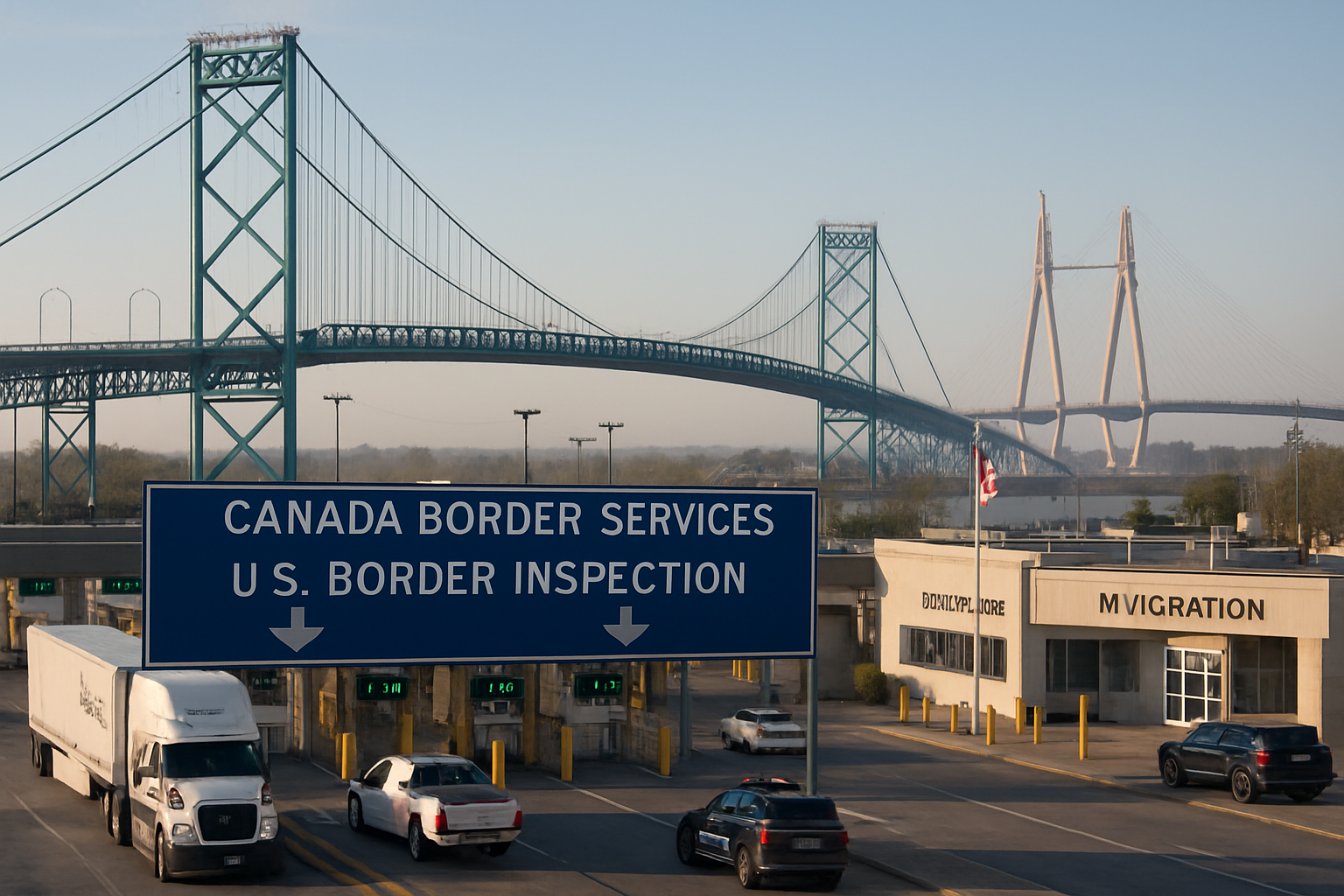
Meanwhile, Canada faces mounting pressure from Washington over the opening of the $4.7 billion Gordie Howe International Bridge connecting Windsor, Ontario, and Detroit, Michigan. Democrats in the US Congress are demanding correspondence from Commerce Secretary nominee Howard Lutnick after reports emerged that Trump's threats to block the bridge opening came following Lutnick's meeting with Matthew Moroun, whose family owns the competing Ambassador Bridge.
The controversy centers on Trump's demand for US ownership of "at least half" of the bridge despite Canada providing all funding for the project. The bridge construction is complete, with testing underway for its planned 2026 opening, but Trump has threatened to prevent its operation unless Ottawa treats the US with "fairness and respect."
"The Gordie Howe bridge won't open until Ottawa treats the US with fairness and respect," Trump declared on Truth Social, creating unprecedented tensions over foreign-funded infrastructure crossing US territory.
— President Donald Trump, Truth Social post
Democrats are expanding their probe into the circumstances around Trump's threats, targeting bridge owner Matthew Moroun in their investigation. The 1.5-mile bridge, named for hockey legend Gordie Howe, represents a critical trade link between the world's largest trading partners and is designed to ease border congestion.
Interprovincial Trade Barrier Elimination
Adding another layer to Canada's policy challenges, British Columbia introduced groundbreaking legislation to tackle interprovincial trade barriers. The new law will help businesses while reducing costs for consumers, according to the province's jobs minister Ravi Kahlon.
The legislation establishes transparency requirements for any exemptions the province seeks to protect goods, services, or labor. This represents a significant step toward reducing the complex web of interprovincial trade restrictions that have historically hindered Canada's internal economic integration.
"This legislation will help businesses, but also reduce costs for consumers," stated Ravi Kahlon, B.C.'s Minister of Jobs and Economic Growth.
— Ravi Kahlon, B.C. Minister of Jobs and Economic Growth
Congressional Opposition to Trump's Canada Policy
The bridge dispute occurs against the backdrop of growing congressional resistance to Trump's broader Canada policy. The Republican-controlled House recently passed legislation 219-211 ending President Trump's tariffs on Canada, with six GOP members defecting to join nearly all Democrats in a rare bipartisan rebuke of the administration's trade policies.
This represents the first significant congressional challenge to Trump's economic agenda in his second term, with House Speaker Mike Johnson unsuccessfully attempting to prevent the vote from reaching the floor. The legislation now advances to the Senate, though Trump retains veto power over any final measure.
Strategic Implications for US-Canada Relations
The convergence of immigration policy updates, infrastructure disputes, and trade barrier elimination efforts reflects the complex challenges facing US-Canada relations. The Gordie Howe bridge controversy has created particular concern among business leaders who depend on predictable cross-border infrastructure for supply chain planning.
The bridge dispute fits a broader pattern of the Trump administration using bilateral pressure backed by economic threats to renegotiate alliance relationships. This approach contrasts with traditional multilateral frameworks that have historically governed US-Canada cooperation on shared infrastructure projects.
Economic and Security Dimensions
Canada's immigration system updates come as the country seeks to maintain its competitive edge in attracting global talent, particularly in technology and defense sectors. The new military category reflects growing recognition of the need for specialized defense capabilities amid evolving security challenges.
The bridge infrastructure dispute carries significant economic implications, as any opening delays would affect businesses planning logistics around the new crossing's capacity. The Gordie Howe bridge is critical for US-Canada trade and automotive supply chains, representing a major North American infrastructure achievement.
B.C.'s interprovincial trade barrier legislation addresses long-standing inefficiencies in Canada's internal market, potentially serving as a model for other provinces seeking to reduce regulatory obstacles to internal trade. The timing of these initiatives suggests coordinated efforts to strengthen Canada's economic competitiveness amid external pressures.
International Context and Future Implications
The developments unfold as Canada navigates broader geopolitical pressures, including ongoing tensions over energy policy and defense spending commitments. The bridge controversy creates precedents for future shared infrastructure projects between allied nations, particularly regarding funding nation rights versus territorial nation claims.
Immigration policy updates position Canada to compete more effectively for global talent in critical sectors, while addressing domestic labor shortages that have constrained economic growth. The military category addition reflects increased focus on defense capabilities amid evolving security environments.
The success or failure of resolving the bridge dispute will likely influence future US-Canada cooperation on major infrastructure projects and set important precedents for how allied nations manage shared critical infrastructure in an era of intensified bilateral pressure tactics.