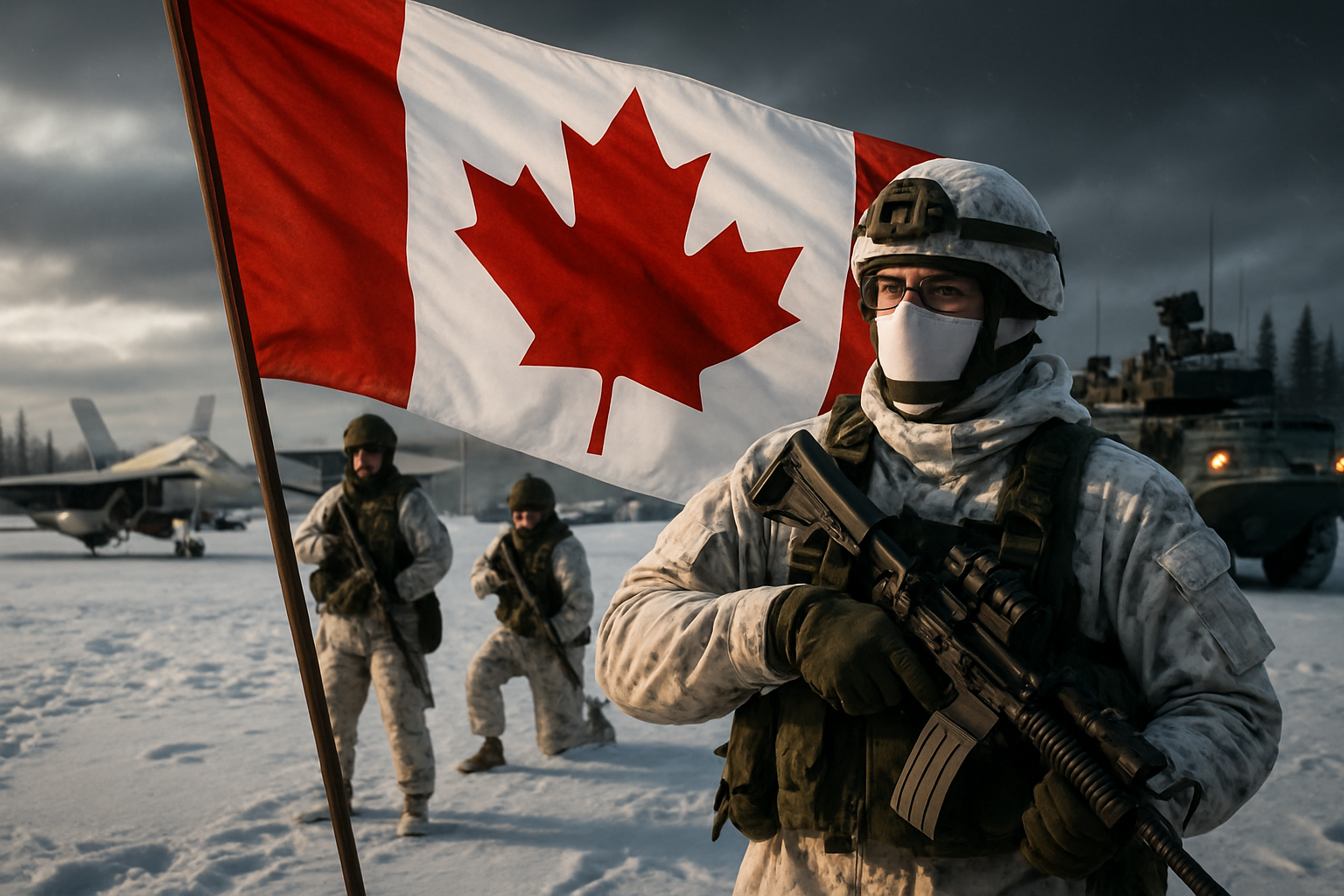
Prime Minister Mark Carney on Tuesday unveiled Canada's most ambitious defense spending initiative in modern history, announcing a $6.6 billion Defence Industrial Strategy designed to dramatically reduce the nation's military dependence on the United States while creating 125,000 new jobs over the next decade.
The comprehensive plan, formally announced at CAE Inc. in Montreal, represents Canada's first-ever defense industrial strategy and signals a fundamental shift in the country's approach to military procurement. Under the new "Build-Partner-Buy" framework, 70% of defense contracts will be awarded to Canadian companies, reversing the current situation where Ottawa allocates 70% of its defense budget to American products.
Strategic Response to Changing Alliance Dynamics
The timing of Carney's announcement is particularly significant, coming as President Donald Trump continues to pressure NATO allies to increase defense spending and reduce dependence on American military support. The Canadian initiative directly addresses Trump's demands for greater burden-sharing while asserting national sovereignty over defense capabilities.
"Canada has not done nearly enough to defend itself in an increasingly dangerous world, and counting on US protection is no longer sufficient," Carney stated during the announcement, emphasizing the need for strategic autonomy in an era of evolving international relationships.
The strategy forms part of Canada's broader commitment to increase military spending to 5% of GDP by 2035, significantly exceeding NATO's current 2% target and positioning Canada among the alliance's most significant defense contributors.
Unprecedented Investment in Domestic Capabilities
The $6.6 billion investment will focus on developing indigenous military technologies and manufacturing capabilities across multiple sectors. The plan prioritizes advanced defense systems, including aerospace technologies, cybersecurity capabilities, and Arctic defense systems crucial for Canada's northern sovereignty.
"This represents the most significant transformation of Canada's defense industry since World War II," stated Defense Minister David McGuinty. "We're not just buying equipment; we're building the industrial foundation for long-term security independence."
— David McGuinty, Canadian Defense Minister
The initiative will establish new research and development centers, expand existing defense contractors, and create partnerships between Canadian universities and military industries. Priority areas include Arctic surveillance systems, naval shipbuilding, fighter aircraft maintenance, and advanced materials for extreme weather conditions.
Job Creation and Economic Impact
The promise of 125,000 new jobs over ten years represents one of the largest employment initiatives in Canadian defense history. These positions will span multiple skill levels, from advanced engineering and cybersecurity specialists to manufacturing and logistics personnel.
Regional economic benefits are expected to be substantial, with defense contracts distributed across major Canadian industrial centers. Quebec, Ontario, and the Maritime provinces are anticipated to receive the largest shares of new investments, though Western Canada will also benefit from aerospace and technology contracts.
The economic multiplier effect could generate additional indirect employment, with economists estimating total job creation might reach 200,000 positions when accounting for supply chain and service sector impacts.
International Context and Alliance Implications
Canada's defense strategy emerges amid broader NATO discussions about burden-sharing and strategic autonomy. European allies have similarly announced initiatives to reduce American military dependence, creating a coordinated Western response to changing geopolitical dynamics.
The strategy aligns with recent developments in European defense cooperation, including France and Germany's nuclear deterrence discussions and the UK's increased Arctic military presence. These coordinated efforts suggest a fundamental realignment of Western military relationships beyond traditional American leadership.
Trump administration officials have generally welcomed allied defense spending increases, though specific reactions to Canada's procurement nationalism remain unclear. The approach balances alliance commitments with national industrial policy, potentially serving as a template for other NATO members.
Challenges and Implementation Timeline
Despite broad political support, the initiative faces significant implementation challenges. Critics argue that rapid defense industrial development risks inefficiency and cost overruns, particularly given Canada's limited recent experience with large-scale military manufacturing.
Parliamentary opposition has raised concerns about bureaucratic expansion and the potential for political interference in defense procurement. Conservative critics warn that economic nationalism in defense spending could compromise military effectiveness if domestic capabilities prove inferior to international alternatives.
The timeline for full implementation extends through 2035, requiring sustained political commitment across multiple electoral cycles. Success depends on maintaining bipartisan support and avoiding the delays that have historically plagued major Canadian defense procurements.
Arctic Defense and Sovereignty Implications
A significant portion of the defense investment will focus on Arctic capabilities, addressing growing concerns about Russian and Chinese activities in Canada's northern territories. The strategy includes advanced surveillance systems, icebreakers, and Arctic-specific military equipment designed for extreme weather operations.
This emphasis on northern defense capabilities comes as NATO launches its Arctic Sentry mission and European allies increase their Arctic military presence. Canada's geographic position makes it crucial for continental defense and North American security architecture.
The Arctic focus also addresses sovereignty concerns raised by Trump's territorial statements about Greenland and broader questions about northern boundary security in an era of climate change and resource competition.
Technology and Innovation Focus
The strategy prioritizes cutting-edge military technologies, including artificial intelligence applications, cybersecurity systems, and space-based defense capabilities. Canadian universities and research institutions will receive increased funding for defense-related research, creating innovation ecosystems around military technology development.
Partnerships with allied nations will continue, but under frameworks that preserve Canadian intellectual property and manufacturing capabilities. The approach seeks to balance technological advancement with industrial sovereignty, ensuring that critical defense technologies remain under Canadian control.
Looking Ahead: Strategic Autonomy and Alliance Solidarity
Canada's Defence Industrial Strategy represents a calculated response to evolving international security challenges and changing alliance dynamics. By investing in domestic military capabilities while maintaining NATO commitments, Canada seeks to position itself as a more capable and autonomous security partner.
The success of this initiative will be measured not only in jobs created and contracts awarded but in Canada's ability to contribute meaningfully to collective defense while maintaining strategic independence. As international security challenges intensify, Canada's approach may serve as a model for middle powers seeking to balance alliance obligations with national sovereignty.
The coming months will be crucial as implementation begins and international reactions become clearer. Whether this strategy enhances or complicates Canada's relationships with traditional allies will significantly impact North American security cooperation and the broader evolution of Western defense partnerships in the 21st century.