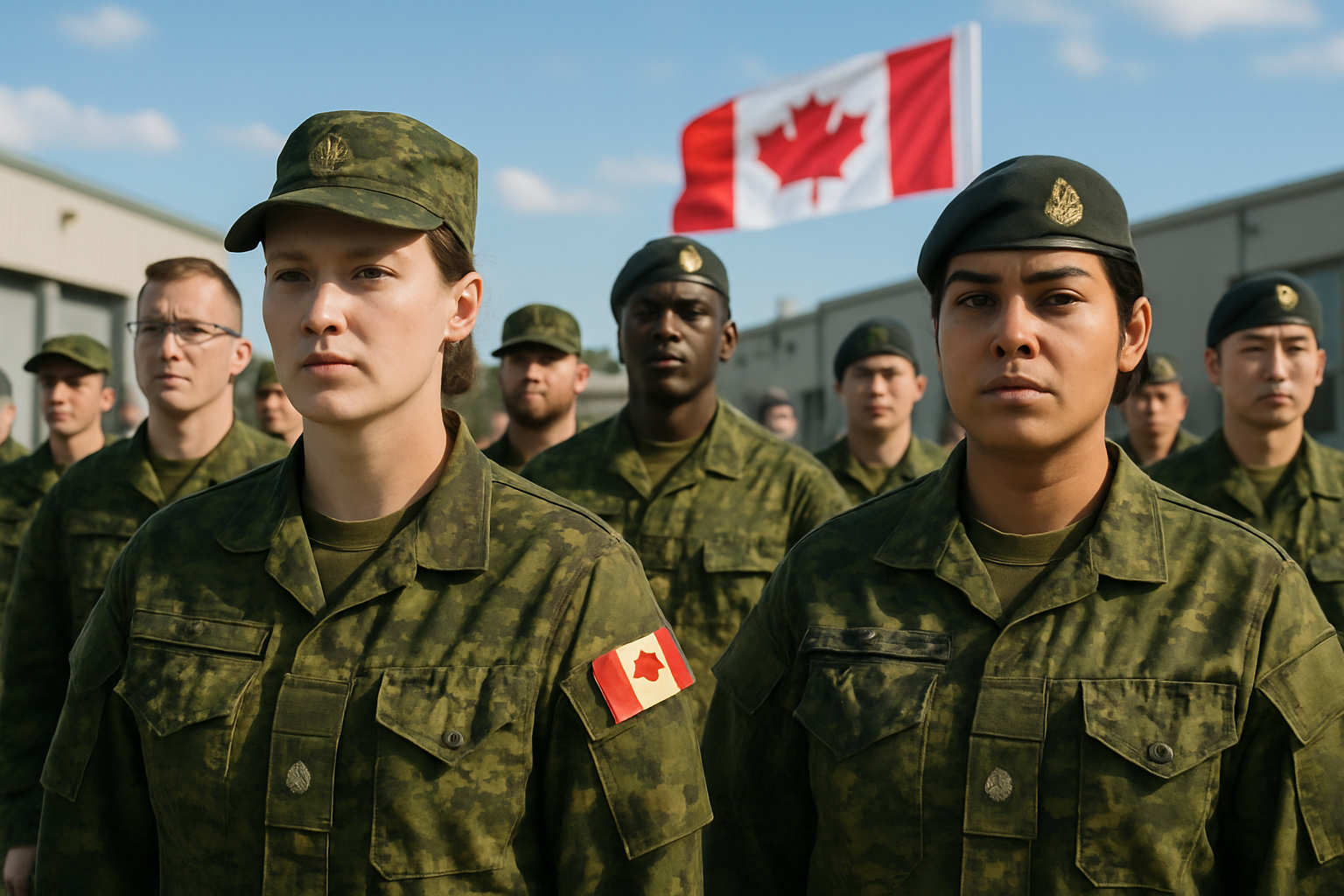
Canada's military establishment faces a deepening recruitment crisis as the Canadian Armed Forces remains far from achieving its decade-old target for female participation, with Defense Minister David McGuinty acknowledging persistent personnel shortfalls that threaten the country's ability to meet growing international security commitments.
The recruitment challenges come at a critical juncture for Canada's defense posture, as the country navigates heightened Arctic tensions with Russia, implements a $35 billion Arctic defense investment, and fulfills ambitious plans to increase military spending to 5% of GDP by 2035. Yet despite these mounting security pressures and repeated government initiatives, the Canadian Armed Forces continues to struggle with attracting and retaining female personnel.
Historical Context of Female Recruitment Goals
The origins of Canada's current recruitment crisis trace back to 2014, when the Canadian Armed Forces established ambitious targets for increasing female participation across all military branches. These goals were set against a backdrop of NATO pressure for member nations to diversify their forces and recommendations from internal reviews highlighting the strategic advantages of gender-inclusive military organizations.
However, more than a decade later, the military remains "thousands short of 2017 strategic targets," according to Defense Minister McGuinty's recent parliamentary testimony. This shortfall has become increasingly problematic as Canada faces mounting pressure from the Trump administration to increase NATO burden-sharing and enhance its contribution to collective defense.
Systemic Barriers Hampering Progress
Military analysts and gender equality experts point to several interconnected factors that continue to impede female recruitment and retention in the Canadian Armed Forces. These systemic barriers operate at multiple levels, from institutional culture to practical considerations that disproportionately affect women.
One significant challenge lies in the military's operational culture, which has historically been designed around male-dominated hierarchies and traditions. Despite official policy changes and diversity initiatives, informal networks and unwritten cultural norms continue to create environments that can be unwelcoming or challenging for female personnel.
"The military has made policy changes on paper, but changing deeply embedded cultural patterns takes sustained effort over many years. We're still seeing the effects of decades of male-dominated institutional thinking."
— Defense Policy Expert, Conference of Defence Associations Institute
Recruitment challenges are compounded by practical barriers including family accommodation policies, childcare availability at military bases, and career progression pathways that don't always align with the realities of military families where both spouses may serve.
International Comparisons and Lessons
Canada's struggles with female military recruitment are not unique among NATO allies, but some countries have made more significant progress in addressing similar challenges. Australia's recent appointment of Lieutenant General Susan Coyle as the country's first female army chief represents the kind of breakthrough leadership representation that Canada has yet to achieve at the highest levels.
Nordic countries, particularly Norway and Sweden, have implemented innovative approaches to military service that have resulted in higher female participation rates. These include mandatory military service for all genders and comprehensive support systems for military families that have proven more effective than voluntary recruitment models.
Lessons from Allied Nations
International experiences suggest that successful female recruitment requires comprehensive approaches that address both structural and cultural barriers simultaneously. Countries that have achieved significant progress typically implement:
- Comprehensive family support systems including childcare and flexible deployment schedules
- Clear career progression pathways with mentorship programs
- Leadership representation at senior levels that provides role models for junior female personnel
- Zero-tolerance policies for harassment and discrimination with robust enforcement mechanisms
Economic and Strategic Implications
The recruitment shortfall carries significant implications beyond simple personnel numbers. As Canada implements its ambitious Defense Industrial Strategy, which promises 125,000 new defense-related jobs over the next decade, the military's inability to diversify its ranks limits the talent pool available for increasingly sophisticated military operations.
Modern military operations require diverse skill sets, including cyber warfare capabilities, advanced technology management, and complex international coordination. Research consistently demonstrates that diverse teams perform better in these complex environments, making gender diversity not just a matter of equity but of operational effectiveness.
The economic implications extend to Canada's broader defense industrial base. With 70% of defense contracts now targeted for Canadian companies under the new industrial strategy, a diverse military workforce is essential for effective oversight and management of these substantial investments.
Current Initiatives and Their Limitations
The Canadian Armed Forces has implemented numerous initiatives aimed at addressing female recruitment challenges. These include updated recruitment advertising that features female personnel, revised physical fitness standards that better accommodate different body types, and enhanced support systems for military families.
However, critics argue that many of these initiatives address symptoms rather than root causes. Despite years of diversity programs, women still comprise only approximately 20% of the Australian Defence Force, and similar proportions are reported for the Canadian Armed Forces, suggesting that incremental approaches may be insufficient to achieve meaningful change.
Inadequate Measurement and Accountability
One significant challenge in addressing the recruitment shortfall is the lack of transparent, publicly available data on recruitment and retention rates by gender. This makes it difficult for policymakers, researchers, and advocacy groups to assess the effectiveness of various initiatives or identify specific areas requiring attention.
"Without clear metrics and regular public reporting on recruitment and retention by gender, it's impossible to know whether current initiatives are working or need fundamental revision."
— Senior Fellow, Canadian Defence and Foreign Affairs Institute
Political and Parliamentary Oversight
The recruitment challenges have attracted increasing attention from parliamentarians across party lines, with opposition parties likely to scrutinize government priorities and spending allocations in upcoming budget discussions. Defense Minister McGuinty's acknowledgment of persistent personnel shortfalls has prompted calls for renewed parliamentary attention to defense recruitment strategies.
Conservative critics have questioned whether current diversity initiatives represent effective use of taxpayer resources, while NDP representatives have called for more comprehensive approaches that address underlying social and economic barriers to women's military participation.
The political implications extend beyond domestic considerations, as Canada's ability to meet its NATO commitments depends partly on its capacity to recruit and retain sufficient qualified personnel across all military specialties.
Future Pathways and Reform Proposals
Addressing Canada's female recruitment shortfall will require comprehensive reform that goes beyond current piecemeal initiatives. Military experts and gender equality advocates propose several potential pathways forward that could yield more substantial progress.
One approach involves fundamental restructuring of military career pathways to better accommodate the realities of modern Canadian families. This could include expanded remote work opportunities for certain military occupations, more flexible deployment schedules, and enhanced support for dual-military families.
Cultural Transformation Initiatives
Successful recruitment and retention requires sustained cultural change within military institutions. This involves not only updating official policies but actively working to transform informal networks and social dynamics that can exclude or marginalize female personnel.
Some experts advocate for leadership accountability measures that tie promotion and evaluation criteria for senior officers to their success in recruiting, retaining, and developing female personnel under their command. This would create institutional incentives for cultural change at all levels of the military hierarchy.
Integration with Broader Defense Priorities
Canada's female recruitment challenges cannot be separated from broader defense modernization efforts. As the country implements its $35 billion Arctic defense investment and works to meet its commitment to spend 5% of GDP on defense by 2035, the quality and diversity of military personnel becomes increasingly critical.
The Arctic defense strategy, in particular, requires personnel capable of operating in challenging conditions while managing sophisticated technology and maintaining international partnerships with Nordic allies. These requirements make diversity and inclusion not just moral imperatives but operational necessities.
Future success in meeting female recruitment targets will depend on integrating diversity goals with broader strategic objectives rather than treating them as separate initiatives. This requires sustained political commitment beyond electoral cycles and comprehensive stakeholder engagement across military and civilian institutions.
Measuring Success and Accountability
Moving forward, Canada needs robust mechanisms for measuring progress on female recruitment and retention that go beyond simple numerical targets. Effective metrics should include retention rates by rank and military occupation, career progression patterns, and measures of institutional culture change.
Success factors identified from international best practices include sustained political commitment across electoral cycles, comprehensive professional training programs that address unconscious bias, authentic community engagement with potential recruits, and continued international cooperation for sharing effective strategies.
"True progress requires treating gender equality as fundamental community infrastructure rather than individual crisis management. Success depends on transforming annual recognition into sustained daily commitment to institutional change."
— Gender Equality Researcher, citing International Women's Day 2026 global findings
Strategic Implications for Canadian Security
The stakes extend far beyond recruitment numbers. Canada's ability to maintain its international commitments, from NATO obligations to Arctic sovereignty protection, depends on developing a military force that reflects the diversity and capabilities of Canadian society.
As global security challenges become increasingly complex, involving cyber threats, climate-related emergencies, and sophisticated international coordination requirements, military effectiveness depends on accessing the full range of Canadian talent and perspectives.
The recruitment shortfall represents both a challenge and an opportunity. Addressing it successfully could position Canada as a leader in military innovation and effectiveness, while continued failure risks limiting the country's ability to meet its strategic objectives in an increasingly complex security environment.
The path forward requires sustained commitment from political leadership, military institutions, and Canadian society as a whole to create armed forces that truly represent the diversity and capabilities of the nation they serve. Only through such comprehensive effort can Canada hope to meet both its gender diversity goals and its growing security responsibilities in the decades ahead.