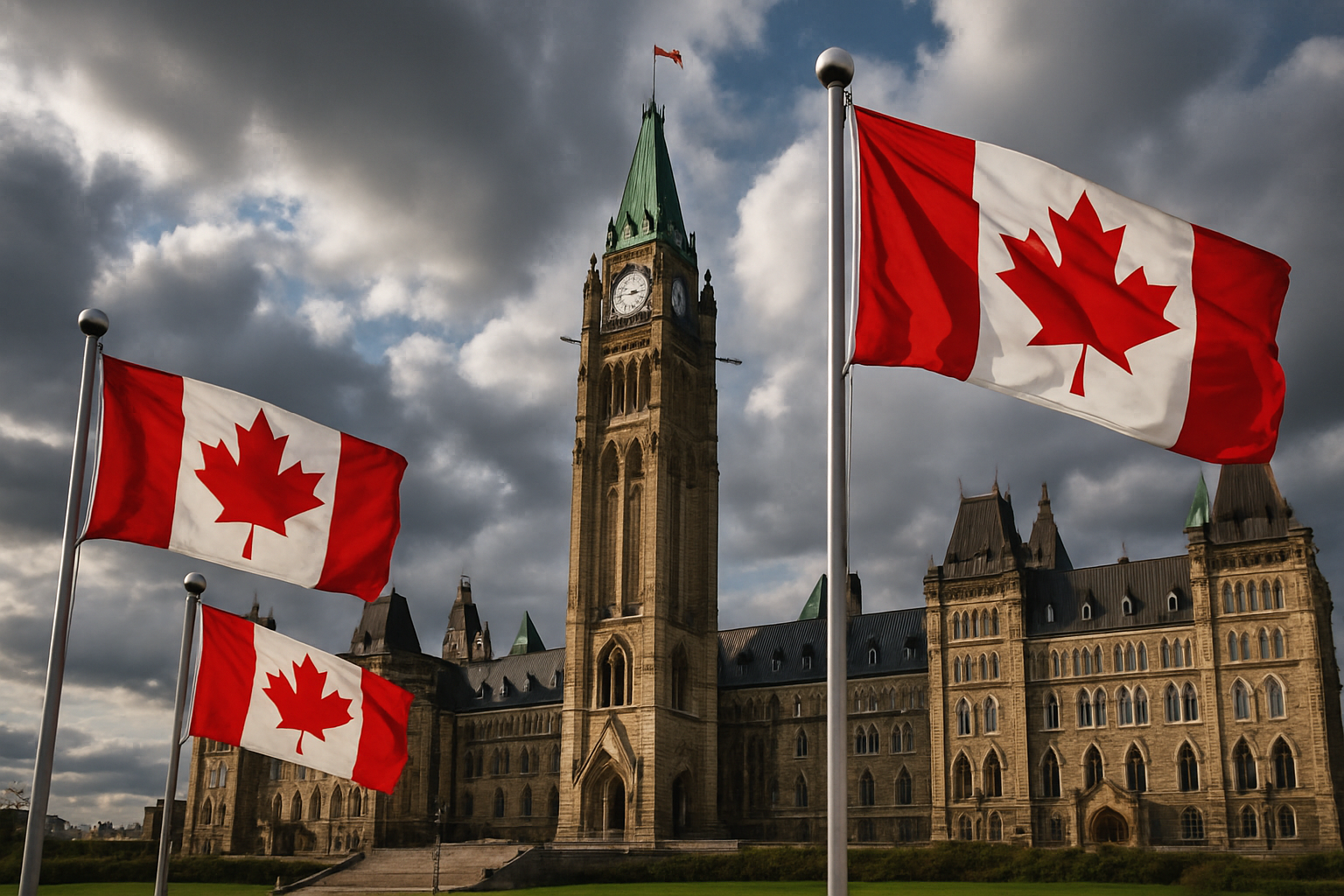
Prime Minister Mark Carney announced Canada's first national sovereign wealth fund on Monday, pitching the Canada Strong Fund as a transformational investment vehicle for nation-building projects while navigating significant domestic policy challenges and corporate restructuring initiatives.
The historic announcement comes as Canada faces multiple converging issues, from major corporate restructuring at Rogers Communications to ongoing infrastructure debates around the Prime Minister's official residence, highlighting the complex landscape of Canadian governance under Carney's leadership.
The Canada Strong Fund: A New Economic Vision
Speaking at a government announcement, Carney positioned the Canada Strong Fund as a way for Canadians to invest directly in nation-building projects across key sectors including energy, infrastructure, mining, agriculture, and technology. The sovereign wealth fund represents a significant departure from Canada's traditional approach to public investment and economic development.
"This fund will allow Canadians to participate directly in building our nation's future," Carney stated during the announcement. The initiative comes as the government seeks new mechanisms to fund critical infrastructure while maintaining fiscal responsibility during uncertain economic times.
"We can no longer rely solely on traditional funding mechanisms when it comes to the scale of investment Canada needs for the 21st century."
— Prime Minister Mark Carney
Corporate Upheaval at Rogers Communications
The sovereign wealth fund announcement coincides with significant corporate restructuring across Canada's telecommunications sector. Rogers Communications Inc. confirmed it is offering voluntary buyouts to approximately 10,000 eligible employees as the media and telecommunications giant aims to reduce operational costs.
The buyout program affects a substantial portion of Rogers' workforce and reflects broader pressures facing Canada's telecommunications industry. The company, which operates extensive telecommunications, media, and sports properties, cited the need to streamline operations amid changing market conditions.
Industry analysts view the Rogers restructuring as indicative of broader challenges facing Canadian telecommunications companies, including increased competition, regulatory pressures, and evolving consumer demands in the digital economy.
Infrastructure and Governance Challenges
Carney's government also faces immediate infrastructure challenges, with the Prime Minister describing the state of 24 Sussex Drive, the official prime ministerial residence, as "an embarrassment." The deteriorating condition of the historic residence has become symbolic of broader infrastructure investment needs across federal properties.
The 24 Sussex situation illustrates the practical challenges facing the government as it promotes major infrastructure investment through the new sovereign wealth fund while dealing with basic maintenance issues in government facilities. The residence has been uninhabitable for years due to extensive repair needs, forcing prime ministers to seek alternative accommodations.
International Perspective and Trade Relations
The developments occur against a backdrop of complex international trade relationships. Norwegian media coverage of Canada's sovereign wealth fund initiative suggests international interest in the country's new approach to public investment, with some drawing comparisons to Norway's successful Government Pension Fund Global.
Carney previously stated that Canada won't be "chasing a small deal" to obtain U.S. tariff relief, indicating a more assertive approach to trade negotiations. This stance aligns with the sovereign wealth fund's emphasis on building domestic economic capabilities and reducing dependence on external factors.
Political Context and Parliamentary Dynamics
The announcement comes as Carney's government works to implement its economic agenda while managing various political challenges. The Prime Minister has strengthened his parliamentary position through strategic political developments, including floor-crossings from opposition parties that have brought the Liberals closer to majority government status.
Recent defections to the Liberal Party, including NDP MP Lori Idlout citing Arctic sovereignty and Indigenous rights concerns, have provided Carney with additional political capital to pursue ambitious initiatives like the sovereign wealth fund. The enhanced parliamentary position allows for more decisive action on major economic policies.
Economic Strategy and Implementation
The Canada Strong Fund represents part of a broader economic strategy that includes significant defense spending increases and Arctic sovereignty investments. The government has committed to substantial increases in defense spending, reaching 5% of GDP by 2035, well above NATO's 2% target.
This comprehensive approach to economic policy aims to address multiple challenges simultaneously: infrastructure investment needs, economic competitiveness, national security requirements, and public participation in nation-building projects.
Implementation details for the sovereign wealth fund remain under development, with the government promising more specific information about investment mechanisms, governance structures, and return expectations for Canadian participants.
Challenges and Opposition Response
Critics question the timing and structure of the sovereign wealth fund announcement, particularly given ongoing challenges in basic government operations and infrastructure maintenance. Opposition parties have raised concerns about the government's ability to manage complex investment vehicles while addressing immediate governance issues.
The Rogers buyout situation also raises questions about the stability of Canada's telecommunications sector at a time when the government is promoting major technology investments through the sovereign wealth fund.
Conservative opposition leader Pierre Poilievre continues to maintain strong polling numbers through his "common sense conservatism" message, focusing on kitchen table issues like housing costs, inflation, and taxation that directly affect Canadian families.
Future Implications
The sovereign wealth fund announcement marks a significant evolution in Canadian economic policy, potentially influencing how the country approaches large-scale infrastructure and development projects for decades to come. Success will depend on effective implementation, transparent governance, and the ability to deliver tangible benefits to participating Canadians.
The convergence of corporate restructuring, infrastructure challenges, and new investment vehicles reflects the complex economic transformation underway in Canada. How effectively the government manages these simultaneous challenges will likely influence its political fortunes and Canada's economic trajectory.
As the Canada Strong Fund moves from announcement to implementation, its performance will serve as a key measure of the Carney government's economic stewardship and its ability to deliver on ambitious promises for national development and citizen participation in building Canada's economic future.