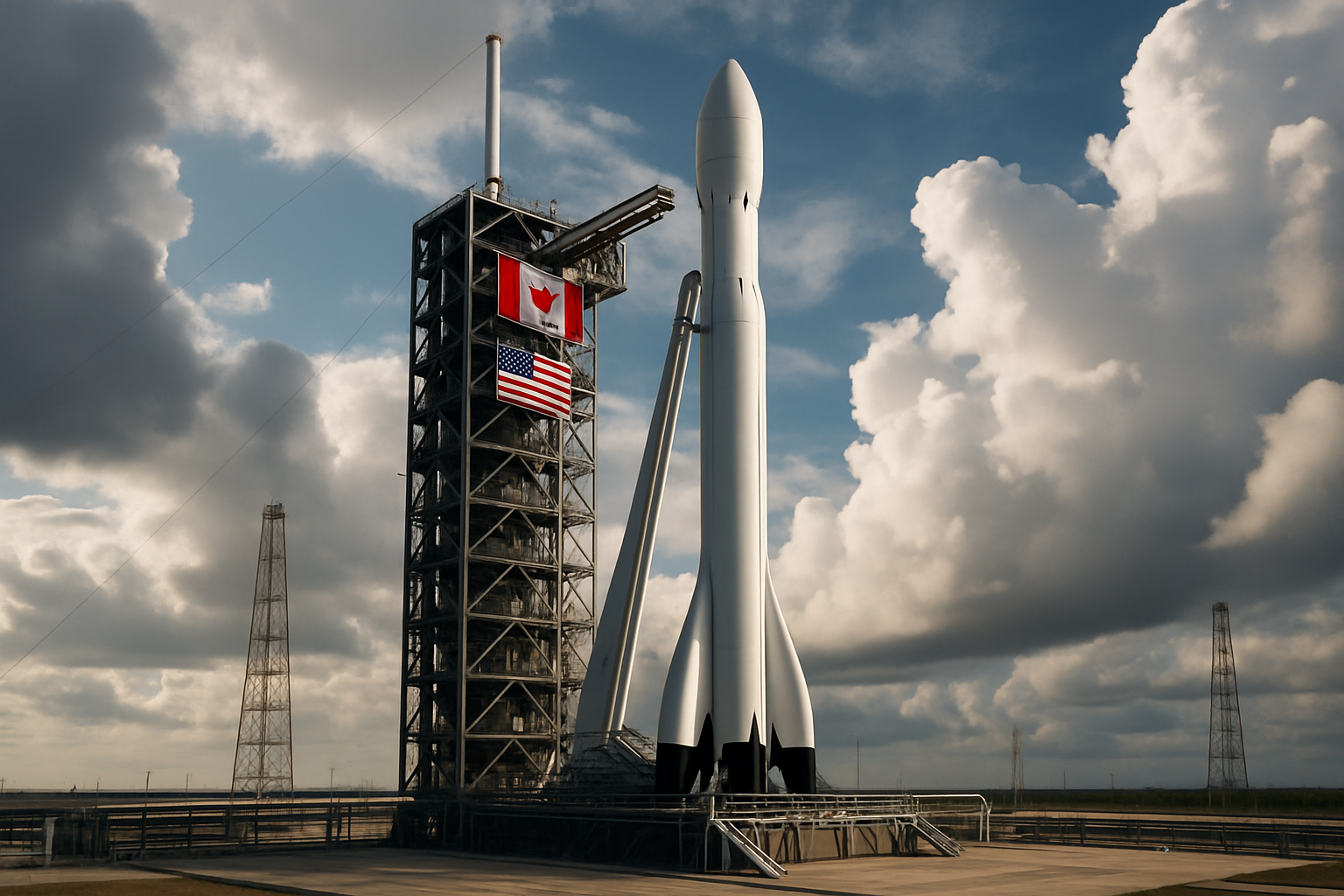
Canada and the United States are simultaneously opening their regulatory frameworks to enable domestic space launches, marking a significant expansion of the commercial space industry across North America as both nations position themselves to capitalize on the rapidly growing space economy projected to exceed $1 trillion by 2030.
The Canadian federal government announced the introduction of the Canadian Space Launch Act, aimed at enabling "homegrown" space launches from Canadian soil for the first time. This groundbreaking legislation comes on the heels of the successful NASA Artemis II lunar mission, which featured Canadian astronaut Jeremy Hansen as the first Canadian to travel beyond Earth orbit.
Historic Canadian Space Launch Legislation
The proposed Canadian Space Launch Act represents a fundamental shift in Canada's space policy, moving from a purely supportive role in international missions to establishing sovereign launch capabilities. The legislation would create a comprehensive regulatory framework allowing rockets and payloads to blast off from Canadian territory, ending the country's dependence on foreign launch services.
"On the heels of the successful Artemis II space mission, the federal government says it's taking another step toward launching Canadian spacecraft from home soil," according to government sources familiar with the legislation. The timing is strategic, capitalizing on the momentum from Jeremy Hansen's historic lunar flyby mission and Canada's enhanced profile in international space exploration.
The legislation addresses critical gaps in Canada's space infrastructure that have long limited the country's ability to provide end-to-end space services to domestic and international clients. Currently, Canadian-built satellites and space technology must be launched from foreign facilities, creating logistical challenges and reducing Canada's competitiveness in the global space market.
Regulatory Framework and Safety Standards
The Canadian Space Launch Act will establish comprehensive safety standards, environmental protections, and licensing requirements for commercial space operators. The framework is designed to balance innovation and economic opportunity with public safety and environmental stewardship.
Key components of the proposed legislation include:
- Licensing requirements for launch facility operators
- Safety certification processes for launch vehicles
- Environmental impact assessment requirements
- Insurance and liability frameworks
- International treaty compliance mechanisms
- Emergency response protocols
The legislation builds on Canada's existing expertise in space technology, including the country's renowned contributions to the International Space Station through the Canadarm robotic systems and its growing satellite manufacturing sector.
US Regulatory Harmonization Efforts
Parallel to Canada's legislative initiative, the United States is undertaking comprehensive reforms to its space launch regulatory framework. The US Federal Aviation Administration and other agencies are streamlining licensing processes to accommodate the rapid growth in commercial space activities while maintaining rigorous safety standards.
The US regulatory expansion comes as the American commercial space sector experiences unprecedented growth, driven by companies like SpaceX, Blue Origin, and numerous smaller launch providers. The simplified framework aims to reduce bureaucratic delays while ensuring public safety and national security requirements are met.
Cross-border coordination between Canadian and US space authorities is expected to create a integrated North American space launch corridor, enabling more flexible mission planning and emergency response capabilities. This cooperation builds on existing aerospace partnerships, including NORAD and various bilateral space agreements.
Economic Impact and Industry Response
The expansion of North American space launch capabilities is expected to generate significant economic benefits across both countries. Industry analysts project that domestic launch capabilities could create thousands of high-skilled jobs in engineering, manufacturing, and operations sectors.
Canadian space companies have welcomed the proposed legislation as a crucial step toward making Canada a more competitive player in the global space economy. The ability to offer complete space services, from satellite manufacturing to launch operations, positions Canadian firms to compete more effectively for international contracts.
The legislation also supports Canada's growing small satellite sector, which has been constrained by limited launch options. Domestic launch capabilities would enable more frequent and flexible satellite deployments, supporting applications ranging from Earth observation to communications services.
Strategic Context and International Competition
The North American regulatory expansion occurs within a broader context of intensifying global competition in the commercial space sector. China has rapidly expanded its launch capabilities, while European nations are investing heavily in independent space access through programs like Ariane 6 and various national initiatives.
Canada's move toward sovereign launch capabilities aligns with broader trends toward space sovereignty, where nations seek to reduce dependence on foreign launch services for critical space infrastructure. This approach ensures continued access to space even during periods of international tension or supply chain disruptions.
The timing coincides with what space industry analysts term the "space economy golden age," characterized by falling launch costs, increasing satellite capabilities, and expanding commercial applications. The global space economy is projected to exceed $1 trillion by 2030, driven by satellite internet services, Earth observation capabilities, and emerging applications like space-based manufacturing.
Environmental Considerations and Sustainability
Both Canadian and US regulatory frameworks incorporate environmental protection measures to ensure space launch activities do not compromise terrestrial ecosystems. This includes requirements for environmental impact assessments, noise mitigation measures, and protocols for managing rocket debris.
The legislation addresses growing concerns about space debris, implementing requirements for end-of-life satellite disposal and collision avoidance measures. With over 34,000 tracked objects currently in orbit, responsible space operations have become a critical component of sustainable space development.
Canadian officials emphasize that the regulatory framework will incorporate lessons learned from other launch nations, implementing best practices for environmental protection while enabling commercial growth.
Implementation Timeline and Next Steps
The Canadian Space Launch Act is expected to undergo parliamentary review and committee consideration over the coming months, with implementation anticipated within the next two years. The legislation will require coordination with provincial governments, particularly regarding facility siting and environmental approvals.
Industry stakeholders are actively engaging with government officials to ensure the regulatory framework meets operational needs while maintaining appropriate safety and environmental standards. This collaborative approach aims to create a balanced system that encourages innovation while protecting public interests.
The success of these regulatory initiatives will significantly influence North America's position in the global space economy, potentially establishing the continent as a leading destination for commercial space operations and international partnerships.
Future Implications for North American Space Leadership
The coordinated expansion of space launch regulatory frameworks across Canada and the United States represents a strategic response to the evolving global space landscape. By creating more flexible and comprehensive regulatory environments, both nations are positioning themselves to capitalize on the commercial space revolution while maintaining their leadership roles in space exploration and technology development.
This regulatory evolution comes at a critical moment when the space industry is transitioning from experimental to essential infrastructure, with satellite services becoming integral to communications, navigation, weather monitoring, and numerous other applications that underpin modern society.
The success of these initiatives will determine whether North America can maintain its competitive edge in space technology and services, while also contributing to the broader goal of making space access more reliable, affordable, and sustainable for the benefit of all nations.