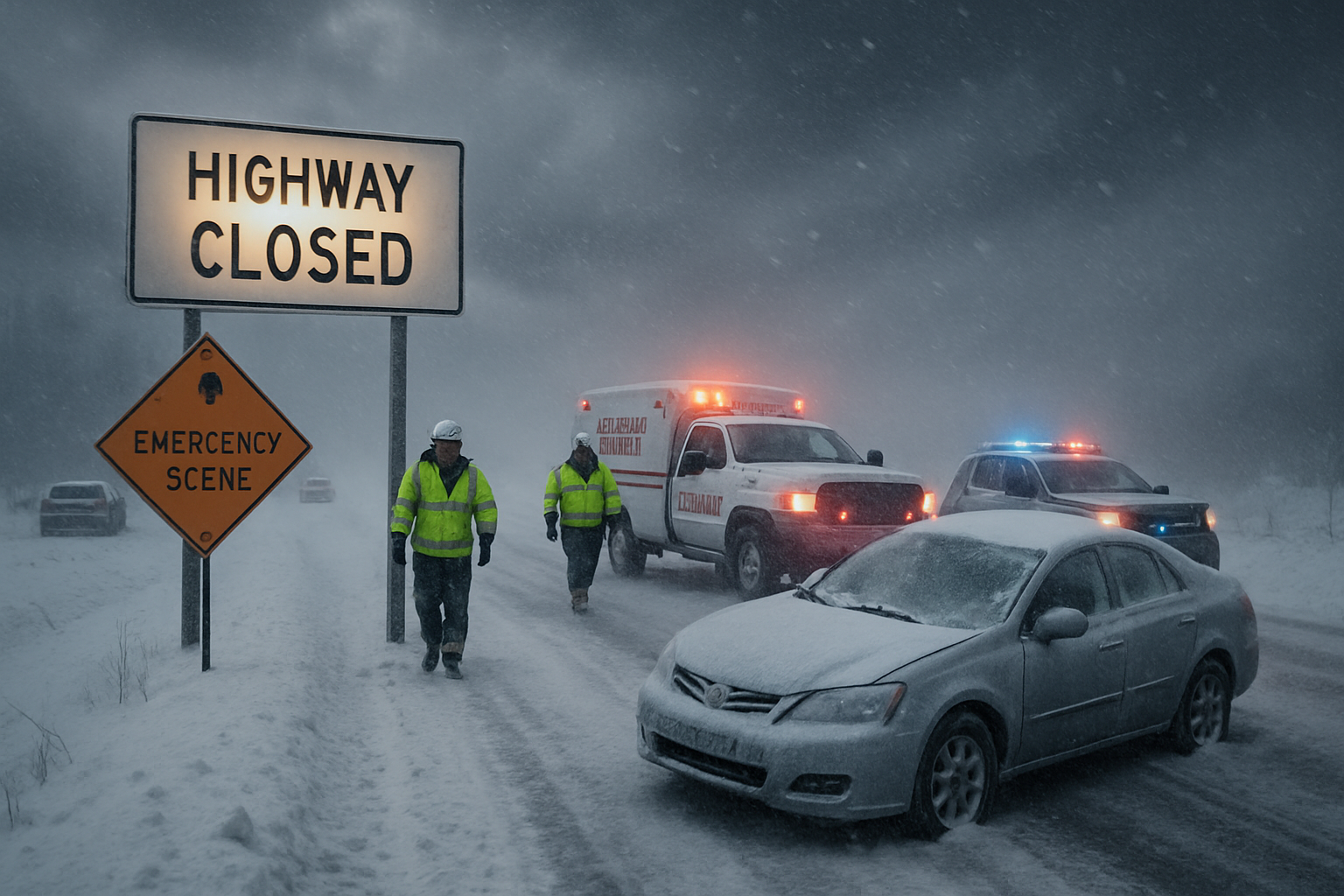
Canada is confronting a severe winter weather emergency as northeastern Ontario experiences "extremely hazardous" conditions forcing highway closures while British Columbia grapples with dozens of weather alerts across the province, marking the latest chapter in an unprecedented season of climate volatility affecting North America.
The Canadian weather crisis, occurring during the 20th consecutive month of global temperatures exceeding 1.5°C above pre-industrial levels, demonstrates the complex paradox of climate change where sustained warming enables both extreme regional cold events and devastating storms through disrupted atmospheric circulation patterns.
Northeastern Ontario in Crisis
Authorities in northeastern Ontario have declared conditions "extremely hazardous" as heavy snowfall and dangerous winds force the closure of major transportation corridors. The situation mirrors the broader pattern of extreme weather events that have characterized the 2025-2026 winter season across Canada's northern regions.
Emergency services report widespread impacts to transportation networks, with highway closures leaving communities isolated and supply chains disrupted. The severity of conditions has prompted coordinated responses from provincial authorities and emergency management agencies, drawing comparisons to previous major winter emergencies that have tested Canada's infrastructure resilience.
British Columbia Under Multiple Warnings
Simultaneously, British Columbia faces a complex weather emergency with dozens of alerts issued across the province. Heavy rain warnings affect parts of Metro Vancouver and Vancouver Island, while significant snowfall threatens much of the Interior and northern regions of the province.
The multi-faceted nature of B.C.'s weather emergency reflects the province's diverse geography and its vulnerability to Pacific storm systems. Coastal areas battle flooding risks from torrential rains, while inland communities prepare for heavy snow accumulations that could impact transportation and power infrastructure.
The convergence of rain and snow warnings across different regions of British Columbia demonstrates the scale of the weather system affecting Canada's westernmost province, requiring coordinated emergency responses across multiple climate zones within a single provincial jurisdiction.
Historical Context of Canada's Winter Weather Crisis
The current emergency builds upon a devastating winter that has already claimed significant lives and resources across North America. Previous extreme weather events this season, including the historic "bomb cyclone" and polar vortex disruptions in February, killed over 110 people in the United States alone, marking it as one of the deadliest winter weather events in recent history.
Canada's Atlantic provinces have been particularly hard hit throughout the winter, with Newfoundland schools closed repeatedly and Nova Scotia facing multiple major storms in succession. The cumulative impact has strained emergency services and tested the resilience of transportation networks designed for historical rather than current climate conditions.
"The frequency and intensity of extreme weather events this winter season represents a fundamental shift that requires us to rethink our emergency preparedness and infrastructure design for permanent climate volatility,"
— Emergency Management Expert Analysis
Infrastructure Vulnerabilities Exposed
The simultaneous crises in Ontario and British Columbia expose critical vulnerabilities in Canada's transportation and power infrastructure. Highway systems, originally designed for historical weather patterns, struggle to cope with the intensity and duration of current extreme weather events.
Power grids face unprecedented strain from heavy snow loads, ice accumulation, and extreme temperature fluctuations. The cascading effects of infrastructure failures extend beyond immediate transportation disruptions to impact healthcare services, food security, and economic activity across affected regions.
Emergency services report operating at or near capacity limits, with traditional mutual aid mechanisms strained when multiple provinces face simultaneous disasters. The scale of concurrent emergencies challenges established protocols designed for sequential rather than simultaneous regional crises.
Economic and Social Impact
The economic ramifications of Canada's winter weather emergency extend far beyond immediate response costs. Supply chain disruptions affect everything from grocery deliveries to critical medical supplies, with remote communities facing particular challenges when transportation links are severed.
Tourism industries in both affected regions face significant losses during what should be peak winter seasons. Ski resorts and winter recreation facilities must balance safety concerns against economic pressures, with some facilities forced to close during prime business periods.
The human cost includes families separated by impassable roads, businesses unable to operate, and vulnerable populations requiring extended emergency support. Mental health services report increased demand as communities cope with repeated extreme weather trauma throughout the extended winter season.
Climate Science and Broader Implications
The current crisis occurs against the backdrop of unprecedented global warming, with January 2026 confirmed as the hottest month ever recorded and the 20th consecutive month to exceed the critical 1.5°C threshold above pre-industrial levels. This sustained warming paradoxically enables more severe regional winter events through disruption of polar vortex patterns and jet stream behavior.
Climate scientists emphasize that current conditions provide a preview of routine circumstances expected in the 2030s without significant climate adaptation investment. The phenomenon demonstrates how global warming can override natural cooling cycles while simultaneously enabling extreme regional cold through atmospheric disruption.
Emergency Response and Recovery Efforts
Coordinated emergency responses involve multiple levels of government, from local municipal services to federal emergency management agencies. The Royal Canadian Mounted Police, provincial transportation departments, and emergency health services work together to maintain essential services and ensure public safety.
Recovery efforts emphasize "building back better" approaches that incorporate climate resilience into infrastructure repairs and upgrades. Traditional reconstruction methods prove inadequate for infrastructure that must withstand increasingly volatile weather patterns.
International cooperation frameworks provide templates for managing similar crises, drawing lessons from European responses to the devastating Atlantic storm succession earlier this winter that claimed over 35 lives and required the largest coordinated emergency response in European history.
Adaptation Imperatives
The simultaneous crises in Ontario and British Columbia underscore the urgent need for transformative adaptation strategies rather than reactive crisis management. Emergency management experts emphasize that response systems based on historical weather patterns require fundamental restructuring for the era of permanent climate volatility.
Infrastructure design standards must anticipate future rather than historical climate conditions, incorporating enhanced resilience against extreme weather events of unprecedented frequency and intensity. This includes upgrading power grids, transportation networks, and communication systems to withstand conditions exceeding traditional design parameters.
Enhanced early warning systems, improved cross-provincial coordination, and community-level preparedness initiatives represent essential components of comprehensive climate adaptation strategies. The window for effective climate action continues to narrow while the costs of both adaptation and inaction escalate rapidly.
Looking Forward
Additional weather systems developing across North America suggest that current crisis conditions may persist for weeks, establishing what experts describe as a "new normal" of extreme weather frequency and intensity. Authorities maintain high alert levels and advise continued caution for unnecessary travel.
The recovery timeline extends well beyond the immediate crisis period, with some infrastructure damage requiring months for full repair. This extended disruption raises concerns about community resilience and the ability to respond to additional extreme weather events before achieving full recovery from current impacts.
Canada's response to this winter weather emergency provides crucial insights for climate adaptation strategies not only domestically but for other northern nations facing similar challenges. The choices made in coming weeks regarding reactive crisis management versus transformative infrastructure adaptation will likely influence climate resilience strategies for decades ahead.