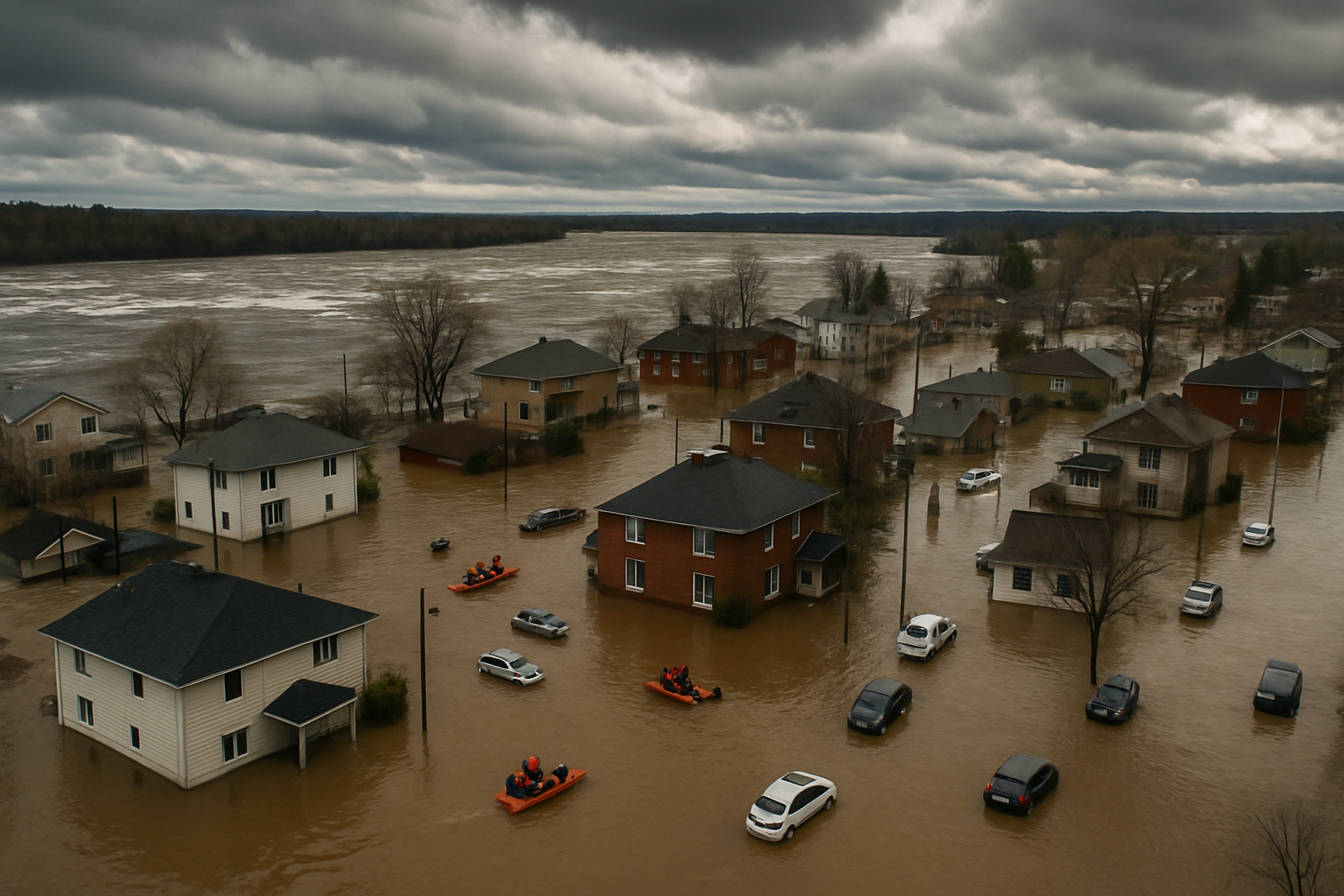
Spring flooding has reached crisis levels across Quebec and Ontario, with the Ottawa River threatening communities in Gatineau as rising waters force mass evacuations and street closures, while emergency services struggle to respond to the unprecedented scale of the disaster.
The flooding emergency, centered in the Ottawa River valley, has displaced hundreds of residents from their homes as water levels continue to surge beyond normal spring flood patterns. Gatineau, Quebec, has become the epicenter of the crisis, with numerous neighborhoods experiencing significant flooding that has rendered streets impassable and put residential areas at immediate risk.
Widespread Evacuations and Emergency Response
Emergency services across both Quebec and Ontario are coordinating massive evacuation efforts as the flooding extends beyond typical spring runoff patterns. Over 120,000 people have been affected across the broader region, with 77,000 families requiring immediate assistance according to regional emergency coordination centers.
In Quebec municipalities, emergency shelters have been established to accommodate displaced residents as the crisis unfolds. The provincial emergency response has mobilized significant resources, with Civil Protection services working around the clock to manage evacuations and provide essential services to affected communities.
The scope of the disaster has strained emergency response capabilities, with traditional mutual aid mechanisms being tested as multiple communities face simultaneous flooding rather than the sequential emergencies that emergency systems are typically designed to handle.
Ottawa River Reaches Critical Levels
The Ottawa River, which forms the border between Quebec and Ontario in the National Capital Region, has reached levels that threaten critical infrastructure and residential areas. Water levels have surged beyond the capacity of existing flood management systems, overwhelming barriers that were designed based on historical flood patterns.
Local residents in affected areas have reported water reaching dangerous depths, with some neighborhoods experiencing flooding that has made evacuation by conventional vehicles impossible. Emergency responders have deployed specialized water rescue equipment and boats to reach stranded residents in areas where roads have become impassable.
The current flood levels are being compared to significant historical flooding events in the region, with some areas experiencing conditions not seen in decades. The combination of snowmelt, recent precipitation, and saturated ground conditions has created a perfect storm for extensive flooding across the watershed.
Infrastructure and Transportation Impacts
The flooding has caused significant disruption to transportation networks across the affected regions. Major highways and local roads have been closed due to water accumulation, isolating some communities and complicating evacuation and emergency response efforts.
Critical infrastructure including bridges, utilities, and communication systems are under strain from the flooding. Power outages have been reported in several areas, adding to the challenges faced by emergency responders and displaced residents.
The economic impact of the flooding is expected to be substantial, with damage assessments ongoing as the crisis continues. Agricultural areas, commercial districts, and residential neighborhoods are all experiencing significant water damage that will require extensive recovery efforts.
"The scale of this flooding event is testing our emergency response capabilities in ways we haven't seen before. The simultaneous nature of the crisis across multiple communities requires coordinated efforts at unprecedented levels."
— Regional Emergency Coordinator
Climate Context and Historical Significance
This flooding crisis occurs against a backdrop of increasingly volatile weather patterns that have characterized 2026. The intensity and extent of the current flooding reflect broader trends in extreme weather events that are challenging traditional emergency preparedness frameworks.
Climate scientists have noted that the current conditions are consistent with projections for more frequent and intense flooding events as weather patterns become more unpredictable. The combination of changing precipitation patterns and rapid temperature fluctuations has created conditions that exceed the parameters for which existing flood management infrastructure was designed.
The crisis follows a pattern of extreme weather events that have affected multiple regions globally throughout 2026, demonstrating the interconnected nature of climate-driven emergencies and the need for enhanced adaptation strategies.
Community Response and Resilience
Despite the challenges, affected communities have demonstrated remarkable resilience in responding to the crisis. Local volunteer networks, neighborhood assistance programs, and community organizations have mobilized to support evacuation efforts and provide aid to displaced families.
Social media platforms and community communication networks have played crucial roles in coordinating emergency information and mutual aid efforts when official communication systems have been overwhelmed or disrupted by the flooding.
The response has highlighted both the vulnerabilities and strengths of communities facing extreme weather events, with examples of neighbors helping neighbors and local knowledge proving invaluable in navigation and rescue efforts.
Recovery and Future Preparedness
As the immediate emergency response continues, authorities are already beginning to plan for recovery efforts that are expected to extend over months rather than weeks. The scope of infrastructure damage and the number of displaced residents will require sustained support and coordination across multiple levels of government.
The crisis has prompted discussions about "building back better" approaches to flood management and community resilience. Traditional restoration approaches may prove inadequate for future flooding events that could exceed current patterns in both frequency and intensity.
Emergency management experts emphasize that the current flooding represents a watershed moment for regional preparedness strategies. The response to this crisis will likely influence flood management approaches and community resilience planning for years to come.
Enhanced early warning systems, improved community preparedness programs, and infrastructure adaptation to handle more extreme conditions are all being considered as essential elements of future flood management strategies in the region.
Ongoing Emergency Operations
Emergency operations continue across the affected regions as authorities work to ensure the safety of all residents while managing the complex logistics of a multi-community disaster. Coordination between Quebec and Ontario emergency services has been essential given the cross-border nature of the Ottawa River watershed.
Weather forecasts continue to be monitored closely, as additional precipitation could exacerbate the current situation. Emergency services remain on high alert and are prepared to expand evacuation efforts if conditions deteriorate further.
The crisis serves as a powerful reminder of the importance of comprehensive emergency preparedness and the need for continued investment in resilient infrastructure and community response capabilities. As recovery efforts begin in earnest, the lessons learned from this flooding event will be crucial for protecting communities from future extreme weather disasters.