Prime Minister Mark Carney announced sweeping changes to Canada's approach to Indigenous rights and athletic funding on March 14, 2026, marking a significant policy shift as his government positions itself as a champion of both reconciliation and sports excellence ahead of international competitions.
Speaking at the Holmenkollen ski festival in Oslo, Norway, Carney told Canadian athletes Liliane Gagnon and Alison Mackie that Ottawa plans to "very deliberately" examine athlete funding over the next six months, promising a comprehensive revamp just before a federal commission on Canadian sport releases its final report.
Musqueam Rights Recognition Agreement Creates New Precedent
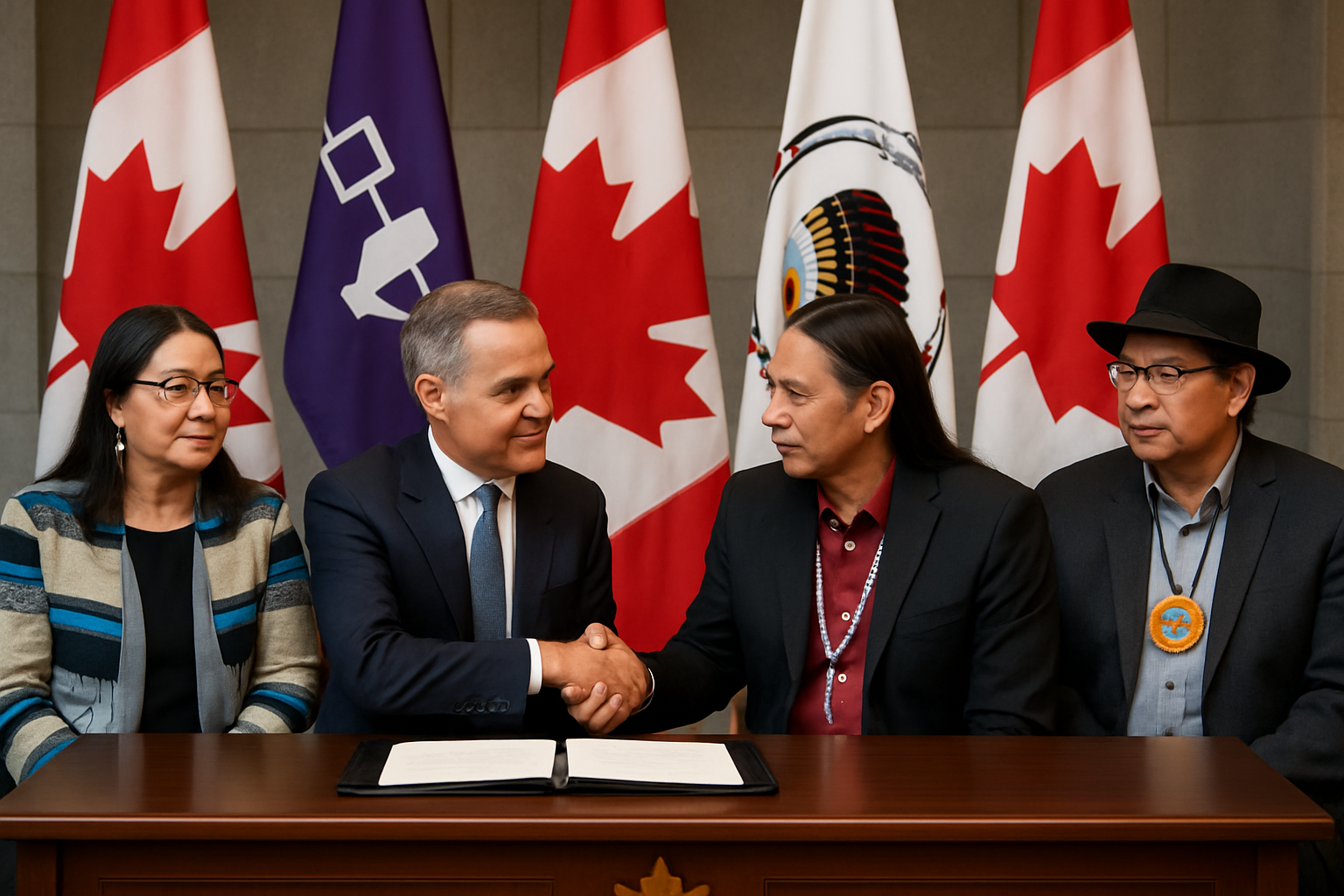
The announcement comes amid intense debate over a groundbreaking agreement signed February 20, 2026, between the Government of Canada and the xʷməθkʷəy̓əm (Musqueam) Indian Band that recognizes Aboriginal rights across much of Metro Vancouver. The agreement has sparked discussions about private property rights and overlapping Indigenous territories, representing one of the most significant urban Indigenous rights recognitions in Canadian history.
The Musqueam agreement acknowledges the Band's ancestral connection to traditional territories that encompass significant portions of the Vancouver metropolitan area, including areas that have been developed for decades. While the agreement does not directly impact private property ownership, it establishes a framework for consultation and collaboration on future development projects that could affect traditional territories.
"This agreement recognizes what we have always known - that our connection to these lands predates colonial settlement and continues today,"
— Musqueam Chief Wayne Sparrow
Political Strength Enables Bold Policy Moves
The timing of these announcements reflects Carney's strengthened parliamentary position following NDP MP Lori Idlout's floor-crossing to the Liberal Party. Idlout, the first Inuk woman MP representing Nunavut, cited Arctic sovereignty, Indigenous rights, and climate change as key factors in her decision to join the Liberals, bringing Carney within two seats of a majority government.
This political capital has proven crucial as Carney navigates complex international pressures, including US-Canada tensions and his recent $35 billion Arctic defense investment announcement. The Prime Minister's approach reflects what observers call "middle power diplomacy" - leveraging Canada's position to advance Indigenous rights while strengthening national institutions.
Athletic Funding Overhaul Addresses Long-Standing Concerns
The athlete funding review addresses persistent concerns about Canada's competitiveness in international sport. The federal commission on Canadian sport has been examining how to better support athletes financially while maintaining performance standards that reflect Canadian values of inclusivity and fair play.
The review will examine funding structures that have left many Canadian athletes struggling financially despite representing the country at the highest levels of international competition. Sources indicate the government is considering more substantial base funding for athletes, enhanced support for winter sports, and programs specifically designed to support Indigenous athletes.
Indigenous Context Within Broader Government Strategy
The Musqueam agreement is part of a broader pattern of Indigenous rights advancement under Carney's leadership. Recent memory of government initiatives includes Governor General Mary Simon's role in Arctic diplomacy, where her Inuit heritage provided cultural legitimacy during international tensions over Greenland's sovereignty.
The agreement comes as Canada faces criticism from some First Nations over Carney's resource-extraction plans aimed at strengthening the Canadian economy against US threats. Some Indigenous communities have expressed concerns that rapid economic development could conflict with traditional land use and environmental protection.
"The challenge is balancing economic development with respect for Indigenous sovereignty and environmental stewardship. This agreement shows we can do both,"
— Federal Indigenous Relations Minister Marc Miller
Debates Over Urban Indigenous Rights
The Musqueam agreement has generated debate about how Indigenous rights apply in heavily developed urban areas. Critics worry about potential impacts on municipal planning and development, while supporters argue it simply formalizes consultation processes that should have been in place for decades.
Legal experts note that the agreement establishes a framework for meaningful consultation rather than vetoing development, reflecting modern approaches to reconciliation that seek to balance Indigenous rights with existing legal structures. The agreement includes provisions for economic partnerships and collaborative stewardship of traditional territories.
International Context and Arctic Sovereignty
These domestic policy moves occur against a backdrop of intense international pressure, particularly regarding Arctic sovereignty. The recent France-Canada consular cooperation in Greenland, where Governor General Simon's Indigenous heritage played a crucial diplomatic role, demonstrates how Indigenous leadership has become central to Canada's international positioning.
The convergence of Indigenous rights advancement and athletic funding reform reflects Carney's broader strategy of strengthening Canadian institutions while asserting sovereignty. This approach has gained particular urgency amid US territorial pressures and the need to demonstrate Canadian unity and effectiveness on the global stage.
Opposition and Future Challenges
Conservative critics argue that the Musqueam agreement creates uncertainty for businesses and municipalities, though legal analysis suggests the impact will be largely procedural, requiring consultation rather than blocking development. The athlete funding review faces scrutiny over whether increased spending can be justified during a period of fiscal restraint.
However, Carney's strengthened parliamentary position following the Idlout floor-crossing provides significant political cover for these initiatives. The Prime Minister has framed both policies as essential investments in Canadian sovereignty and unity.
Looking Forward: Implementation and Impact
The success of these initiatives will depend on implementation details still being developed. The athlete funding review is expected to report by September 2026, while the Musqueam agreement enters a multi-year implementation phase requiring coordination between federal, provincial, and municipal governments.
Both initiatives reflect Carney's approach of using Canada's "middle power" status to advance progressive policies while maintaining international competitiveness. The combination of Indigenous rights advancement and athletic funding reform demonstrates the government's attempt to address historical injustices while preparing for future challenges.
As Canada continues to navigate international pressures and domestic reconciliation efforts, these March 2026 announcements may be remembered as a turning point in how the country balances Indigenous sovereignty, athletic excellence, and national unity in an increasingly complex global environment.