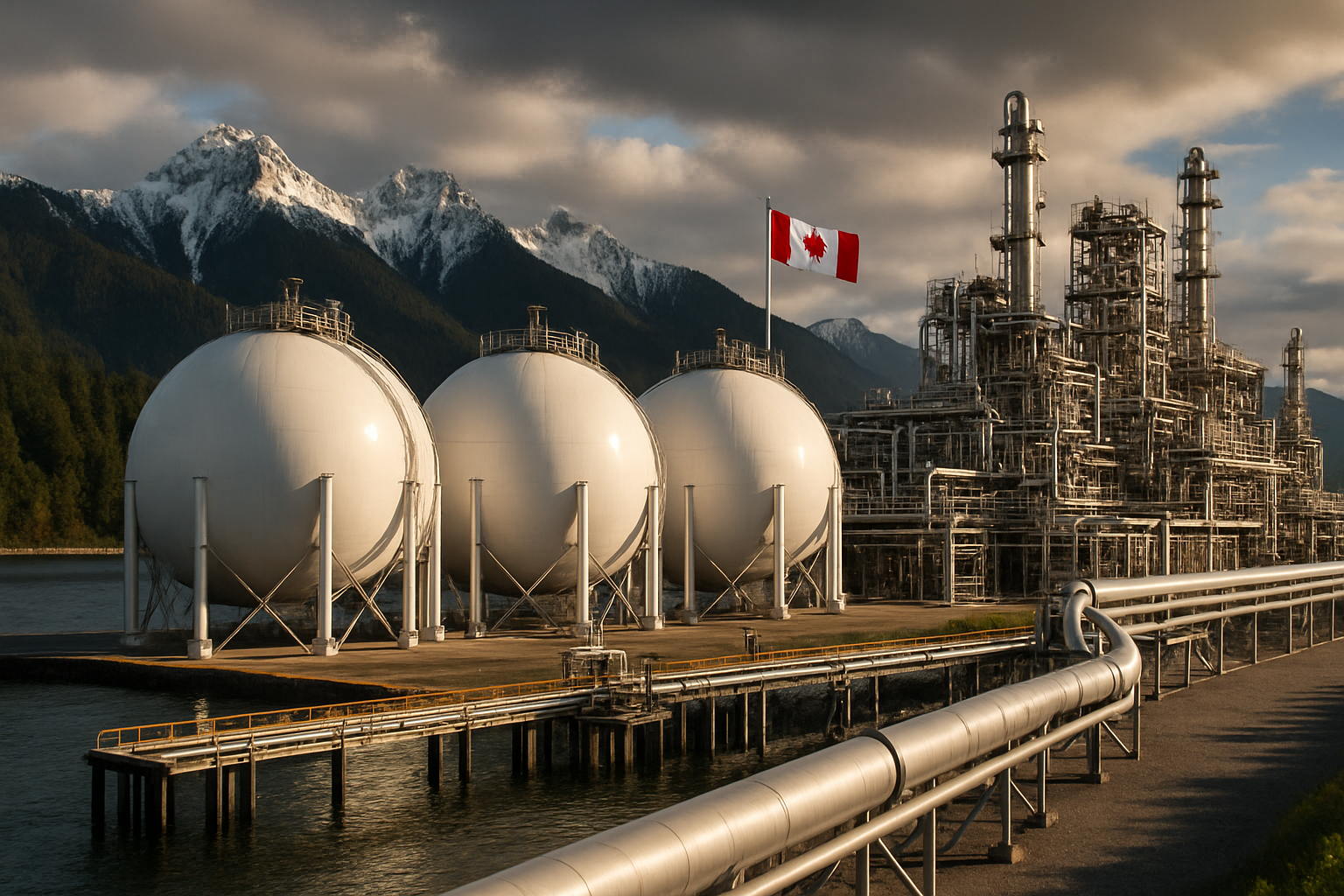
Canada is positioned to become "one of the largest suppliers of liquefied natural gas in the world," with the energy minister outlining ambitious expansion plans targeting exports of up to 100 million tonnes per year, as the nation capitalizes on global energy security concerns and supply chain diversification efforts.
The announcement comes at a pivotal moment for global energy markets, with natural gas prices surging 24% in Europe and 78% in the United States amid geopolitical tensions and supply constraints. Canada's strategic positioning as a stable, democratic supplier offers international partners an attractive alternative to traditional energy sources increasingly viewed as unreliable or politically compromised.
Cedar LNG: Symbol of Canadian Innovation
At the forefront of this expansion is the Cedar LNG project, the world's first Indigenous majority-owned LNG facility, currently under construction on Canada's Pacific coast in Kitimat, British Columbia. With minority ownership from Pembina Pipeline Corporation, the facility represents a new model of energy development that prioritizes Indigenous partnership and environmental stewardship while delivering world-class infrastructure.
The project's groundbreaking governance structure demonstrates how Canada is reimagining energy development for the 21st century, combining traditional Indigenous knowledge with cutting-edge technology to create sustainable, community-driven energy solutions. This approach positions Canada uniquely in the global LNG market, offering international buyers not just energy security but ethical supply chains that align with environmental, social, and governance (ESG) priorities.
Strategic Geopolitical Positioning
Canada's LNG ambitions unfold against a backdrop of unprecedented global energy volatility. The ongoing crisis in the Middle East, which has affected 40% of global oil transit through the Strait of Hormuz, underscores the critical importance of diversified energy supply chains. Recent events in the Caribbean, including Cuba's complete aviation isolation due to fuel shortages, further highlight the vulnerabilities inherent in concentrated energy dependencies.
Tim Hodgson, Canada's energy minister, has positioned the nation's LNG expansion as both an economic opportunity and a strategic imperative. The country's vast natural gas reserves, combined with its political stability and advanced infrastructure, create compelling advantages for international partners seeking reliable long-term energy partnerships.
Technology and Innovation Leadership
Canadian LNG development incorporates the most advanced technologies available, including digital monitoring systems, automated efficiency controls, and smart grid integration. These innovations enable cost reduction and reliability improvements that strengthen Canada's competitive position in global markets.
The integration of renewable energy sources with traditional natural gas infrastructure represents another Canadian innovation. Projects across British Columbia demonstrate how LNG facilities can incorporate solar power, advanced battery storage, and hydroelectric integration to minimize their environmental footprint while maintaining operational excellence.
International Market Dynamics
Global LNG markets are experiencing fundamental shifts driven by supply chain vulnerabilities and geopolitical pressures. China's dominance of critical materials production (60% of global production, 90% of refining capacity for lithium, cobalt, and rare earth elements) has prompted the US-EU-Japan Critical Minerals Partnership, involving 55 countries seeking supply chain diversification.
This broader trend toward strategic resource security creates substantial opportunities for Canadian LNG exports. European partners, in particular, are actively seeking alternatives to Russian energy supplies, while Asian markets continue expanding their natural gas consumption to support economic growth and reduce coal dependence.
"Canada's emergence as a major LNG supplier represents more than just market expansion—it's about providing the world with reliable, ethically-sourced energy when global stability depends on it."
— Energy Industry Analyst
Environmental Considerations and Sustainability
Canadian LNG development operates under some of the world's strictest environmental regulations, incorporating advanced emissions controls, habitat protection measures, and comprehensive environmental impact assessments. The Cedar LNG project exemplifies this approach, with Indigenous-led environmental stewardship ensuring that development proceeds in harmony with local ecosystems.
The sector's commitment to reducing methane emissions through advanced leak detection, capture technologies, and process optimization demonstrates how Canadian LNG can serve as a bridge fuel supporting global decarbonization efforts while maintaining energy security.
Economic Impact and Job Creation
The LNG expansion promises substantial economic benefits across Canadian communities, particularly in British Columbia and Alberta. Construction activities alone are expected to generate thousands of high-skilled jobs, while ongoing operations will create permanent employment in engineering, maintenance, transportation, and support services.
Indigenous communities stand to benefit significantly through ownership stakes, employment opportunities, and revenue-sharing agreements that ensure energy development contributes to long-term community prosperity. This model positions Canada as a global leader in inclusive resource development.
Infrastructure Development Requirements
Achieving 100 million tonnes of annual LNG exports requires massive infrastructure investments across the entire supply chain, from wellhead production to export terminals. This includes expanding pipeline networks, upgrading port facilities, and developing specialized transportation infrastructure capable of handling increased volumes safely and efficiently.
The federal government's support for these investments, combined with private sector partnerships and Indigenous participation, creates a robust foundation for sustained growth in Canadian LNG capacity over the coming decade.
Challenges and Opportunities
Despite the promising outlook, Canadian LNG expansion faces significant challenges, including regulatory complexity, environmental concerns, and international competition from established suppliers. The need to balance rapid development with environmental protection requires sophisticated project management and community engagement.
However, these challenges also represent opportunities for Canadian innovation in sustainable energy development, regulatory efficiency, and stakeholder engagement. Success in addressing these issues positions Canada as a global model for responsible resource development.
Global Energy Security Implications
Canada's LNG ambitions occur during a period of unprecedented global energy insecurity. Recent developments, including the Iran nuclear crisis and associated supply disruptions, underscore the critical importance of reliable energy suppliers from stable democratic nations.
The country's geographic advantages—including Pacific coast access for Asian markets and Atlantic positioning for European exports—enable Canada to serve as a flexible supplier capable of responding to shifting global demand patterns and geopolitical developments.
Future Outlook
The timeline for achieving 100 million tonnes of annual LNG exports extends through the 2030s, requiring sustained political commitment, technological innovation, and international partnership development. Success depends on maintaining Canada's competitive advantages while addressing environmental concerns and ensuring Indigenous communities benefit from development.
As global energy markets continue evolving in response to climate commitments, geopolitical pressures, and technological advancement, Canada's LNG sector represents a critical component of both domestic economic strategy and international energy security architecture.
The transformation of Canada into a global LNG powerhouse reflects broader shifts in international energy relationships, where reliability, sustainability, and ethical governance increasingly determine supplier selection. Canada's unique combination of abundant resources, advanced technology, democratic governance, and Indigenous partnership creates compelling advantages for sustained success in this critical global market.