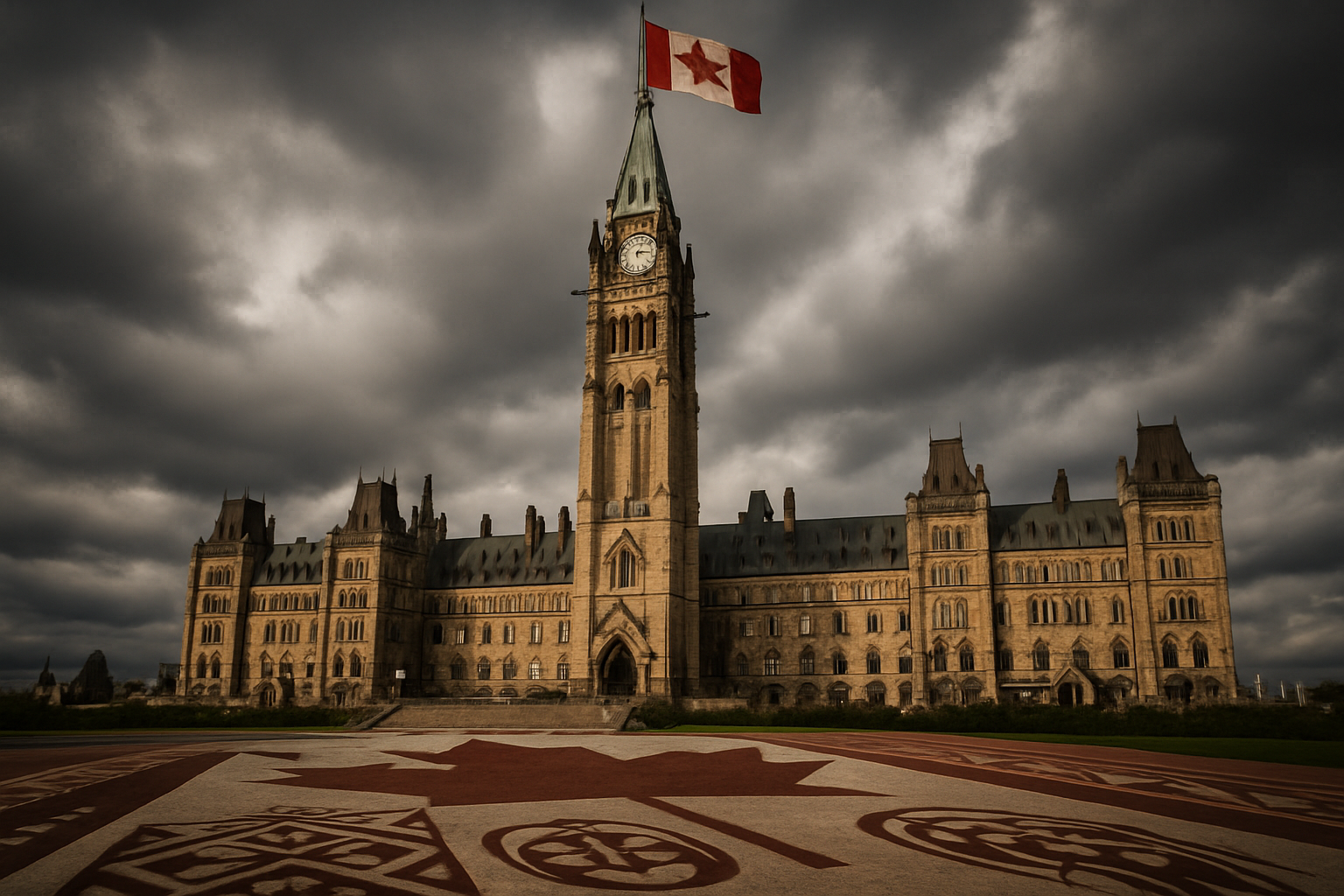
A seismic shift in Canadian parliamentary arithmetic unfolded this week as Nunavut MP Lori Idlout crossed the floor from the NDP to join Prime Minister Mark Carney's Liberal Party, bringing the government within two seats of a majority while sparking fierce debates over Indigenous representation and federal service cuts.
The floor-crossing, announced Tuesday evening, represents a significant boost to Carney's minority government at a time when his administration faces mounting criticism over budget cuts affecting federal prisons, student aid, and Indigenous programs. Idlout, the first Inuk woman to serve as an MP, cited Arctic sovereignty, Indigenous rights, and climate change as driving factors in her decision.
Parliamentary Mathematics Shift
Idlout's defection fundamentally alters the balance of power in Parliament, reducing the NDP caucus while strengthening Liberal legislative prospects. The move brings Carney's government to within striking distance of the 170 seats needed for a majority, providing crucial additional votes for budget measures and key legislation during a period of heightened US-Canada tensions.
Interim NDP Leader Don Davies expressed sharp criticism of the decision, arguing it overrides the "sacred trust" of the ballot box. Speaking to reporters after an emergency caucus meeting, Davies characterized the floor-crossing as a betrayal of voters who elected Idlout under the NDP banner in 2021.
"When voters cast their ballots, they're not just choosing an individual—they're choosing the values and policies that person represents. This decision undermines that fundamental democratic principle."
— Don Davies, Interim NDP Leader
The timing of Idlout's announcement comes amid broader questions about the stability of Canada's minority Parliament. Political observers note that her decision strengthens Carney's position at a critical juncture, as his government navigates complex international challenges including evolving US-Canada relations under the Trump administration.
Budget Cuts Spark Widespread Criticism
The political developments unfold against a backdrop of fierce debate over federal budget cuts affecting multiple government services. The Correctional Service of Canada announced plans to eliminate all prison librarian positions and employment coordinator roles across federal institutions, moves that advocacy groups characterize as violations of human rights principles.
The cuts will affect programming designed to support inmate rehabilitation and reintegration, with critics warning the measures could increase recidivism rates. Federal penitentiaries currently house approximately 14,000 inmates, with library services and employment programs serving as crucial components of rehabilitation efforts.
Library technicians and employment coordinators have traditionally played vital roles in helping inmates develop educational and vocational skills needed for successful community reintegration. The elimination of these positions represents a significant shift away from rehabilitation-focused corrections policy.
Student Aid Protests Sweep Ontario
Simultaneously, high school students across southwestern Ontario staged walkouts Wednesday to protest cuts to the Ontario Student Assistance Program (OSAP). The protests, organized under the banner "Hands off our grants," saw hundreds of students leave classes in Windsor, London, and other communities.
Student organizers argue the cuts will disproportionately affect working-class families and create barriers to post-secondary education. Onielia Waltin, a Windsor student carrying a sign reading "Don't cut what builds the future," said the protests represent a stand against policies that limit educational opportunity.
The student demonstrations highlight growing tensions over education funding in Canada's most populous province. Ontario's Progressive Conservative government has defended the changes as necessary fiscal measures, while education advocates warn of long-term consequences for accessibility.
Indigenous Rights and Arctic Sovereignty
Idlout's floor-crossing carries particular significance given her role as the first Inuk woman MP and her constituency's unique position in Canadian Arctic policy. Nunavut represents the heart of Canada's Arctic sovereignty claims, with climate change opening new shipping routes and resource extraction opportunities that have attracted international attention.
The MP's stated reasons for joining the Liberals—Arctic sovereignty, Indigenous rights, and climate change—reflect key policy areas where the federal government faces growing challenges. Her decision suggests confidence in Liberal approaches to Northern and Indigenous issues, particularly during a period when Arctic geopolitics have intensified.
Historical context from recent political developments shows Canada has faced increasing pressure regarding Arctic sovereignty, with international partners supporting Danish positions on Greenland while the Arctic region gains strategic importance due to climate change and resource competition.
Correction System Reforms Under Fire
The federal prison cuts have drawn condemnation from human rights advocates who argue that library services and employment programs represent fundamental components of humane incarceration. Critics note that these services are particularly important for Indigenous inmates, who are overrepresented in the federal prison system.
Employment coordinators typically help inmates develop job skills and establish connections with potential employers, while library services provide educational resources and programs that support literacy and personal development. The elimination of these positions comes at a time when Canada faces ongoing calls for criminal justice reform, particularly regarding Indigenous overrepresentation.
Advocacy groups have characterized the cuts as a step backward in corrections policy, arguing that evidence-based approaches to rehabilitation require investment in programming rather than reductions. The moves affect institutions across the country, from minimum-security facilities to maximum-security penitentiaries.
Provincial Education Tensions
The Ontario student protests reflect broader tensions over education funding and accessibility across Canada. OSAP changes affect thousands of students annually, with critics arguing that cuts to grants and modifications to eligibility criteria will create additional financial barriers to post-secondary education.
Student demonstrators emphasized the importance of accessible education for economic opportunity and social mobility. The protests occurred during school hours, with many participants arguing that the cuts warrant civil disobedience to draw attention to their concerns about educational equity.
Education funding has emerged as a contentious political issue across multiple provinces, with governments balancing fiscal constraints against investments in human capital development. The protests demonstrate student willingness to engage directly in political advocacy over policies affecting their futures.
Parliamentary Dynamics and Future Implications
Idlout's defection represents the latest example of Canada's fluid parliamentary dynamics, where individual MP decisions can significantly impact government stability and legislative capacity. The move provides Carney with additional political capital to advance government priorities while responding to domestic and international challenges.
The floor-crossing occurs during a period when the Liberal government faces multiple pressures, from managing US-Canada relations to addressing domestic policy concerns regarding corrections, education, and Indigenous affairs. Idlout's support strengthens the government's ability to navigate these challenges while maintaining parliamentary confidence.
Political analysts note that floor-crossings often reflect broader shifts in political momentum, with MPs making strategic calculations about party directions and electoral prospects. Idlout's decision suggests confidence in Liberal policy approaches, particularly on issues central to her Northern constituency.
Arctic Policy and Climate Considerations
The MP's emphasis on Arctic sovereignty and climate change reflects growing recognition of the region's strategic importance. Climate change is opening Arctic shipping routes and making resource extraction more feasible, attracting international attention and investment while raising questions about territorial claims and environmental protection.
Canada's Arctic policy faces multiple challenges, from infrastructure development to Indigenous rights recognition to environmental stewardship. Idlout's background and constituency provide unique perspectives on these issues, making her support valuable for government Arctic policy development.
Recent international developments have highlighted Arctic geopolitics, with various nations strengthening their northern presence and capabilities. Canada's response requires balancing sovereignty assertions with international cooperation and Indigenous rights recognition.
Looking Ahead: Political Stability and Policy Debates
The convergence of Idlout's floor-crossing with debates over federal service cuts illustrates the complex challenges facing Canadian governance. The government must balance fiscal constraints with service provision while managing parliamentary dynamics and responding to public concerns.
The strengthened Liberal position in Parliament provides greater legislative stability, potentially enabling more ambitious policy initiatives while reducing dependence on opposition support. However, the controversies over prison cuts and student aid demonstrate that political arithmetic alone cannot resolve policy debates.
As Canada navigates evolving domestic and international challenges, the alignment of parliamentary support with effective policy implementation remains crucial for government success. The coming months will test whether increased Liberal strength translates into more effective governance and policy outcomes.
The developments underscore the dynamic nature of Canadian parliamentary democracy, where individual decisions can reshape political landscapes while ongoing policy debates reflect deeper questions about government priorities and public service provision. The intersection of political strategy with substantive policy challenges continues to define contemporary Canadian governance.