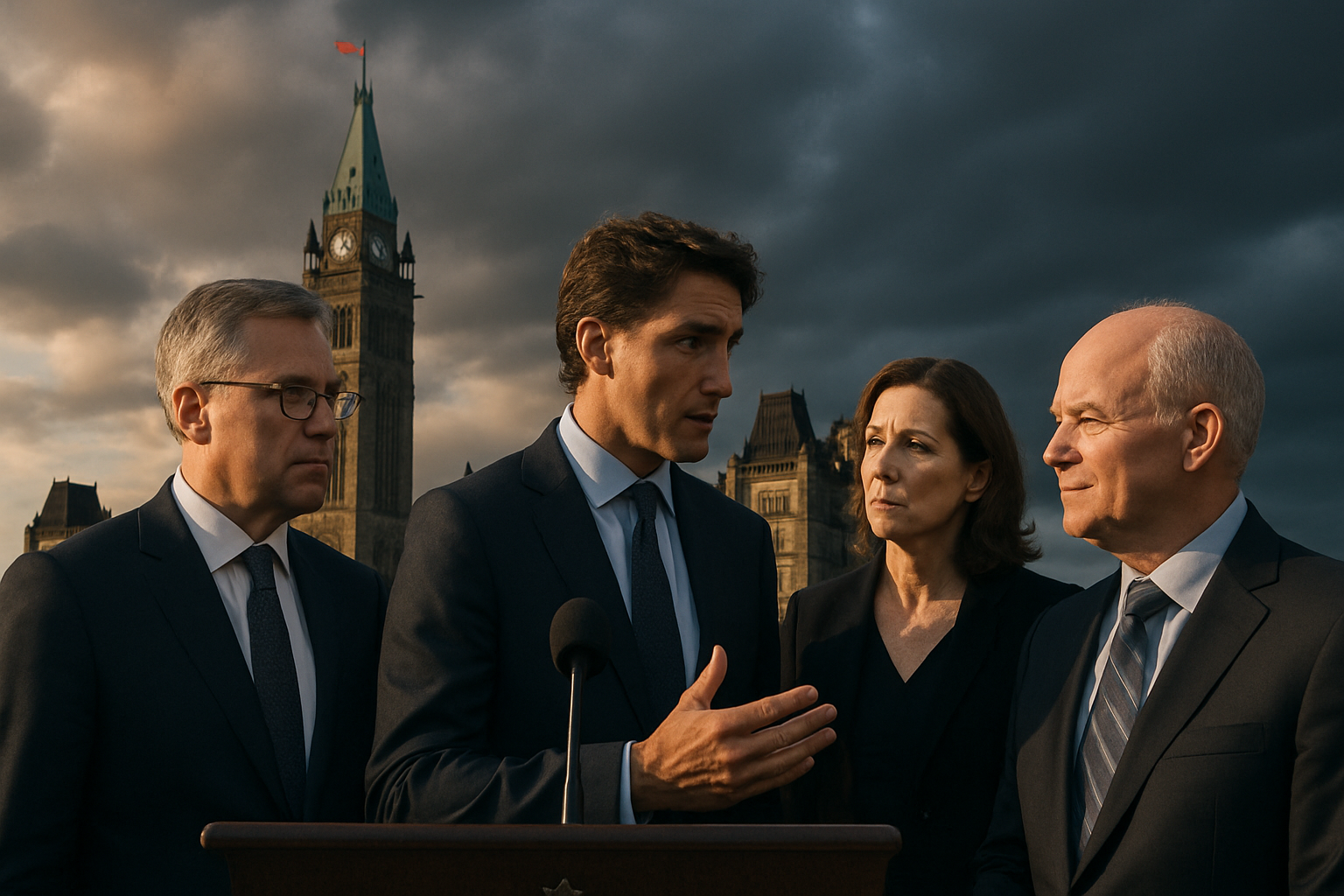
Canada faces a critical political juncture as the federal NDP prepares to choose new leadership while an Alberta Conservative MLA openly calls for a separation referendum, exposing fundamental fractures in the nation's political unity.
The New Democratic Party's national convention kicked off in Winnipeg Friday evening as delegates gathered to address what many describe as an existential crisis. The party has endured months of soul-searching following a record low share of the popular vote and the loss of official party status in the House of Commons.
Manitoba Premier Wab Kinew welcomed delegates to the 2026 National Convention, acknowledging the party's unprecedented challenges while attempting to project optimism about renewal. The leadership selection process has attracted significant attention as the party seeks to rebuild from its worst electoral performance in decades.
NDP's Existential Moment
The convention comes at a time when the NDP's very survival as a major political force hangs in the balance. The party's recent electoral failures have prompted serious questions about its relevance in contemporary Canadian politics, particularly as other parties have successfully captured traditional NDP voter bases.
Party insiders describe the atmosphere as both somber and determined, with delegates recognizing that the choices made this weekend could determine whether the NDP remains a viable political alternative or continues its slide toward irrelevance. The leadership race has exposed ideological divisions within the party about future direction and strategic priorities.
The timing of the convention is particularly significant given the broader political upheaval affecting Canadian federalism. As the NDP grapples with internal challenges, external pressures are mounting from various quarters, including separatist movements in western provinces.
Alberta Separation Referendum Call
Adding to the political turbulence, Red Deer-South MLA Jason Stephan has publicly urged Albertans to sign a petition calling for a referendum on provincial separation from Canada. The United Conservative Party member argues that such a referendum is necessary to address what he characterizes as persistent grievances with the federal government.
Stephan's call represents a significant escalation in federal-provincial tensions, marking one of the most direct challenges to Canadian unity from an elected official in recent memory. Opposition parties have demanded that Premier Danielle Smith remove Stephan from the UCP caucus, viewing his statements as fundamentally incompatible with responsible governance.
The MLA's petition campaign reflects deeper frustrations among some Albertans who feel their province's interests are systematically overlooked by federal policymakers. These sentiments have been building for years, fueled by disputes over energy policy, equalization payments, and federal regulatory oversight of resource development.
"A referendum on whether Alberta should separate from Canada is necessary to address provincial grievances with the federal government."
— Jason Stephan, Red Deer-South MLA
Federal-Provincial Tensions Intensify
The separation call comes amid broader strains in federal-provincial relations that have characterized Canadian politics in recent years. Multiple provincial governments have expressed frustration with federal policies on everything from carbon pricing to healthcare funding, creating an atmosphere of constitutional tension reminiscent of previous national unity crises.
Political observers note that Stephan's intervention occurs during a period when Prime Minister Mark Carney's Liberal government is already facing multiple challenges, including economic pressures and questions about governmental competence. The addition of separatist rhetoric from elected officials adds another layer of complexity to an already challenging political environment.
The federal government has not yet responded directly to Stephan's statements, but Liberal strategists are undoubtedly concerned about the implications for national cohesion. Previous separatist movements in Quebec demonstrated how quickly political rhetoric can transform into serious constitutional challenges requiring sustained governmental attention.
Impact on National Political Dynamics
The convergence of NDP leadership uncertainty and Alberta separatist calls creates a unique moment in Canadian political history. The traditional three-party system that has dominated federal politics for generations appears increasingly unstable, with new forces and old grievances reshaping the national conversation.
Conservative Party leader Pierre Poilievre has maintained strong polling leads against the Liberal government, but the emergence of separatist sentiment within conservative ranks presents both opportunities and challenges for his movement. While anti-federal sentiment might boost Conservative support, actual separatism could fragment the conservative coalition.
The NDP's leadership crisis occurs precisely when progressive voters might be seeking alternatives to Liberal governance, but the party's current weakness limits its ability to capitalize on potential opportunities. This creates space for other political movements to emerge or existing parties to expand their influence.
Historical Context and Precedent
Canada has weathered previous national unity crises, most notably during the Quebec sovereignty movements of the 1980s and 1990s. However, the current situation differs significantly due to the involvement of western provinces and the intersection with broader questions about federal effectiveness and democratic representation.
Unlike previous separatist movements that focused primarily on cultural and linguistic issues, Alberta-centered grievances tend to emphasize economic policy and resource management. This creates different political dynamics and potentially different solutions, but also poses unique challenges for national unity.
The timing of these developments coincides with significant international pressures, including trade disputes and security challenges that typically require strong federal-provincial cooperation. Managing domestic political fragmentation while addressing external challenges represents a complex governmental challenge.
Looking Forward
As NDP delegates work through their leadership selection process, the party faces fundamental questions about its future role in Canadian politics. The new leader will inherit not only the challenge of rebuilding party fortunes but also navigating a political landscape increasingly characterized by regional tensions and institutional skepticism.
Similarly, the response to Stephan's separation call will likely influence broader conversations about Canadian federalism and the balance between provincial autonomy and national coherence. Premier Smith's handling of the situation could set important precedents for how elected officials can discuss separatism while maintaining their responsibilities within the Canadian constitutional framework.
The coming weeks and months will prove crucial for determining whether these current political pressures represent temporary turbulence or more fundamental shifts in Canadian political culture. The resolution of both the NDP leadership question and the Alberta separation debate will significantly influence the trajectory of Canadian politics heading toward the next federal election.
Implications for Canadian Democracy
These developments occur against the backdrop of broader questions about democratic effectiveness and citizen engagement that affect many western democracies. The NDP's struggles reflect challenges facing traditional social democratic parties globally, while separatist sentiments echo broader frustrations with existing political institutions.
The ultimate test will be whether Canadian political institutions can adapt to address legitimate grievances while preserving national unity and democratic governance. Success in managing these challenges could strengthen Canadian democracy, while failure might encourage further fragmentation and institutional breakdown.
As the NDP convention continues and the separation debate evolves, Canadians are witnessing a critical moment in their nation's political development. The choices made by political leaders and citizens in the coming period will significantly influence Canada's democratic trajectory and national cohesion for years to come.