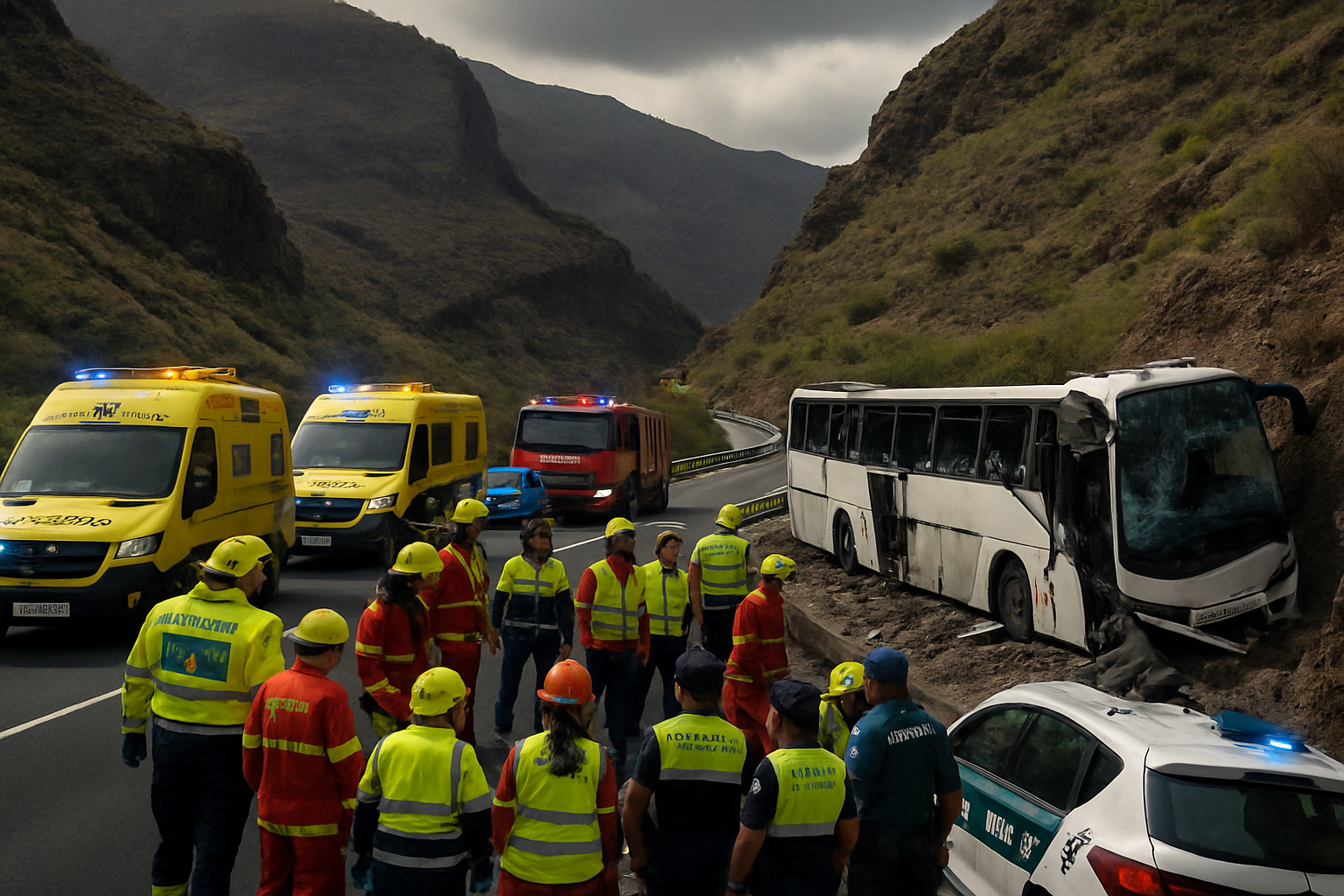
A devastating bus crash on the Canary Islands has claimed one life and left 27 injured, marking the latest tragedy in what experts are calling the most challenging year for global travel safety since the COVID-19 pandemic.
The incident occurred at 1:15 PM local time on Friday, April 10, 2026, when a tourist bus carrying 28 British passengers veered into a ravine on the GM-2 highway near San Sebastian de La Gomera. The vehicle, which was transporting tourists for a boat excursion, rolled down the mountainous terrain after leaving the roadway on the Spanish island.
According to Norwegian media sources citing Sky News, one man died at the scene while 27 passengers were hospitalized. Three of the injured remain in critical condition, highlighting the severity of the accident on one of Europe's most popular vacation destinations.
A Pattern of Mounting Incidents
The La Gomera crash represents far more than an isolated tragedy. Analysis of travel safety data reveals that 2026 has witnessed an unprecedented convergence of transportation accidents, infrastructure failures, and security challenges that have fundamentally reshaped global mobility patterns.
Since February 2026, over 200 significant transportation incidents have been documented across 50+ countries. The crisis encompasses everything from the devastating LaGuardia Airport collision that killed two Air Canada Express pilots in March, to the systematic infrastructure failures that have overwhelmed emergency services across multiple continents.
The economic impact extends far beyond immediate medical costs. Each traffic fatality represents hundreds of thousands of dollars in lost productivity, medical expenses, and legal proceedings, while transportation disruptions create cascading effects through regional supply chains, agriculture, and tourism sectors.
Climate Pressures Overwhelming Infrastructure
A critical factor in 2026's safety crisis is the intersection of aging infrastructure with unprecedented climate volatility. April 2026 marks the 22nd consecutive month that global temperatures have exceeded 1.5°C above pre-industrial levels – the longest sustained extreme warming period in recorded human history.
Transportation networks and safety systems designed for historical weather patterns are repeatedly failing when confronted with operational conditions that exceed their engineering parameters. The Canary Islands, while generally considered a safe destination, are not immune to these broader environmental pressures affecting road conditions and emergency response capabilities.
Emergency services are operating at or beyond capacity limits globally, with traditional mutual aid mechanisms proving inadequate when multiple countries face simultaneous disasters rather than the sequential patterns that historical frameworks assumed.
Tourism Industry Under Pressure
The Canary Islands incident comes at a particularly challenging time for the global tourism industry. The archipelago has emerged as a preferred alternative destination for European travelers following the massive Middle East aviation crisis that has cancelled over 18,000 flights worldwide since March 2026.
Spanish tourism officials report that destinations like the Canary Islands are benefiting from redirected demand as travelers seek safer European alternatives to traditional Middle Eastern routes. However, this increased pressure on regional infrastructure coincides with the very safety challenges that make comprehensive emergency preparedness essential.
The incident also highlights the vulnerability of working populations and tourists who depend on shared transportation to reach remote destinations. British tourists, who represent a significant portion of Canary Islands visitors, now face additional safety considerations when planning island excursions.
Successful Safety Models Provide Hope
Despite the mounting challenges, several countries have demonstrated that transformative safety improvements are achievable through sustained political commitment and comprehensive approaches.
Sweden's Vision Zero policy has achieved remarkable fatality reductions through infrastructure design that accounts for human error, while the Netherlands' Safe System Approach minimizes accident consequences through integrated engineering and emergency response protocols. Australia's urban speed management programs have also shown measurable improvements in reducing serious injuries and deaths.
Norway provides another encouraging example, achieving zero recreational boating fatalities in the first quarter of 2026 – the first time since record-keeping began in 2001. This success has been attributed to enhanced weather prediction systems, improved safety equipment requirements, and comprehensive public education programs.
Technology Integration and Human Oversight
The path forward requires a careful balance between technological advancement and human expertise. AI-powered impaired driving detection systems now achieve over 90% accuracy, and real-time monitoring can predict structural failures before they become catastrophic. However, cybersecurity vulnerabilities and implementation obstacles continue to slow widespread adoption of these safety innovations.
Croatia has emerged as a leader in tourist safety infrastructure, deploying 62 tourist medical clinics for the 2026 season – Europe's most extensive seasonal healthcare network. This comprehensive approach addresses both preventive safety measures and emergency response capabilities that could serve as a model for other popular destinations.
International Cooperation Essential
The investigation into the La Gomera crash will likely influence international transportation safety standards for years to come. The European aviation authority ICAO is already reviewing emergency vehicle coordination protocols at airports worldwide following the LaGuardia incident, demonstrating how single tragedies can drive systemic improvements.
Enhanced international cooperation in safety standards, data sharing, and emergency response coordination has become essential as transportation challenges transcend national boundaries. The success of emergency evacuation operations during the Middle East crisis demonstrates both the value of multilateral frameworks and the gaps that remain in unified crisis response mechanisms.
A Watershed Moment for Travel Safety
The convergence of aging infrastructure, climate volatility, and increasing travel demand has created what safety experts describe as a "watershed moment" requiring fundamental transformation rather than incremental improvements. The choice between reactive crisis management and transformative adaptation has become increasingly urgent as the window for effective preventive measures continues to narrow.
For travelers, the current environment demands enhanced vigilance and preparedness. Travel insurance policies that exclude war-related cancellations are driving a shift toward package tours over independent travel, as operators develop comprehensive safety frameworks while individual travelers remain more exposed to emerging risks.
The human cost of inaction makes coordinated international action essential. As families affected by the La Gomera crash begin their recovery, their tragedy serves as a stark reminder that behind every safety statistic are real people whose lives are forever changed by preventable accidents.
The tourism industry's response to these challenges will likely define travel patterns for decades ahead, determining whether enhanced safety management and international cooperation can maintain global mobility in an increasingly volatile world, or whether more restrictive, localized travel patterns become the new reality for millions of travelers worldwide.