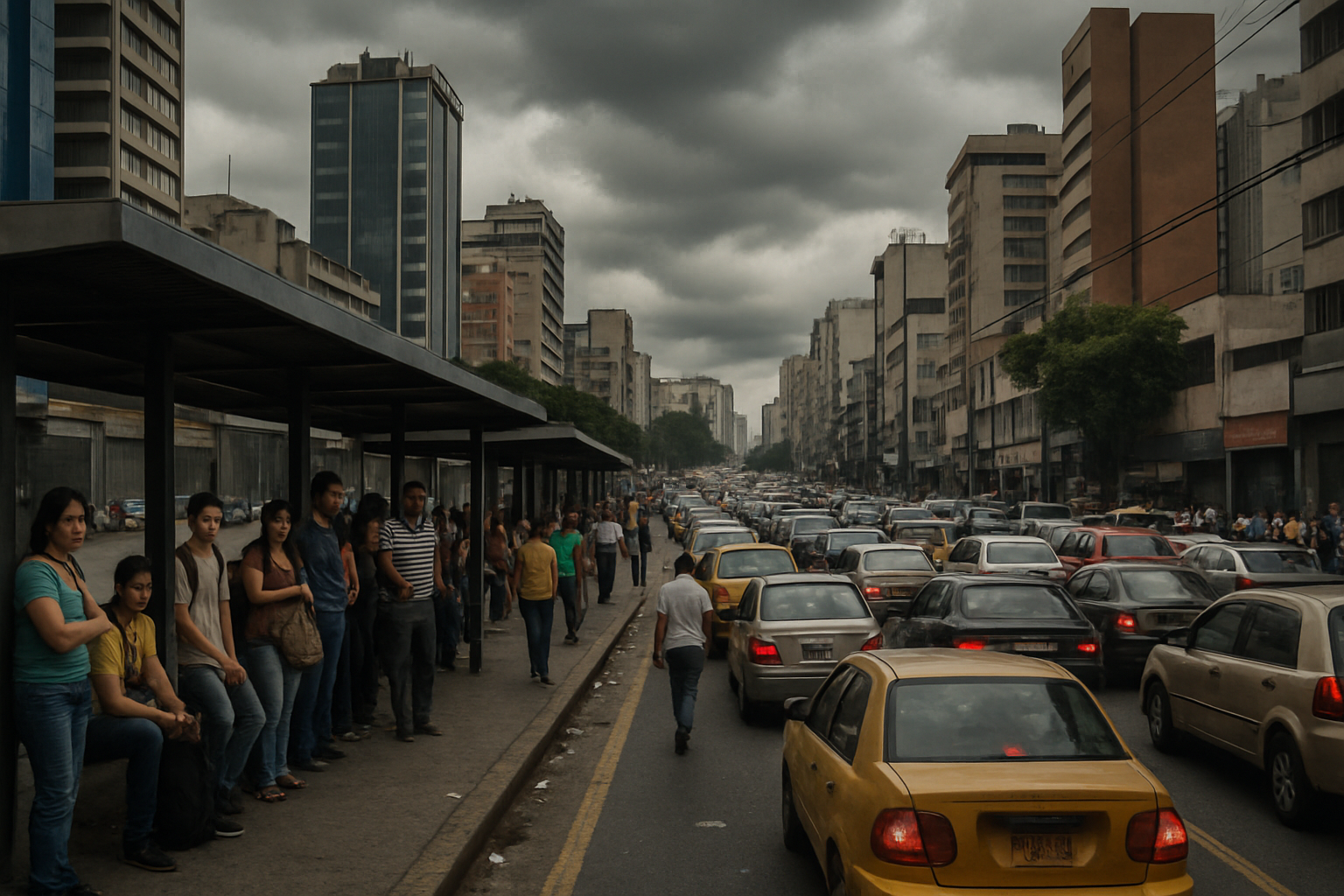
Greater Caracas ground to a halt Monday as transportation workers launched a comprehensive strike demanding fare increases to 120 bolívares and the return of impounded vehicles, while a sophisticated network of fake news channels flooded YouTube with propaganda favorable to Acting President Delcy Rodríguez.
The transport guild's work stoppage has created chaos across Venezuela's capital region, affecting millions of commuters and exposing the fragile state of the country's public transportation infrastructure. Workers are demanding authorities adjust fares to 120 bolívares per ride and return several units they claim are being unjustly detained by government forces.
Transportation Crisis Deepens
The strike represents the latest challenge facing Rodríguez's interim government as it attempts to stabilize Venezuela following the dramatic political changes of January 2026. Public transportation in the Gran Caracas area has been reduced to a fraction of normal operations, forcing residents to seek alternative means of reaching work, school, and essential services.
According to reports from El Nacional, the transportation union argues that current fare structures are insufficient to maintain operations amid Venezuela's ongoing economic challenges. The demanded increase to 120 bolívares would represent a significant adjustment from previous pricing, reflecting the persistent inflation that continues to affect the Venezuelan economy despite recent diplomatic breakthroughs with the United States.
The strike comes at a particularly sensitive time for the Rodríguez administration, which has been working to demonstrate stability and progress following the comprehensive political prisoner amnesty program that has seen over 750 releases since January 2026. Transportation disruptions could undermine public confidence in the government's ability to manage basic services during this critical transition period.
Mysterious Propaganda Network Emerges
Simultaneously, Venezuelan social media users have reported an unprecedented surge in YouTube videos promoting Acting President Delcy Rodríguez, with content appearing even when users search for unrelated topics such as cooking recipes or podcasts. The phenomenon has been documented since late February 2026, according to El Nacional's investigation.
This digital propaganda campaign represents a sophisticated information warfare operation that appears designed to boost Rodríguez's public profile during her tenure as interim president. The network of fake news channels has managed to infiltrate YouTube's recommendation algorithms, ensuring maximum exposure for pro-government content across Venezuela's online community.
The timing of this propaganda blitz coincides with critical political developments, including the implementation of Venezuela's historic 1999-2026 amnesty law and ongoing negotiations for the return of opposition leader María Corina Machado, who has announced plans to return "within weeks" as a test of the democratic transition's authenticity.
Context of Political Transition
These dual crises emerge against the backdrop of Venezuela's remarkable political transformation following the January 2026 capture of Nicolás Maduro by U.S. forces. The Rodríguez administration has overseen significant changes, including the restoration of diplomatic relations with the United States and a 60% surge in oil exports to 800,000 barrels daily, with the U.S. displacing China as Venezuela's top customer.
"The guild demands that authorities adjust the fare to 120 bolívares and return various units that, they allege, are being unjustly detained."
— El Nacional Report
The comprehensive 1999-2026 amnesty law passed by Venezuela's National Assembly represents the most ambitious political reconciliation effort in recent Latin American history. However, implementation challenges persist, with approximately 600 political prisoners still detained according to human rights organizations, despite the releases that have garnered international attention.
Economic Pressures Mount
The transportation strike reflects broader economic pressures that continue to affect Venezuelan society despite recent improvements in international relations. While oil exports have surged and sanctions relief has provided some economic breathing room, infrastructure challenges and inflation continue to impact daily life for millions of Venezuelans.
The demanded fare increase to 120 bolívares demonstrates how Venezuela's transport sector struggles with operational costs amid persistent economic volatility. Transportation workers argue that current pricing structures are unsustainable for maintaining vehicle fleets and providing reliable service to the Venezuelan public.
Energy Secretary Chris Wright's February visit to Caracas resulted in comprehensive cooperation agreements that ended the 2019 oil embargo, but the benefits of these diplomatic breakthroughs have yet to fully materialize in improved living conditions for ordinary Venezuelans, particularly in essential services like public transportation.
Information Warfare Implications
The emergence of the fake news network spreading Delcy Rodríguez propaganda raises serious questions about information manipulation during Venezuela's political transition. The sophisticated operation demonstrates how digital platforms can be weaponized to influence public opinion and shape political narratives during critical periods.
Venezuelan users' reports of encountering pro-Rodríguez content while searching for unrelated topics suggests a coordinated campaign using advanced algorithmic manipulation techniques. This represents a new frontier in Venezuelan political communication, moving beyond traditional media control to exploit social media platforms' recommendation systems.
The propaganda network's activities coincide with international attention on Venezuela's democratic progress, potentially aimed at influencing both domestic and international perceptions of the Rodríguez administration's legitimacy and effectiveness during this transitional period.
Regional and International Context
These developments occur as Venezuela continues to reintegrate with the international community following years of diplomatic isolation. The Dominican Republic has reopened full relations, and former Spanish Prime Minister Zapatero continues mediation efforts while Cardinal Porras organizes prayer vigils supporting the reconciliation process.
However, the transportation crisis and propaganda operations demonstrate the complex challenges facing Venezuela's democratic transition. While high-level diplomatic achievements have captured international headlines, fundamental issues of governance, infrastructure, and information integrity continue to affect Venezuelan society.
The success of Marco Rubio's three-phase reconstruction plan—encompassing stabilization, economic recovery, and democratic transition—may ultimately depend on the government's ability to address such practical challenges as transportation services while maintaining information transparency and democratic accountability.
Looking Ahead
The resolution of the transportation strike will serve as an important test of the Rodríguez administration's crisis management capabilities and commitment to addressing citizens' practical concerns. The fare increase demands reflect legitimate economic pressures facing Venezuela's transport sector, requiring careful balance between fiscal constraints and service provision.
Meanwhile, the revelation of coordinated propaganda operations on YouTube highlights the need for enhanced media literacy and platform accountability as Venezuela navigates its political transition. The international community's continued engagement will likely include monitoring both traditional governance indicators and emerging digital information challenges.
As Venezuela approaches what many consider a critical juncture in its democratic development, the handling of these simultaneous crises—transportation disruption and information manipulation—will provide important indicators of the country's trajectory toward sustainable democratic governance and social stability.