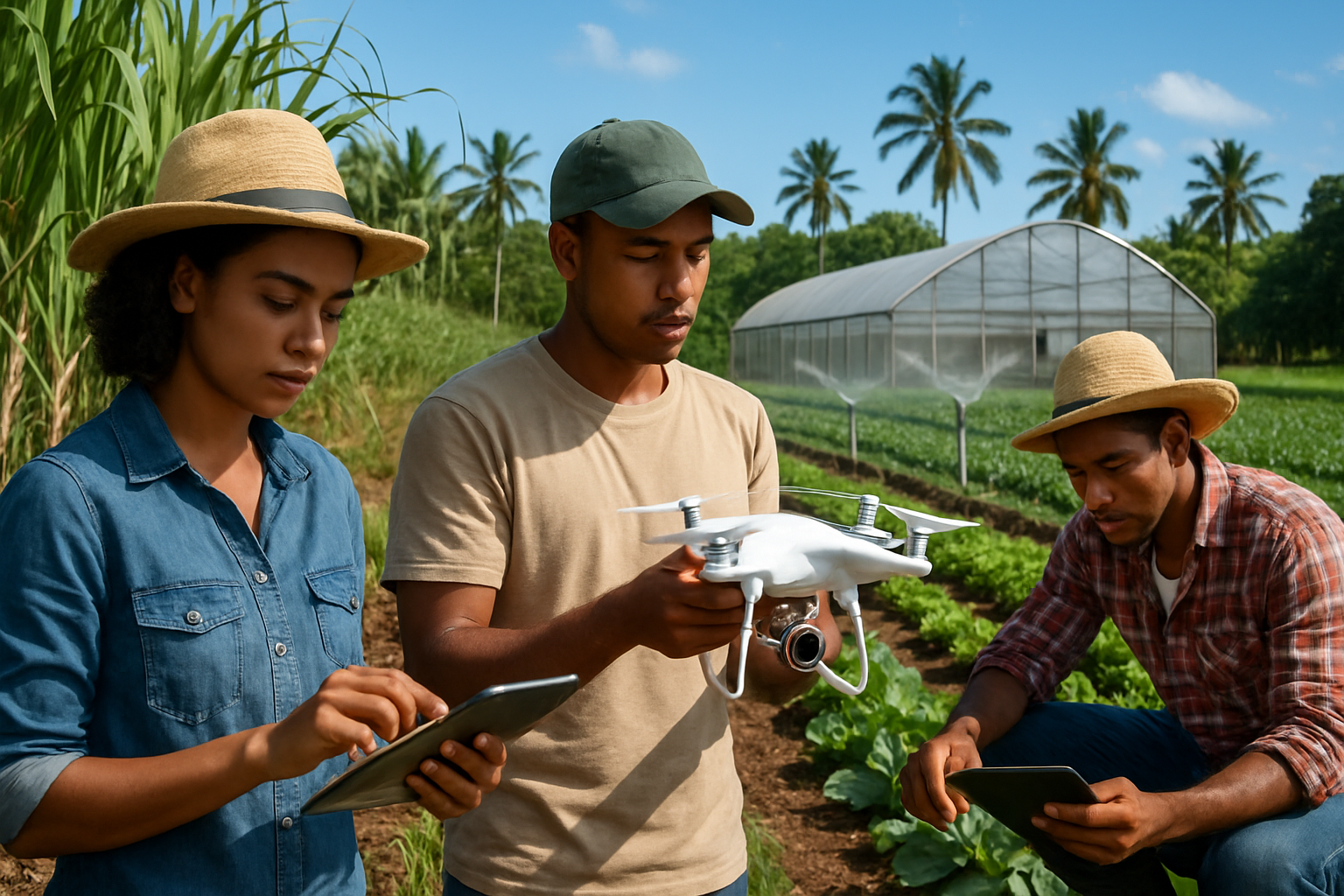
Caribbean nations are spearheading a critical transformation of their agricultural sectors, with Barbados emerging as a key advocate for modernization and youth investment to combat escalating food security challenges threatening the region's economic stability and food independence.
Minister of Agriculture and Barbados Labour Party candidate for St. Philip South, Indar Weir, delivered a stark warning at a recent meeting in St. Patrick's, emphasizing that outdated farming practices can no longer sustain the island's agricultural sector as it grapples with rising production costs and mounting food security concerns. The minister's call for immediate action reflects broader Caribbean struggles with agricultural sustainability in an era of climate change and global economic uncertainty.
Modernization Imperative Across the Caribbean
Weir's advocacy for agricultural modernization comes at a critical juncture for Caribbean nations, where traditional farming methods face unprecedented challenges from climate variability, extreme weather events, and shifting global supply chains. The minister stressed the urgent need for integrating modern technology, implementing climate-smart agriculture practices, and significantly increasing investment in young people to ensure the long-term viability of the agricultural industry.
The Caribbean region's agricultural transformation aligns with global trends observed across developing nations in early 2026. Recent international development initiatives have demonstrated the effectiveness of coordinated agricultural modernization efforts, with countries like Cambodia implementing Agricultural Market Incentive Systems (AIMS) and Mexico's "Sembrando Vida" program showcasing indigenous farmers at international organic farming exhibitions.
"For Barbados' agricultural sector to truly grow and develop, there must be a deliberate shift toward modernisation and stronger investment in young people."
— Indar Weir, Minister of Agriculture, Barbados
Climate-Smart Agriculture as Regional Priority
The emphasis on climate-smart agriculture reflects the Caribbean's vulnerability to environmental challenges. Recent data indicates that January 2026 was the hottest month ever recorded globally, with 18 of the past 19 months exceeding 1.5°C above pre-industrial levels, despite La Niña transition patterns that typically provide cooling effects. This unprecedented warming trend directly impacts agricultural productivity across tropical regions, making technological adaptation essential for food security.
Caribbean agricultural development initiatives mirror successful programs elsewhere, including Belize's IAEA-supported climate-smart agriculture project utilizing nuclear techniques. Led by Dr. Bruno José Rodrigues Alves from EMBRAPA, these initiatives demonstrate the region's commitment to evidence-based agricultural innovation through international partnerships.
Youth Investment as Cornerstone Strategy
Minister Weir's emphasis on youth investment addresses a critical demographic challenge facing Caribbean agriculture. Traditional farming populations are aging across the region, while younger generations often pursue opportunities in tourism, technology, or migrate to urban centers. The strategic focus on attracting and training young farmers represents a fundamental shift in how Caribbean nations approach agricultural workforce development.
This youth-centered approach parallels international best practices observed in agricultural development programs worldwide. Mexico's recent delegation of 19 farmers from the "Sembrando Vida" program to BIOFACH 2026, including representatives from Indigenous communities across multiple states, demonstrates how traditional knowledge can be combined with modern techniques through youth engagement and international exchange.
Regional Food Security Context
The Caribbean's food security challenges extend beyond individual island nations, reflecting global patterns of agricultural vulnerability. Recent initiatives across Africa have highlighted similar priorities, with Rwanda identifying 417,000 hectares of undeveloped irrigation potential and Ethiopia shifting from emergency relief to long-term climate resilience through water infrastructure investment.
These parallel developments underscore the interconnected nature of global food security challenges and the importance of coordinated responses that combine technological innovation, policy reform, and sustainable development practices. The Caribbean's agricultural modernization efforts contribute to broader international objectives outlined in initiatives like the African Continental Free Trade Area (AfCFTA) and various climate adaptation frameworks.
Technology Integration and Market Access
The push for technological modernization in Caribbean agriculture encompasses multiple dimensions, from precision farming techniques and smart irrigation systems to improved market access and supply chain optimization. These initiatives align with global trends toward sustainable agricultural development that balances productivity increases with environmental protection.
International agricultural development programs have demonstrated the effectiveness of multi-sectoral approaches that integrate technology transfer, community ownership, and market integration. Cambodia's AIMS program, for example, emphasizes gender integration and market access for smallholder farmers, providing a model for Caribbean nations seeking to modernize their agricultural sectors while maintaining social equity.
Economic Implications and Regional Competitiveness
The economic implications of agricultural modernization extend far beyond immediate food security concerns. For small island developing states like Barbados, agricultural productivity directly impacts foreign exchange reserves, employment opportunities, and overall economic resilience. Rising production costs, combined with climate-related challenges, have made agricultural reform an urgent economic priority.
Regional competitiveness in agricultural markets requires coordinated investment in infrastructure, technology, and human capital. The Caribbean's agricultural transformation occurs within a broader context of global supply chain volatility, extreme weather events, and shifting consumer preferences toward sustainable and locally-sourced food products.
Implementation Challenges and Opportunities
Despite the clear imperative for agricultural modernization, Caribbean nations face significant implementation challenges including limited financial resources, infrastructure constraints, and the need for specialized technical expertise. However, international partnerships and regional cooperation initiatives provide pathways for overcoming these obstacles through shared resources and knowledge exchange.
The success of agricultural modernization efforts will depend on coordinated policy implementation, sustained investment in education and training programs, and the development of supportive regulatory frameworks that encourage innovation while protecting environmental resources. Minister Weir's advocacy represents a crucial first step in building the political consensus necessary for comprehensive agricultural reform.
Future Outlook and Regional Integration
The Caribbean's agricultural modernization efforts contribute to broader regional integration objectives and sustainable development goals. Success in implementing climate-smart agriculture, attracting young farmers, and integrating modern technology will position Caribbean nations as leaders in sustainable agricultural development for small island developing states worldwide.
As global food security challenges intensify and climate impacts accelerate, the Caribbean's proactive approach to agricultural modernization provides valuable lessons for other regions facing similar challenges. The combination of political leadership, international partnerships, and community engagement demonstrated by initiatives like those championed by Minister Weir offers a roadmap for sustainable agricultural transformation in an era of global uncertainty.