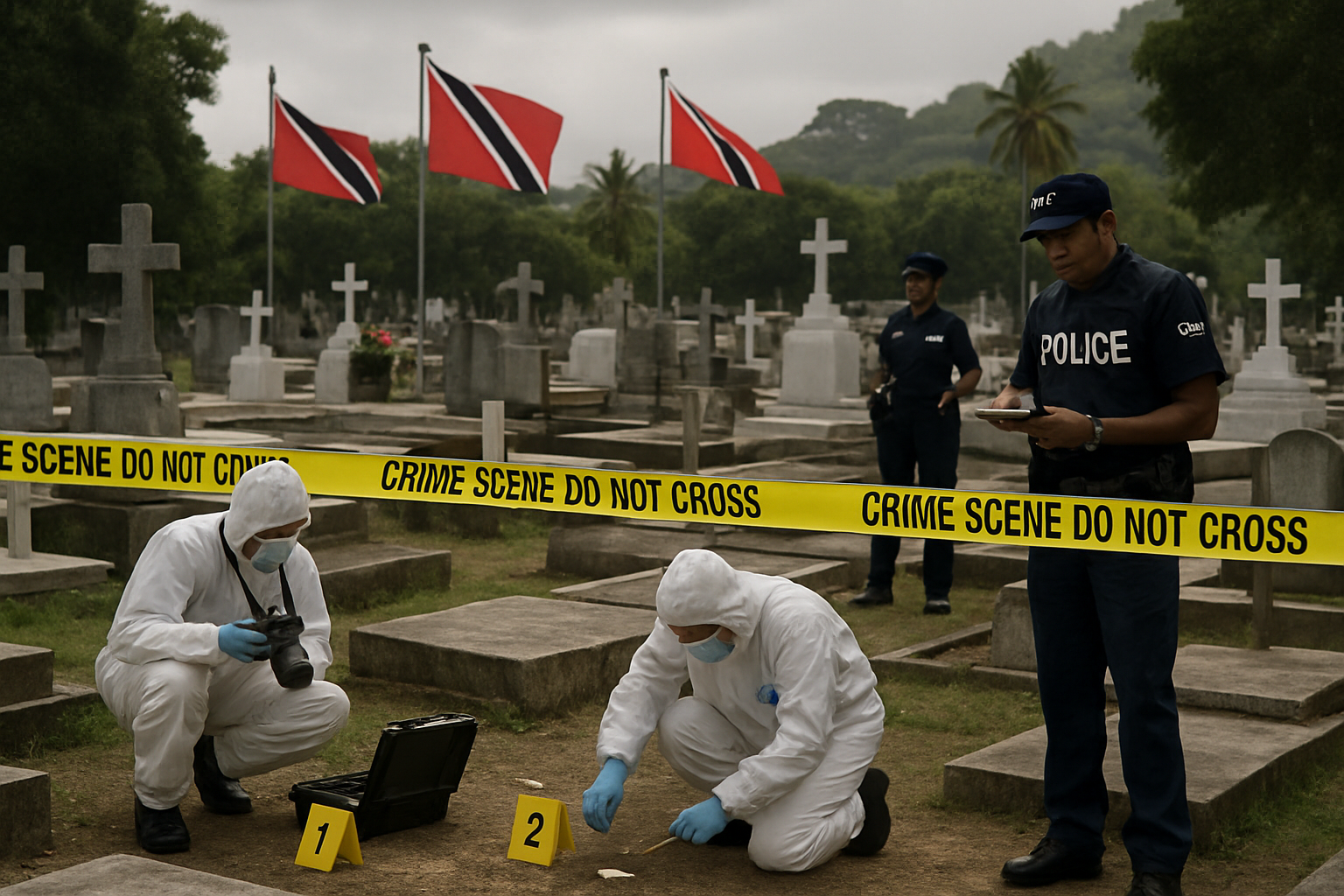
Police in Trinidad and Tobago have launched a major investigation after the shocking discovery of 56 human remains — predominantly infants — found dumped at a cemetery in the twin-island Caribbean nation, prompting authorities to examine potential breaches of morgue protocols and burial procedures.
The gruesome discovery was made Saturday at Cumuto Cemetery, located approximately 40 kilometers (25 miles) east of the capital Port of Spain on Trinidad. The Trinidad and Tobago Police Service (TTPS) confirmed that preliminary investigations indicate this "may be a case involving the unlawful disposal of unclaimed corpses."
Scale of the Discovery
According to official police statements, the remains included at least 50 infants and six adults. Among the adult remains, four were male and two were female corpses, with all but one of the men found with identification tags still attached. Two of the bodies — one male and one female — showed clear signs that autopsies had been performed on them prior to disposal.
The discovery has sent shockwaves through the Caribbean nation, which has been struggling with surging crime rates and deadly gang violence. These ongoing security challenges prompted authorities to extend an existing state of emergency last month under Prime Minister Kamla Persad-Bissessar's administration.
Institutional Crisis Amid Healthcare Strain
The cemetery tragedy occurs during what experts have termed the "Therapeutic Revolution of 2026," a period characterized by remarkable medical advances alongside critical healthcare infrastructure challenges across the Caribbean region. Trinidad and Tobago's healthcare system has been under particular strain, with the Trinidad and Tobago National Nurses Association (TTNNA) warning of patient care risks amid ongoing disputes over compensation and working conditions.
Healthcare workers report being trapped in mandatory overtime situations due to chronic understaffing, with nurses remaining on "2013 salary levels in 2026" while other public servants received recent adjustments. The crisis recently culminated in the death of a senior doctor at the Eric Williams Medical Sciences Complex after an extended Easter weekend shift, described by union officials as a "casualty" of the ongoing industrial relations battle.
Investigation Focus and Procedures
The TTPS emphasized that "this is an active and developing investigation, and further forensic analysis is underway to determine the origin of the remains and any associated breaches of law or procedure." The investigation is examining morgue protocols, legal compliance frameworks, chain of custody procedures, and institutional oversight mechanisms across multiple healthcare facilities.
The high proportion of infant and child remains is particularly concerning to investigators, as these require different legal handling requirements than adult remains and demand especially sensitive procedural oversight. The discovery raises serious questions about how unclaimed bodies are managed within Trinidad and Tobago's healthcare system and whether proper protocols were followed.
Regional Context and Broader Implications
This incident has drawn international attention from major global news outlets, highlighting broader institutional capacity challenges across the Caribbean region amid resource constraints and security pressures. The discovery occurs against the backdrop of Trinidad and Tobago's participation in enhanced security operations, including the Shield of the Americas Anti-Cartel Coalition, reflecting the nation's strategic importance in combating transnational organized crime.
The case represents a critical test of institutional capacity and public trust during a period of complex security and institutional challenges. Recent developments in the Caribbean have included transparency crises in housing contracts worth $3.4 billion and ongoing healthcare worker industrial disputes, creating a challenging environment for maintaining public confidence in government institutions.
Healthcare System Reform Requirements
Healthcare experts emphasize that this discovery highlights the urgent need for comprehensive reforms in several key areas. These include strengthened healthcare oversight mechanisms with enhanced morgue protocols, improved record-keeping systems for unclaimed remains, clearer legal frameworks governing the disposal of human remains, and stronger supervisory mechanisms with regular compliance monitoring.
The incident also underscores the importance of community engagement and transparency in healthcare operations, particularly during periods of institutional strain. Prevention-focused healthcare strategies have demonstrated superior cost-effectiveness compared to reactive crisis management approaches, but require sustained political commitment and adequate resource allocation.
International Response and Support
The case has highlighted the evolution of international healthcare cooperation models during the "Therapeutic Revolution of 2026." Despite WHO funding constraints from major contributor withdrawals, innovative bilateral partnerships and regional cooperation networks continue to drive medical innovation through peer-to-peer knowledge sharing.
Trinidad and Tobago has been part of a $6 million U.S. health partnership over two years supporting health system capacity building, administered by the Ministry of Health for preventing, detecting, and containing public health threats. However, this latest discovery suggests that fundamental institutional oversight mechanisms require immediate attention.
Looking Forward: Reform and Accountability
As the investigation continues, authorities face the challenging task of rebuilding public trust while implementing necessary reforms. The comprehensive nature of the investigation involves examining dozens of institutions across multiple jurisdictions, suggesting this will be a lengthy and complex process given the scope and institutional implications involved.
Police Commissioner Allister has indicated that no charges have been announced yet, but the investigation's breadth suggests that multiple agencies, hospitals, morgues, and medical facilities across Trinidad and Tobago will face scrutiny. The case will likely establish important precedents for healthcare oversight and institutional accountability throughout the Caribbean region.
The discovery at Cumuto Cemetery serves as a stark reminder of the critical importance of maintaining proper institutional oversight, even during periods of crisis and resource constraints. As Trinidad and Tobago works to address this tragedy, the response will likely influence healthcare policy and institutional accountability measures across the Caribbean for years to come.