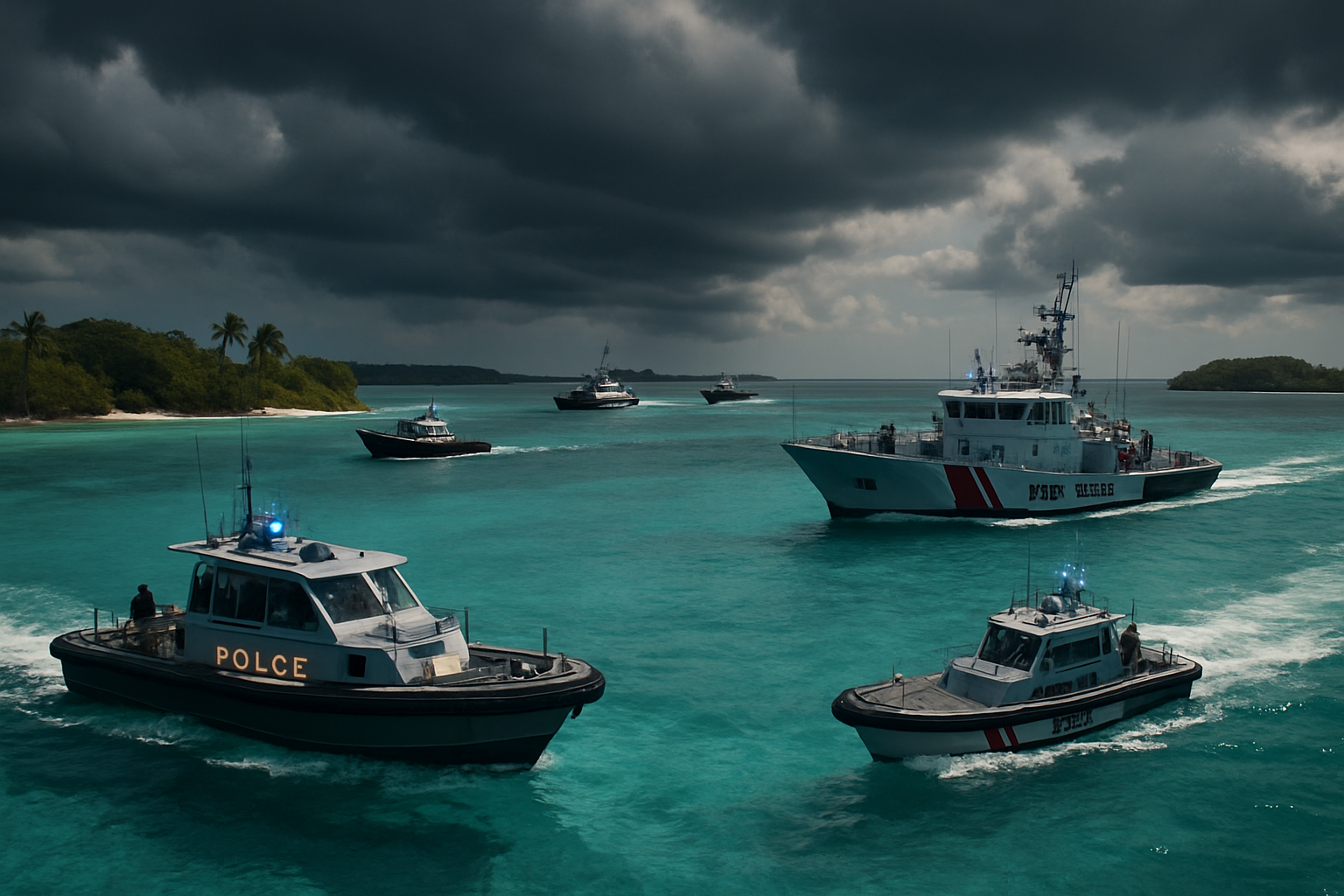
Authorities in Saint Vincent and the Grenadines delivered a crushing blow to international drug trafficking networks Monday, intercepting a vessel carrying 396 kilograms of cocaine with an estimated street value of $12 million off the island's Leeward coast.
The major drug bust, conducted by local law enforcement on April 20, 2026, resulted in the arrest of two individuals who are now assisting authorities with their ongoing investigation. The operation represents one of the largest single cocaine seizures in the nation's recent history, underscoring the Caribbean's critical role as a transit corridor for South American narcotics destined for North American and European markets.
Operation Details and Arrests
According to sources speaking to St Vincent Times, the interception occurred in waters off Saint Vincent's Leeward coast during routine maritime surveillance operations. The significant quantity of cocaine was discovered aboard a vessel that authorities had been monitoring as part of broader counter-narcotics intelligence efforts.
Police have taken two suspects into custody in connection with the seizure, though their identities and nationalities have not yet been publicly disclosed. The investigation continues as authorities work to unravel the broader criminal network responsible for the trafficking operation.
The timing of the seizure comes amid heightened regional law enforcement activity, with Caribbean nations increasingly coordinating their efforts to combat sophisticated drug trafficking organizations that demonstrate what experts describe as "state-like capabilities."
Regional Context and Trafficking Patterns
This latest seizure occurs within a broader pattern of escalating drug trafficking enforcement across the Caribbean region. Saint Vincent and the Grenadines has found itself at the center of international counter-narcotics operations, including a controversial February 13, 2026 U.S. military drone strike in the nation's territorial waters that resulted in the largest cocaine seizure in the country's history—approximately $500 million worth of narcotics.
The February incident, conducted without prior diplomatic notification to Prime Minister Godwin Friday, highlighted the complex sovereignty issues surrounding international drug enforcement operations in Caribbean waters. The strike was part of the U.S. "Operation Southern Spear" campaign, which has resulted in over 145 deaths across more than 40 attacks since September 2025.
Criminal organizations operating in Caribbean waters have evolved into sophisticated enterprises with advanced surveillance systems, encrypted communications, and compartmentalized international structures. These networks exploit the region's strategic location between South American production centers and North American consumption markets, utilizing both traditional maritime routes and increasingly sophisticated concealment methods.
International Enforcement Coordination
The Saint Vincent seizure reflects enhanced international cooperation under frameworks such as the "Shield of the Americas" coalition—a 17-nation alliance established in March 2026 following the successful capture of Sebastian Marset, the world's third most wanted drug trafficker. This coalition enables real-time intelligence sharing, coordinated operational planning, and surgical strikes against criminal leadership without triggering the succession violence typical of major cartel disruptions.
"Criminal organizations demonstrate capabilities rivaling legitimate state institutions, requiring unprecedented international cooperation to counter their sophisticated operations."
— Regional Security Expert
Recent coordinated operations across the Caribbean have yielded remarkable results. In April alone, international law enforcement achieved seizures exceeding $1.2 billion in value across multiple countries, with operations in Belize netting over 1,200 pounds of cocaine and nearly 1,500 pounds of high-grade marijuana in a two-week period.
Criminal Network Sophistication
Intelligence gathered from recent operations reveals that modern drug trafficking organizations possess technological capabilities and operational sophistication that often exceed those of traditional law enforcement agencies. These criminal enterprises employ military-grade surveillance equipment, utilize advanced financial networks that penetrate legitimate banking systems, and maintain sophisticated concealment methods requiring specialized extraction equipment.
The evolution of these networks has created what security experts describe as a "technology arms race" between criminal organizations and law enforcement. Criminal adoption of commercial and military-grade technologies consistently outpaces institutional countermeasure development, creating persistent vulnerabilities that require sustained international investment in law enforcement capabilities.
Evidence from recent seizures demonstrates that trafficking organizations have moved far beyond simple drug transportation to become complex international enterprises with diversified revenue streams including human trafficking, arms dealing, and systematic corruption of government officials.
Economic and Social Impact
The $12 million street value of the seized cocaine represents a significant revenue loss for criminal networks, but experts emphasize that such operations must be sustained and coordinated to achieve lasting impact. The Caribbean's tourism-dependent economies are particularly vulnerable to the perception of lawlessness and violence associated with drug trafficking operations.
Recent events in Saint Vincent, including targeted killings in the Marriaqua area within a 24-hour period, have raised concerns about the intersection of drug trafficking violence with community safety. Police described these incidents as "clinical targeted attacks," indicating the calculated nature of criminal operations in the region.
The broader economic implications extend beyond immediate law enforcement concerns. Drug trafficking organizations systematically target essential services and attempt to corrupt institutional personnel, challenging state authority through calculated violence and undermining community confidence in democratic governance.
Regional Security Challenges
The Caribbean faces unique challenges in combating drug trafficking due to its geography, limited resources, and the sophisticated nature of criminal organizations operating in the region. Small island developing states like Saint Vincent and the Grenadines must balance their limited law enforcement capabilities against criminal networks with international reach and substantial financial resources.
The fishing industry has been particularly affected by increased military and law enforcement operations in Caribbean waters. Following reported incidents involving three Saint Lucian fishermen allegedly killed by U.S. forces in Saint Vincent waters, the Royal SVG Police issued guidance encouraging fishermen to maintain normal operations while staying in communication with authorities.
These developments have created anxiety among Caribbean fishing communities, who must navigate waters where legitimate maritime operations overlap with military enforcement zones. The challenge for regional governments is maintaining effective counter-narcotics operations while protecting civilian populations and preserving traditional economic activities.
International Legal Framework
The legal framework governing international drug enforcement operations in Caribbean waters remains contentious. The use of terrorist organization designations to justify military operations against suspected trafficking vessels has raised questions among maritime law experts about the precedent of lethal strikes against civilian vessels based on suspected rather than confirmed criminal activity.
Democratic lawmakers in various countries have called for greater transparency regarding effectiveness metrics and rules of engagement for military counter-narcotics operations. The challenge lies in developing effective responses to sophisticated criminal threats while preserving fundamental rights and constitutional protections that distinguish democratic from authoritarian approaches.
International cooperation mechanisms continue to evolve, with enhanced coordination through specialized courts in Europe providing templates for processing complex international cases. Success requires balancing effective security measures with civil liberties preservation—a challenge that will define democratic societies' capacity to confront transnational organized crime.
Future Implications
The Saint Vincent cocaine seizure represents a significant tactical victory in the broader strategic campaign against Caribbean drug trafficking networks. However, experts emphasize that sustainable success requires addressing the underlying conditions that enable criminal recruitment, including poverty, corruption, weak governance, and limited economic opportunities in transit regions.
The evolution of criminal networks into entities with state-like capabilities poses unprecedented challenges to traditional sovereignty concepts and law enforcement approaches. Success in countering these threats depends on sustained political commitment to international cooperation, adequate specialized resources, and comprehensive strategies that address both immediate security concerns and long-term prevention.
As criminal organizations continue to adapt their methods and exploit new technologies, the international community faces a critical test of its capacity to maintain democratic governance and rule of law while effectively confronting sophisticated transnational threats. The outcome of this ongoing struggle will significantly influence global security architecture and public confidence in democratic institutions.
The April 2026 operations across the Caribbean region, including the significant Saint Vincent seizure, establish crucial frameworks for 21st-century democratic responses to criminal challenges while preserving the civil liberties and constitutional principles that define free societies. The window for effective coordinated action continues to narrow as criminal capabilities expand, making sustained international cooperation more essential than ever.