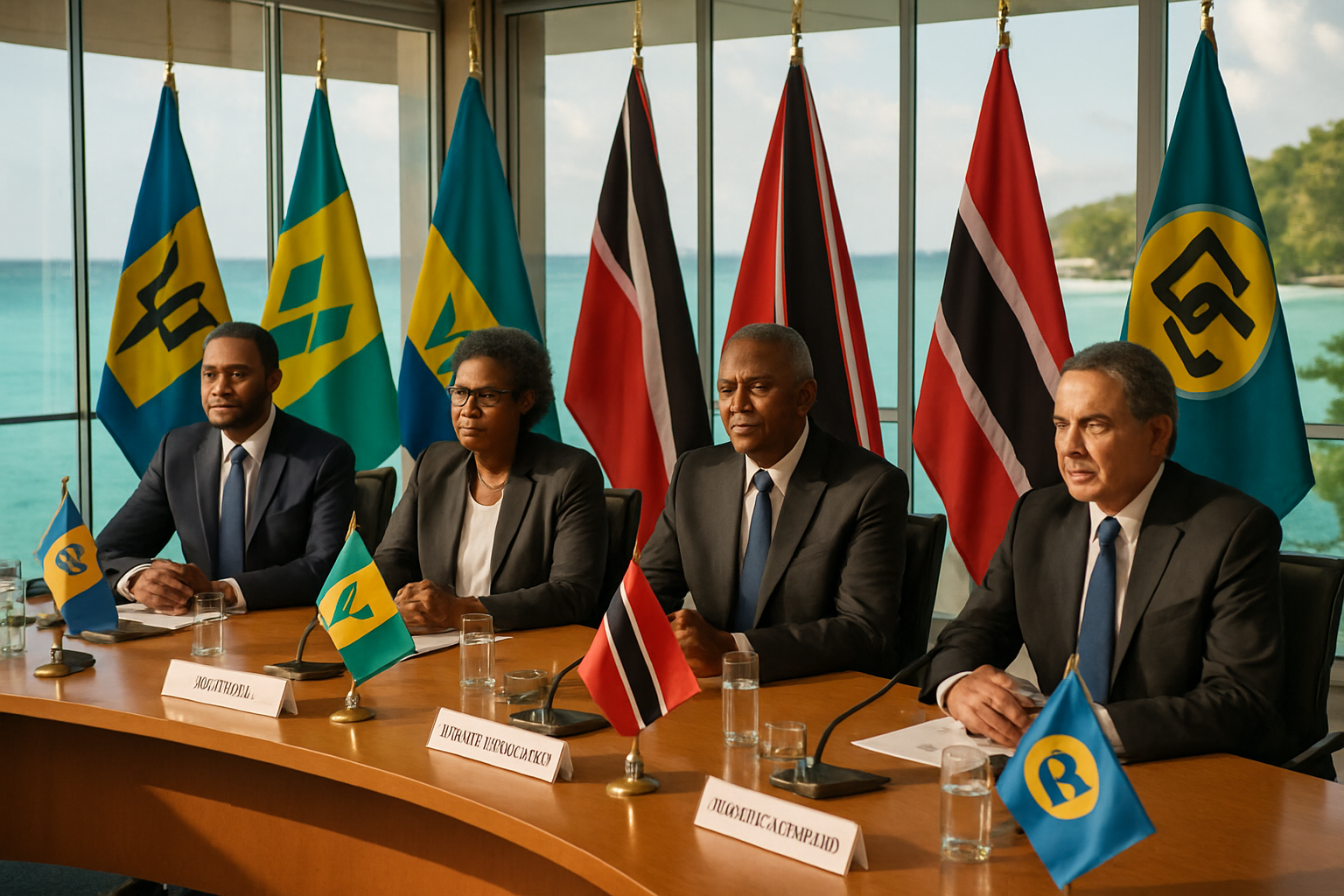
Caribbean nations are experiencing a transformative moment as they secure unprecedented investment commitments while simultaneously confronting one of the region's most severe humanitarian crises in decades, with Cuba facing complete economic isolation and energy shortages.
Historic Investment Expansion
The African Export-Import Bank (Afreximbank) has dramatically increased its Caribbean investment allocation from $3 billion to $5 billion USD, representing one of the most significant financial commitments to the region in recent years. This development was announced by Barbados Ambassador to CARICOM, His Excellency David Comissiong, during his weekly segment on Mornin' Barbados.
The expanded funding will be deployed over the coming years to support critical infrastructure development, trade facilitation, and economic diversification initiatives across CARICOM member states. Prime Minister Dr. Godwin Friday of Saint Vincent and the Grenadines confirmed that significant discussions were held during recent CARICOM meetings regarding international partnerships and development financing, with particular focus on diversifying funding sources and securing investment for critical infrastructure.
"This represents a fundamental shift in how we approach regional development," Ambassador Comissiong noted, emphasizing that Bank President Dr. George Elombi has committed to working closely with Caribbean governments to identify priority projects and ensure effective deployment of resources.
Cuba's Deepening Crisis
While celebrating these investment gains, Caribbean leaders are simultaneously grappling with Cuba's unprecedented humanitarian emergency. The island nation is experiencing its worst economic crisis since the 1990s Special Period, with complete aviation isolation, critical fuel shortages, and 51% of the population facing scheduled blackouts.
Prime Minister Friday confirmed that CARICOM leaders are preparing to extend humanitarian assistance to Cuba during what regional observers describe as one of the island's most severe crises in decades. Speaking at a press conference following the 50th Regular Meeting of CARICOM Heads of Government, Friday outlined the urgent need for coordinated regional responses.
The Cuban crisis has reached alarming proportions, with all nine major airports maintaining zero aviation fuel through March 11, 2026. This has resulted in the evacuation of over 25,000 tourists, including 21,000 Canadians and 4,000 Russians, as major airlines suspended operations. Oil reserves have dwindled to a critical 15-20 day supply, while domestic production has collapsed from 3 million to 700,000 barrels daily.
Regional Unity Under Pressure
The current situation has tested Caribbean solidarity in unprecedented ways. Recent CARICOM meetings have exposed significant regional divisions over how to respond to both external pressures and internal challenges. While some member states advocate for enhanced security cooperation with external partners, others prioritize traditional non-interference principles and diplomatic engagement.
These tensions came to a head during the historic 50th Anniversary CARICOM Summit in Saint Kitts and Nevis, where fundamental disagreements emerged about the organization's direction. Chairman Dr. Terrence Drew acknowledged that CARICOM faces a "decisive hour" as mounting global pressures threaten small state stability.
"We must demonstrate decisive regional action and courage in confronting these pressing crises while maintaining our commitment to sovereignty and regional cooperation."
— Dr. Terrence Drew, CARICOM Chairman
Economic Resilience Amid Challenges
Despite these pressures, Caribbean economies continue to demonstrate remarkable resilience. The region's tourism sector has shown sophisticated adaptation capabilities, with destinations like Saint Kitts and Nevis successfully accommodating multiple cruise ships simultaneously, showcasing advanced port management and visitor coordination systems.
The expanded Afreximbank commitment reflects growing international confidence in Caribbean economic potential. The funding is expected to support various sectors including renewable energy development, digital infrastructure, agricultural modernization, and trade facilitation mechanisms that could enhance regional competitiveness.
Regional cooperation initiatives have continued to flourish, with successful programs in agricultural development, disaster preparedness, and educational advancement. Countries like Guyana have emerged as regional leaders in food security, leveraging strategic diaspora engagement and technology partnerships to strengthen agricultural capabilities across the Caribbean.
Humanitarian Response Coordination
CARICOM's response to Cuba's crisis represents a significant test of regional solidarity. Leaders are working to balance humanitarian imperatives with diplomatic sensitivities, seeking ways to provide meaningful assistance while navigating complex international pressures.
The Cuban emergency has created cascading effects throughout the Caribbean, affecting everything from regional aviation networks to energy security planning. Healthcare systems across the region are monitoring developments closely, as Cuba's medical evacuation capacity has been eliminated and essential supply chains disrupted.
Prime Minister Friday emphasized that the regional response must be coordinated and effective, drawing on CARICOM's experience in disaster response and humanitarian assistance. The organization's established mechanisms for crisis coordination are being adapted to address what many describe as a deliberately engineered humanitarian emergency.
Looking Forward
The convergence of significant investment opportunities with acute humanitarian challenges presents both risks and opportunities for Caribbean development. The Afreximbank commitment provides crucial resources for long-term development projects, while the Cuban crisis demands immediate humanitarian attention.
Regional leaders are emphasizing the importance of maintaining Caribbean values of solidarity and mutual support while pursuing economic advancement. The success of this dual approach will likely determine CARICOM's institutional relevance and effectiveness for the next fifty years of Caribbean integration.
As these developments unfold, the Caribbean finds itself at a critical juncture where economic opportunity and humanitarian responsibility intersect. The region's ability to navigate these challenges while maintaining unity and advancing shared prosperity will serve as a template for small island developing states facing similar pressures worldwide.
The outcomes of both the investment deployment and humanitarian response efforts will have lasting implications for Caribbean integration, regional stability, and the organization's capacity to address complex 21st-century challenges while preserving the sovereignty and dignity of all member states.