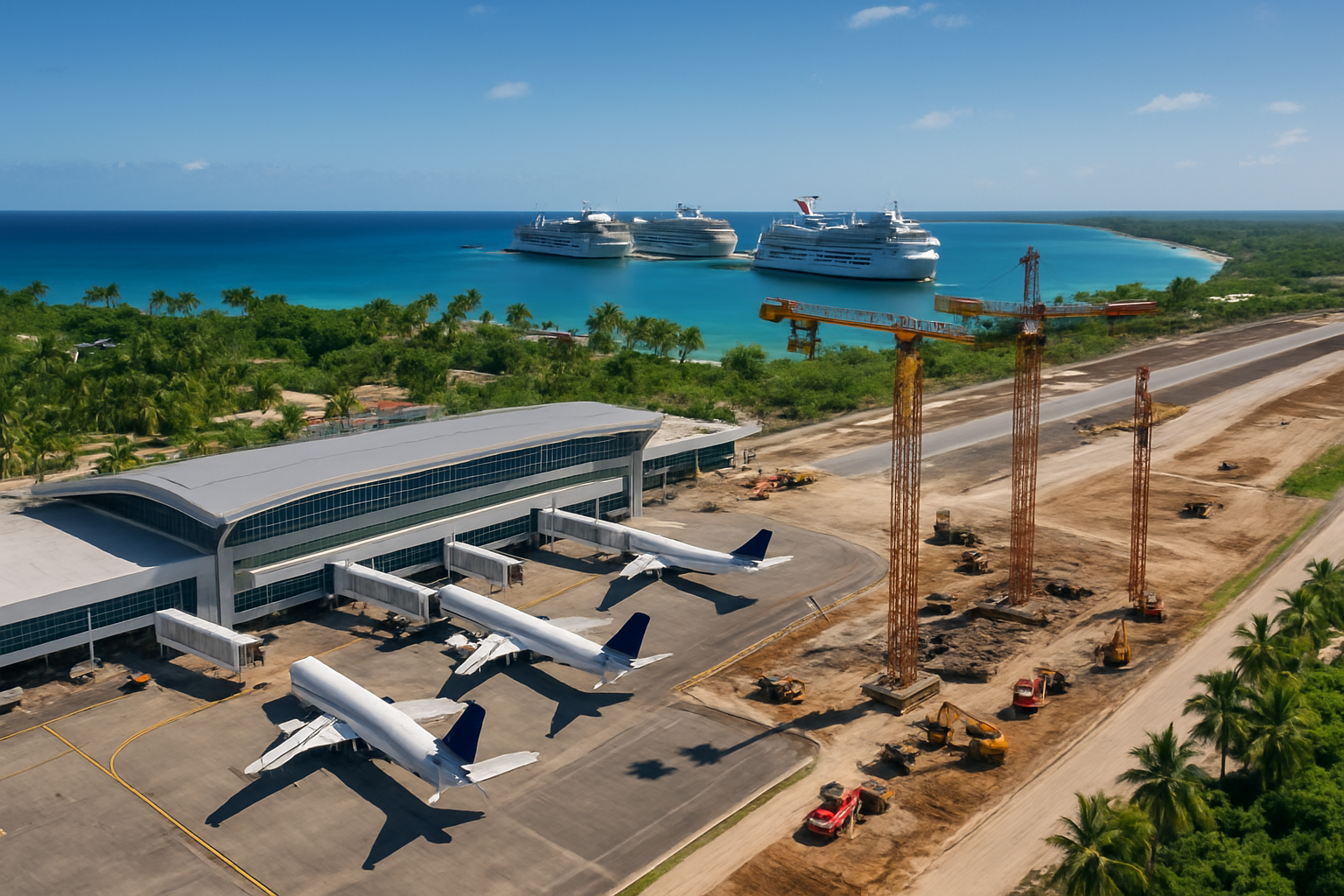
Caribbean nations are spearheading an unprecedented infrastructure and development renaissance, with the Bahamas investing $6.8 million in airport upgrades, Dominica achieving international cultural recognition, and regional airlines strengthening connectivity across the region.
The Government of The Bahamas has announced major aviation infrastructure investments totaling $6.8 million for critical airport upgrades in the Exuma Cays. Contracts have been awarded to Rowdy Boyz Construction and A&E Construction for runway resurfacing and construction of a new terminal at Farmers Cay, alongside comprehensive upgrades to Staniel Cay Airport. These projects represent a significant component of the nation's Family Island Renaissance initiative.
Cultural Achievement and International Recognition
Dominica has achieved a historic milestone in international cultural representation, with the Waitukubuli Artists Association announcing that the prestigious Annecy Film Festival—recognized as the world's most important animation festival—has selected a Dominican production for its official competition. Sandra Vivas' film "Equity in the Workplace, The Experience of Black Irish Women in Academia and the Teaching Profession" is among only 66 films selected for the TV and Commissioned Films category and represents the sole Caribbean entry.
"I feel so privileged to be the first from Dominica to be in this incredible festival, it puts Dominica and the Caribbean Region on the map of animation and I am sure I won't be the last, we have so much talent, so many stories that need to be told."
— Sandra Vivas, Waitukubuli Artists Association
This achievement demonstrates the Caribbean's expanding soft power capabilities and cultural export potential, building on previous successes documented throughout 2026. The region has increasingly leveraged authentic cultural experiences as key differentiators in the global tourism and creative industries marketplace.
Aviation and Maritime Connectivity Enhancement
Regional aviation networks continue strengthening with Caribbean Airlines progressing towards long-term sustainability despite recent challenges. The airline's Board of Directors has categorically rejected rumors regarding closure, instead focusing on comprehensive operational reviews designed to strengthen the business and position the carrier on more stable foundations. Key initiatives include finalizing audited financial statements and recruiting senior management positions to support long-term strategic direction.
Meanwhile, the region's maritime heritage preservation efforts gained momentum with Blue Lagoon Island's centennial celebration of its iconic Watch Tower. Originally constructed in 1926 by Chicago architect Howard Van Doren Shaw, the three-story masonry structure received interior renovations and a commemorative ceremony marking 100 years of Bahamian history. A special ceremony featured the unveiling of a new commemorative plaque and the release of a 100-year anniversary banner from the tower's peak.
Sports Infrastructure and Regional Integration
Cricket West Indies has demonstrated sophisticated crisis management capabilities by rescheduling the abandoned CWI Rising Stars Under-15 bilateral series match between Guyana and Barbados. Following abandonment of initial rounds at Lusignan due to unfavorable conditions, the match has been relocated to the Police Ground in Georgetown, Guyana, showcasing the region's collaborative approach to maintaining international sporting commitments.
The broader Caribbean sports infrastructure development continues building on previous investments, including the near-completion of Saint Vincent and the Grenadines' Athletes' Facility at Sir Vincent Beache Athletic Stadium, which reached 90% completion and is scheduled for April 2026 opening. These developments align with Afreximbank's increased Caribbean investment allocation from $3 billion to $5 billion, demonstrating unprecedented international confidence in regional development potential.
Pacific Partnership Influences Caribbean Strategy
While geographically distant, developments in the Pacific region offer strategic lessons for Caribbean integration. Fiji and Australia are advancing their Vuvale partnership to enhance regional security and shape Pacific future cooperation frameworks. This model of bilateral partnership strengthening within broader regional integration objectives provides templates for Caribbean nations seeking to balance individual sovereignty with collective regional strength.
The Pacific experience demonstrates how smaller island nations can leverage strategic partnerships with larger neighbors while maintaining cultural authenticity and environmental sustainability—principles directly applicable to Caribbean development strategies currently being implemented across the region.
Infrastructure Investment Within Global Context
These Caribbean developments occur within a broader global infrastructure surge totaling over $570 billion in 2026. Regional projects incorporate cutting-edge technology integration, climate adaptation requirements, and environmental sustainability standards from the initial design phase. Enhanced drainage systems, weather-resistant materials, and backup power capabilities are becoming standard features designed for future climate conditions rather than historical patterns.
The Bahamas airport upgrades specifically incorporate smart infrastructure elements including digital monitoring systems, predictive maintenance capabilities, and environmental optimization features. These technological integrations represent the Caribbean's evolution from traditional infrastructure approaches toward comprehensive systems supporting economic development, environmental protection, and community connectivity simultaneously.
Economic Multiplier Effects and Regional Cooperation
The economic impact of current Caribbean development projects extends far beyond immediate construction activities. Airport improvements create permanent employment opportunities in aviation services, tourism support, and specialized technical maintenance. Cultural achievements like Dominica's animation festival success attract international attention and potential investment in creative industries throughout the region.
Regional cooperation increasingly replaces individual nation competition through coordinated marketing efforts, shared infrastructure development, and collaborative approaches to international partnerships. This evolution demonstrates Caribbean maturation toward sophisticated destination and economic management, leveraging collective regional strength while maintaining distinctive national characteristics.
Climate Resilience and Sustainability Integration
All current Caribbean infrastructure projects incorporate climate adaptation as a central design requirement, acknowledging that January 2026 marked the 18th consecutive month of global temperatures exceeding 1.5°C above pre-industrial levels. This sustained warming pattern requires infrastructure designed for future environmental conditions rather than historical precedents.
Success factors consistently emerging across regional projects include sustained political commitment, comprehensive stakeholder engagement, international cooperation frameworks, and adaptive management strategies. The Caribbean is positioning itself as a global leader in sustainable development models that balance economic growth with environmental responsibility and cultural preservation.
Future Implications and Strategic Significance
The convergence of major infrastructure investment, cultural achievement, and regional cooperation initiatives represents a watershed moment for Caribbean development. These projects establish precedents for balancing immediate economic needs with long-term sustainability, individual national priorities with regional integration, and technological advancement with community engagement.
Success in current initiatives will influence investment patterns and development strategies throughout the region for decades ahead. The Caribbean's approach—emphasizing quality-focused development, authentic cultural expression, environmental sustainability, and international cooperation—provides templates for small island developing states worldwide facing similar challenges of economic modernization while preserving cultural identity and environmental integrity.
As these projects progress toward completion throughout 2026, they represent the Caribbean's strategic choice between transformative adaptation and reactive crisis management, positioning the region for enhanced competitiveness in an increasingly complex and interconnected global environment.