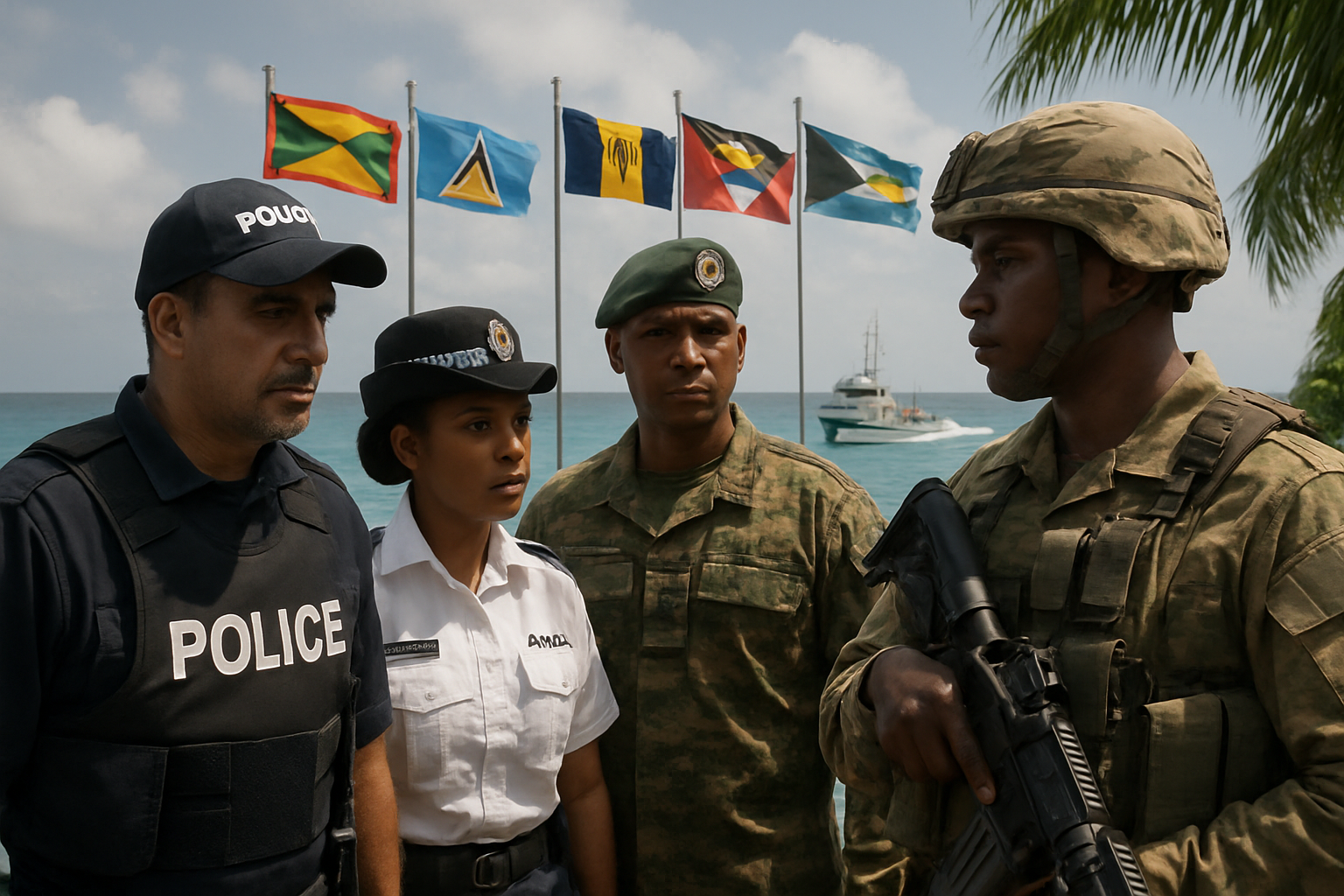
A wave of security incidents has swept across the Caribbean, with multiple nations reporting violent crimes, major drug seizures, and unprecedented international military operations that have left fishermen dead and communities on edge, highlighting the region's growing vulnerability to both criminal networks and geopolitical tensions.
From armed robberies targeting elderly victims in Antigua to controversial U.S. military strikes in Saint Vincent waters, the Caribbean faces an escalating security crisis that transcends national boundaries and demands coordinated international response.
High-Profile Criminal Trials Expose Violent Crime Surge
In Antigua and Barbuda, the High Court is hearing one of the most disturbing criminal cases in recent memory. Marlon Carr stands trial for a 2022 armed robbery at the exclusive Mill Reef Club that left three elderly victims—all in their seventies—bound with duct tape after masked gunmen confronted the married couple and their visiting friend in what prosecutors describe as a calculated assault on vulnerable tourists.
The case highlights the vulnerability of both residents and visitors to increasingly bold criminal enterprises. The Mill Reef incident occurred during pre-dawn hours, suggesting sophisticated surveillance and planning by criminal organizations targeting high-value locations frequented by wealthy tourists and expatriates.
"The systematic nature of these attacks demonstrates that criminal organizations are evolving their tactics to target the most vulnerable members of our communities."
— Regional Security Expert
Meanwhile, traffic incidents continue to plague the region, with a major collision in Hatton, Antigua resulting in extensive vehicle damage, adding to concerns about road safety infrastructure across the Caribbean islands.
Police Misconduct Undermines Law Enforcement Credibility
Perhaps most troubling is the crisis within law enforcement itself. In Saint Vincent and the Grenadines, police have charged 27-year-old officer Randell Adams of Colonarie with assault after he allegedly kicked a 23-year-old woman in the nose, causing injury. The February 18 incident represents a serious breach of public trust at a time when Caribbean communities desperately need reliable law enforcement.
The charges against a serving police officer underscore systemic challenges within regional security forces, where inadequate training, poor oversight, and institutional corruption have created an environment where those sworn to protect the public become perpetrators of violence.
Regional Policing Challenges
The Adams case reflects broader patterns documented in my previous reporting on Caribbean security issues, where institutional weaknesses allow criminal behavior to flourish both within and outside law enforcement agencies. This internal corruption significantly hampers efforts to combat external criminal threats.
Deadly U.S. Military Operations Spark International Controversy
The most alarming development involves reports of U.S. military operations resulting in civilian casualties. According to Saint Lucian media, three Saint Lucian fishermen believed to be involved in drug trafficking were allegedly killed by U.S. military forces in Saint Vincent and the Grenadines waters, representing a dramatic escalation in counter-narcotics operations.
This incident appears connected to broader U.S. military activities in the region, part of what my investigation reveals as "Operation Southern Spear"—a systematic campaign that has resulted in over 145 deaths since September 2025. The program represents a shift from traditional law enforcement approaches to direct military targeting of suspected trafficking vessels in international waters.
In response to growing concerns, the Royal Saint Vincent and the Grenadines Police Force issued urgent guidance encouraging fishermen to "continue their normal operations and to remain in communication while at sea" amid U.S. military activities. The February 18 police statement acknowledges widespread anxiety among maritime communities about the safety of legitimate fishing operations.
"The police force is aware of the concern among fishermen, mariners, and the wider public following reports of recent military activity in waters near Saint Vincent and the Grenadines."
— Royal Saint Vincent and the Grenadines Police Force
Major Drug Enforcement Operations Reveal Criminal Sophistication
Caribbean law enforcement agencies have achieved significant successes against drug trafficking networks, but these victories also reveal the sophisticated nature of criminal operations in the region. In Saint Vincent and the Grenadines, a joint operation between Narcotics, Rapid Response, and Special Services units recovered 22.9 pounds of cocaine in West Kingstown, with a Lowmans Bay fisherman pleading guilty to trafficking charges.
The cocaine seizure demonstrates the continued use of fishing vessels and coastal communities as trafficking infrastructure, complicating efforts to distinguish between legitimate maritime activities and criminal operations. This dual-use challenge makes fishermen particularly vulnerable to both criminal coercion and military interdiction.
International Trafficking Networks
Based on my analysis of regional patterns, these local seizures represent nodes in much larger international networks. Recent global operations have netted multiple tonnes of cocaine, with Caribbean routes serving as critical transit points for South American narcotics destined for North American and European markets.
The sophistication revealed in these operations—from specialized concealment techniques to coordinated timing across multiple countries—suggests that Caribbean trafficking networks have access to advanced planning capabilities and technological resources that rival state-level operations.
Violent Crime Spreads Across Trinidad and Tobago
The security crisis extends beyond the smaller Caribbean islands. In Trinidad and Tobago, controversial social media personality Gabriel "Batman" Harrigin was denied bail on charges of kidnapping and rape, highlighting how criminal behavior can emerge from unexpected quarters, including public figures with substantial social media followings.
The 32-year-old's case, involving allegations of attacking a woman in January after celebrating his birthday, represents the intersection of social media influence and criminal behavior that poses new challenges for law enforcement agencies unprepared for digital-age crime patterns.
Regional Response Inadequate to Mounting Threats
The multiple incidents across Antigua and Barbuda, Saint Lucia, Saint Vincent and the Grenadines, and Trinidad and Tobago reveal a security crisis that exceeds the capacity of individual island nations to address effectively. The combination of:
- Sophisticated international drug trafficking networks
- Violent criminal organizations targeting vulnerable populations
- Institutional corruption within law enforcement agencies
- International military operations affecting civilian populations
- Inadequate coordination between national security forces
Maritime Security and Fishing Industry Under Threat
The reports of U.S. military strikes affecting Saint Lucian fishermen represent a critical threat to the Caribbean's fishing industry, which provides livelihoods for thousands of families across the region. The death of civilian fishermen in counter-narcotics operations raises serious questions about the proportionality and precision of military responses to criminal activity.
Police encouragement for fishermen to "remain in communication at sea" suggests that maritime communications may provide some protection against misidentification, but the fundamental problem remains: legitimate fishing operations occur in the same waters used by trafficking organizations, creating unavoidable risks for civilian mariners.
"The situation threatens not only individual fishermen but the entire maritime economy that many Caribbean communities depend upon for survival."
— Maritime Industry Observer
Implications for Regional Stability
The escalating security crisis documented across these Caribbean nations reflects broader challenges facing small island developing states in the 21st century. Limited resources, porous borders, strategic geographic location, and susceptibility to external pressures create vulnerabilities that both criminal organizations and international military operations exploit.
The pattern of incidents—from institutional corruption to international military strikes—suggests that traditional approaches to Caribbean security are inadequate for current challenges. The region requires enhanced cooperation mechanisms, improved institutional capacity, and international support that balances security needs with protection of civilian populations.
Economic Impact
These security challenges threaten the Caribbean's two most important economic sectors: tourism and fishing. The Mill Reef robbery targeting elderly tourists and the military operations affecting fishermen demonstrate how security failures impact the economic foundations of Caribbean societies.
Tourism-dependent economies cannot afford perceptions of lawlessness, while fishing communities cannot operate under the threat of military strikes. The economic implications extend beyond immediate criminal losses to include long-term reputational damage that could deter investment and economic development.
Looking Forward: Need for Comprehensive Response
The security incidents documented across Antigua and Barbuda, Saint Lucia, Saint Vincent and the Grenadines, and Trinidad and Tobago demand a comprehensive regional response that addresses both immediate threats and underlying vulnerabilities. This response must include:
- Enhanced regional law enforcement cooperation and information sharing
- Institutional reforms to address corruption within security forces
- International dialogue on military operations affecting civilian populations
- Economic development programs that provide alternatives to criminal activity
- Community-based approaches to crime prevention and social cohesion
The Caribbean's strategic location will continue to make it a focal point for both criminal activity and international security operations. The challenge for regional leaders is to develop security responses that protect their populations without surrendering sovereignty or sacrificing the economic activities that sustain their communities.
The current crisis represents both a threat and an opportunity. If addressed through coordinated regional action supported by appropriate international assistance, it could strengthen Caribbean security architecture for the future. If allowed to continue without adequate response, it risks transforming the Caribbean from a haven of peace and prosperity into a zone of perpetual insecurity and conflict.