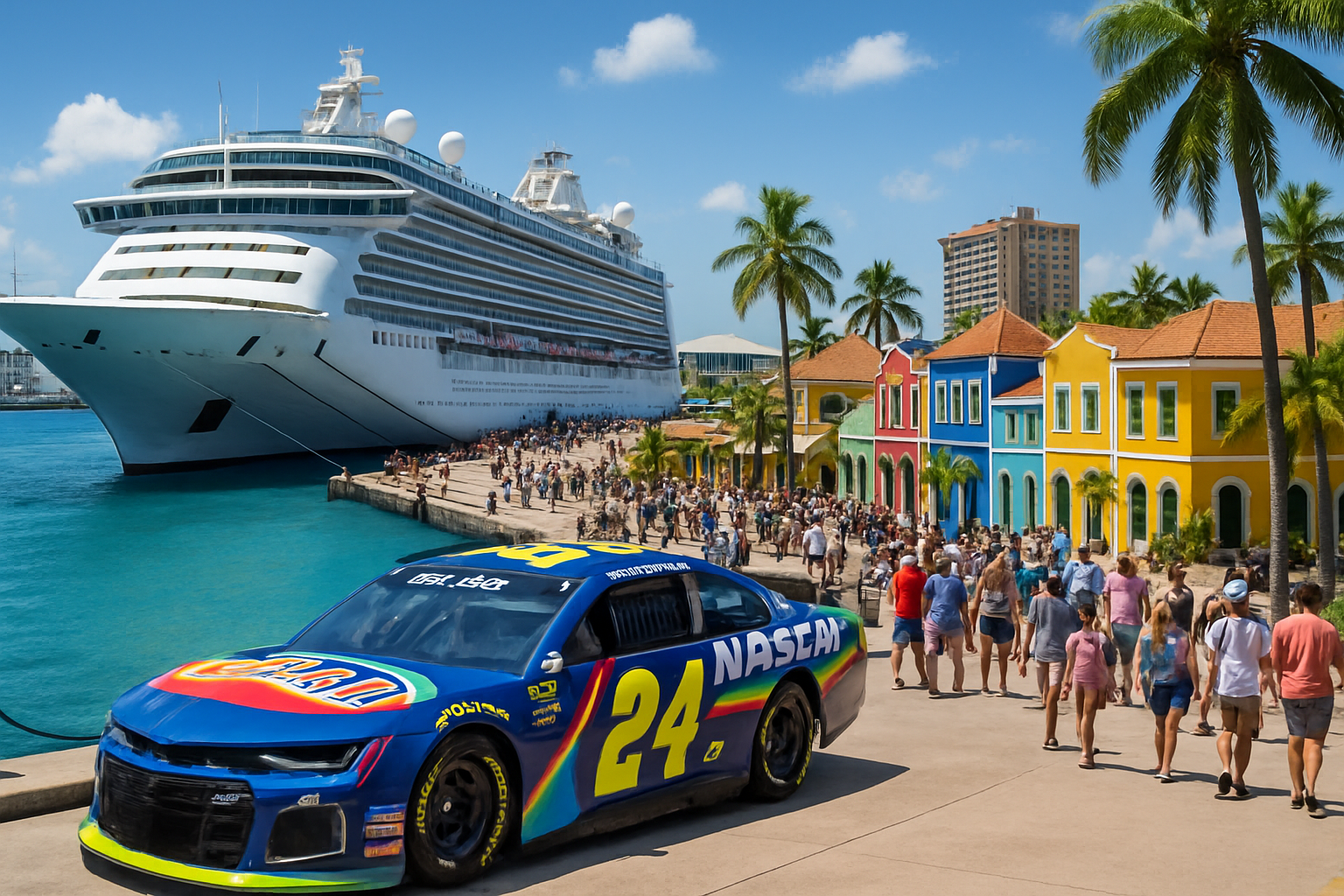
Caribbean tourism leaders are grappling with a complex challenge as they work to advance ambitious development goals while addressing rising security concerns that threaten to undermine the region's reputation as a premier international destination.
The juxtaposition of opportunity and challenge was starkly illustrated this week as Barbados's tourism sector voiced alarm over escalating gun violence, while simultaneously, Saint Vincent and the Grenadines celebrated a groundbreaking partnership with NASCAR rising star Rajah Caruth in what represents the most innovative cultural-sports tourism collaboration in recent Caribbean history.
Tourism Industry Confronts Security Crisis
Javon Griffith, Chairman of the Barbados Hotel and Tourism Association, issued an urgent statement expressing "deep disturbance and profound sadness" over continued acts of senseless gun violence across the island. Speaking after another shooting incident, Griffith warned that these violent episodes are "beginning to feel like regular weekend occurrences" – a reality that should concern "every Barbadian, every visitor, and every stakeholder with an interest in the safety, stability, and reputation of the island."
The tourism industry's concerns reflect broader Caribbean security challenges that have emerged as a critical threat to the region's economic stability. While acknowledging the dedicated work of the Royal Barbados Police Service and other law enforcement agencies, Griffith emphasized that "a broader, more urgent, and coordinated national response is now required."
The timing of these security concerns is particularly troubling given the Caribbean's remarkable tourism recovery. According to memory records, the region has achieved unprecedented sophistication in destination management, with Barbados alone recording a record-breaking 2.4 million passengers through Grantley Adams International Airport and establishing itself as the number one cruise homeport in the Southern Caribbean.
Historic Cultural Partnership Breaks New Ground
Contrasting sharply with these security challenges, Saint Vincent and the Grenadines demonstrated the innovative potential of Caribbean tourism through an unprecedented partnership announcement. NASCAR O'Reilly Auto Parts Series driver Rajah Caruth, 23, has been officially signed as brand ambassador for the St. Vincent & the Grenadines Tourism Authority through a groundbreaking six-month partnership with TEMPO Networks.
The collaboration represents the first time a major NASCAR personality has served as an official Caribbean tourism ambassador, creating a unique bridge between American motorsports culture and Caribbean heritage. Caruth, whose Vincentian heritage connects him to the islands, brings significant media exposure through NASCAR's massive North American audience to Saint Vincent's tourism sector.
This partnership exemplifies the sophisticated approach Caribbean nations are taking toward tourism diversification. Rather than relying solely on traditional sun-and-sand marketing, the region is leveraging cultural connections, sports diplomacy, and innovative media partnerships to reach new demographics and build lasting international relationships.
Regional Development Renaissance Amid Challenges
The contrasting developments in Barbados and Saint Vincent and the Grenadines reflect broader tensions within the Caribbean's current development trajectory. Historical context reveals the region is experiencing an unprecedented infrastructure renaissance, with Afreximbank increasing Caribbean investment allocation from $3 billion to $5 billion USD, representing the largest financial commitment to Caribbean development in recent memory.
Saint Vincent and the Grenadines has positioned itself as a regional leader in this transformation, with recent completions including a state-of-the-art Athletes' Facility at Sir Vincent Beache Athletic Stadium and upgraded runway facilities at J.F. Mitchell Airport in Bequia. The nation's $300+ million infrastructure allocation represents the largest per-capita Caribbean infrastructure commitment on record.
The Caruth partnership fits strategically within this broader development narrative. By connecting with the NASCAR driver's Vincentian heritage, the tourism authority is creating authentic cultural bridges that extend beyond traditional marketing approaches. This represents the evolution of Caribbean tourism toward sophisticated destination management that combines infrastructure investment with cultural diplomacy.
Security Challenges Threaten Economic Progress
However, the security challenges highlighted by Barbados's tourism association demonstrate how quickly violence can undermine years of development progress. The Caribbean's tourism-dependent economies cannot afford perceptions of lawlessness, particularly when competing with destinations worldwide for visitor confidence and international investment.
The region's tourism success has been built on sophisticated crisis management, enhanced safety protocols, and climate-resilient infrastructure development. But criminal violence presents a different category of challenge – one that requires coordinated responses across law enforcement, community development, and regional cooperation frameworks.
According to documented patterns, Caribbean nations have demonstrated remarkable ability to coordinate port operations, manage multiple cruise ships simultaneously, and maintain international visitor confidence through various challenges. However, persistent gun violence threatens to overwhelm these operational successes if not addressed systematically.
Innovation Through International Partnerships
The Saint Vincent-NASCAR partnership demonstrates how Caribbean nations are innovating beyond traditional tourism models. Rather than competing individually for visitor attention, the region is developing sophisticated partnerships that leverage cultural connections, sports diplomacy, and media relationships to create sustainable competitive advantages.
TEMPO Networks' involvement in the partnership adds another dimension, providing media platform capabilities that can amplify Caribbean cultural content across North American markets. This type of strategic media partnership represents the maturation of Caribbean tourism marketing beyond conventional advertising toward content creation and cultural exchange programming.
The partnership also reflects broader trends in Generation Z travel preferences, where authentic cultural experiences and meaningful connections matter more than traditional luxury amenities. By connecting NASCAR's popularity with genuine cultural heritage, Saint Vincent is positioning itself for long-term visitor engagement rather than transactional tourism relationships.
Regional Cooperation Essential for Success
Both the security challenges and partnership opportunities highlight the critical importance of regional cooperation in Caribbean development. Individual island nations lack the capacity to address sophisticated international challenges or maximize complex partnership opportunities without coordinated approaches.
Historical context shows the Caribbean Community Climate Change Centre, CARICOM frameworks, and other regional institutions have matured significantly, enabling coordinated responses to shared challenges. However, security concerns require enhanced cooperation mechanisms, improved institutional capacity, and sustained international support that balances security needs with civilian protection.
The success of innovative partnerships like the Saint Vincent-NASCAR collaboration could provide templates for other Caribbean nations seeking to diversify their tourism marketing and build lasting international relationships. Regional knowledge sharing and coordinated partnership development could multiply the benefits of such initiatives across the Caribbean basin.
Economic Stakes and Future Implications
The economic stakes involved in resolving this tension between development opportunities and security challenges are substantial. Tourism provides critical employment across the Caribbean, supporting everything from hospitality services to transportation, cultural industries, and infrastructure development. The sector's success creates multiplier effects that benefit entire communities through year-round employment and sustainable economic foundations.
Current global tourism trends favor destinations that can provide quality experiences, cultural authenticity, community engagement, and reliable safety – exactly the combination Caribbean nations are working to achieve. The region's sophisticated destination management capabilities, demonstrated through successful cruise coordination and infrastructure development, provide strong foundations for continued growth if security challenges can be addressed effectively.
The Saint Vincent partnership demonstrates that Caribbean creativity and cultural assets can compete successfully in global markets when properly leveraged through strategic partnerships. However, these opportunities can only be fully realized in environments where visitors, communities, and international partners feel confident in their safety and security.
Looking Forward: Balancing Development and Security
The Caribbean tourism sector stands at a critical juncture where the choices made regarding security challenges and partnership development will influence the region's trajectory for decades to come. The contrast between Barbados's security concerns and Saint Vincent's partnership success illustrates both the challenges and opportunities facing Caribbean development.
Success will require unprecedented coordination between tourism development, security enhancement, community engagement, and international cooperation. The region's demonstrated capacity for sophisticated destination management, combined with innovative partnership development, provides strong foundations for addressing these challenges while maintaining development momentum.
The NASCAR partnership represents the type of creative, culturally authentic international relationship that could define Caribbean tourism's future. However, realizing such opportunities requires environments where communities feel safe, visitors feel secure, and international partners feel confident in long-term collaboration.
As Caribbean nations continue building on their infrastructure renaissance and international partnership development, addressing security challenges through comprehensive community-based approaches will be essential for ensuring that development benefits reach all residents while maintaining the peaceful, welcoming environment that makes the Caribbean a preferred global destination.