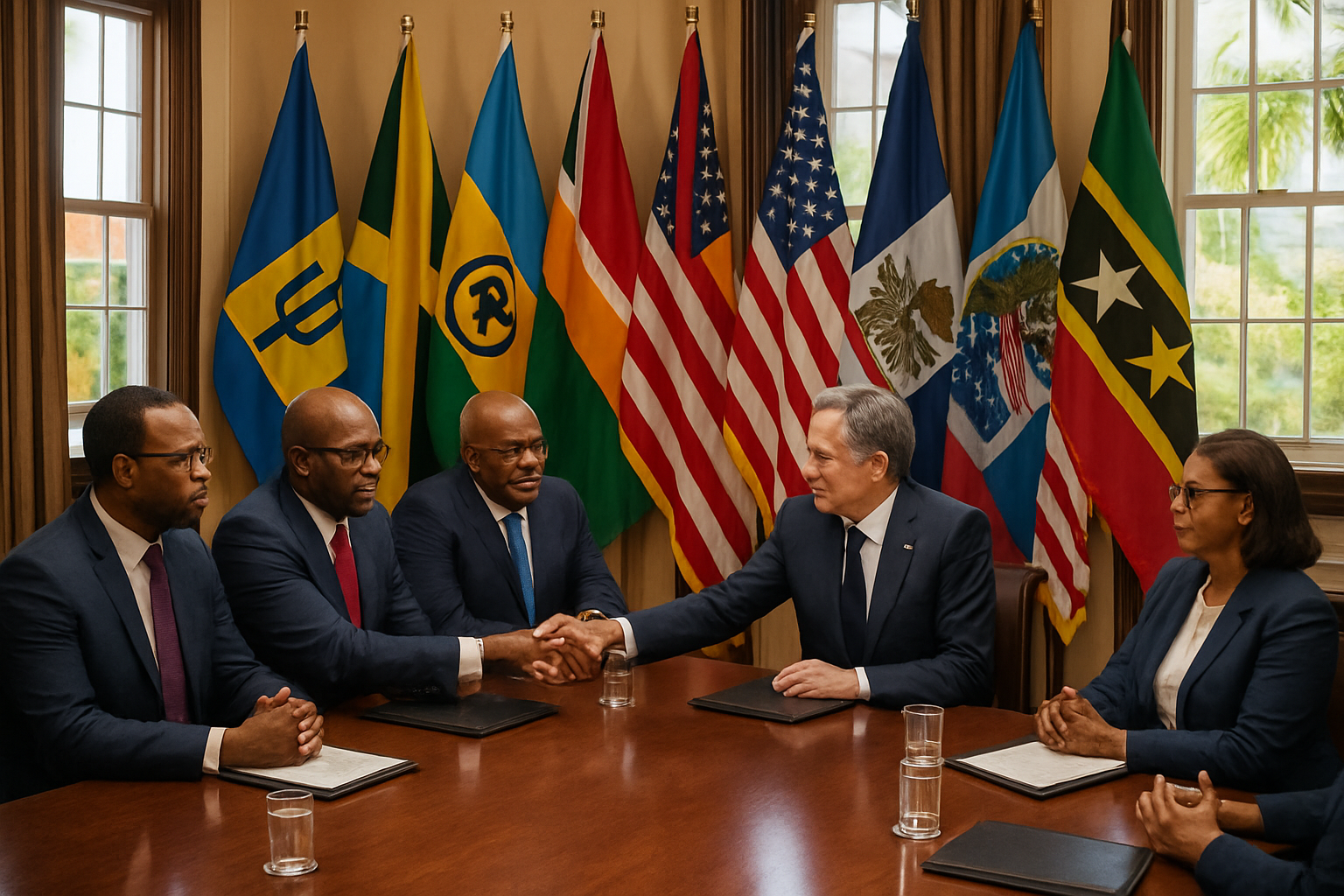
US Secretary of State Marco Rubio engaged in crucial diplomatic meetings with Caribbean Community (CARICOM) leaders during their historic 50th anniversary summit in St. Kitts and Nevis, marking a pivotal moment in US-Caribbean relations as the region grapples with unprecedented security challenges and sovereignty concerns.
The February 25, 2026 summit, hosted by CARICOM Chairman and St. Kitts Prime Minister Dr. Terrence Drew, brought together America's top diplomat with regional leaders for both collective discussions and bilateral meetings, addressing what Drew characterized as CARICOM's "decisive hour" amid mounting global pressures.
Security Cooperation Takes Center Stage
Rubio's participation comes at a critical juncture for Caribbean-US relations, with regional security cooperation emerging as the primary agenda item. The Secretary of State reportedly offered comprehensive security partnerships focused on dismantling violent criminal organizations and halting illegal weapons flows throughout the Caribbean basin.
According to sources from multiple Caribbean nations, the discussions centered on expanding Operation Southern Spear, the US-led counter-narcotics campaign that has resulted in over 145 deaths since September 2025. However, this military approach has created deep divisions within CARICOM, with some members supporting enhanced US security cooperation while others express grave concerns about sovereignty violations.
Regional Divisions Exposed
The summit highlighted unprecedented fractures within the 50-year-old Caribbean integration movement. Trinidad and Tobago Prime Minister Kamla Persad-Bissessar delivered what opposition leader Pennelope Beckles called a "revolting and bizarre" address, defending Trinidad's support for US military operations while dismissing CARICOM's traditional "zone of peace" policy.
"Don't talk to me about zone of peace," Persad-Bissessar reportedly told fellow leaders, creating what diplomatic sources described as a fundamental breach of Caribbean diplomatic norms. The comments reflected Trinidad's broader alignment with US policy on Venezuela and Cuba, contrasting sharply with other CARICOM members' preference for non-interference approaches.
"CARICOM is at a decisive hour facing unprecedented global shocks that threaten our small state stability."
— Dr. Terrence Drew, CARICOM Chairman
Bilateral Engagements Reveal Strategic Priorities
Beyond the collective discussions, Rubio held individual bilateral meetings with several Caribbean leaders, including Guyana President Irfaan Ali and Haitian Prime Minister Alix Didier Fils-Aimé. These one-on-one sessions reportedly focused on specific security concerns and bilateral cooperation frameworks.
The Guyana meeting addressed concerns about maritime security in the contested Essequibo region, while discussions with the Haitian leadership centered on the ongoing political crisis and security challenges facing the Caribbean nation. Haitian sources described the talks as focusing on a "pact" for institutional stability and security cooperation.
Cuba Crisis Casts Long Shadow
The summit unfolded against the backdrop of Cuba's worst energy crisis since the 1990s Special Period, with the island experiencing complete aviation isolation and widespread blackouts affecting over half the population. Multiple sources indicated that the Cuban humanitarian situation dominated private discussions among regional leaders.
CARICOM members remain deeply divided over how to respond to Cuba's crisis, with some advocating for humanitarian assistance and engagement while others, particularly Trinidad, support maintaining pressure aligned with US policy. Chairman Drew called for coordinated responses to the Cuban economic isolation, emphasizing its implications for regional stability.
Sovereignty Versus Security Concerns
The most contentious issue emerged around recent US military operations in Caribbean territorial waters. The February 13 drone strike in St. Vincent and the Grenadines' territorial waters, which seized $500 million worth of cocaine without prior diplomatic notification, has raised serious international law questions.
SVG Prime Minister Dr. Godwin Friday, serving as OECS Chairman, reportedly received no official US information prior to the strike in his nation's waters. This incident, combined with reports of three Saint Lucian fishermen killed in separate US operations, has created anxiety among Caribbean fishing communities and raised concerns about proportional response in maritime security operations.
Jamaica Prime Minister Andrew Holness clarified that "CARICOM is not a political union" and cannot override member sovereignty, highlighting the fundamental tension between collective security needs and individual nation autonomy.
Venezuela Context Reshapes Regional Dynamics
The summit occurred as Venezuela undergoes dramatic political and economic transformation under Acting President Delcy Rodríguez's interim government. Venezuelan oil exports have surged 60% to 800,000 barrels daily, with the US displacing China as the top customer following historic energy cooperation agreements.
This rapid Venezuelan transformation has created new geopolitical dynamics that CARICOM members are navigating differently. Some view the changes as opportunities for enhanced regional cooperation, while others remain cautious about the implications for Caribbean energy security and political stability.
Infrastructure Achievements Amid Political Tensions
Despite the political divisions, the summit showcased significant connectivity advances. Host nation St. Kitts demonstrated its sophisticated port capabilities by simultaneously accommodating six cruise ships, highlighting economic achievements that security concerns threaten to overshadow.
The inauguration of the Cairo-Basseterre direct flight represents broader infrastructural integration progress, though leaders acknowledged that political unity remains a prerequisite for meaningful long-term cooperation.
Looking Forward: Unity or Fragmentation?
As CARICOM Secretary-General Dr. Carla Barnett made urgent appeals for coordinated foreign policy among member states, the summit's outcome will determine whether the Caribbean Community can maintain unity while accommodating diverse perspectives on external relationships.
The presence of Rubio, representing the Trump administration's "Corolario Trump" Caribbean strategy, has forced CARICOM to confront fundamental questions about the balance between regional solidarity, individual sovereignty, and security cooperation with major powers.
Strategic Implications for the Future
The 50th anniversary summit, intended as a celebration of Caribbean integration, instead became a forum for fundamental disagreements about CARICOM's direction and relevance in an increasingly complex international environment.
The divisions exposed during Rubio's visit reflect broader challenges facing small island developing states in balancing sovereignty protection with security needs. The resolution of these tensions will likely determine CARICOM's institutional relevance for the next fifty years of Caribbean integration.
As the summit concluded, observers noted that the choice between unity and fragmentation remains open, with the path forward dependent on CARICOM's ability to manage competing pressures from national security concerns, regional solidarity commitments, and international partnership demands in an era of great power competition.