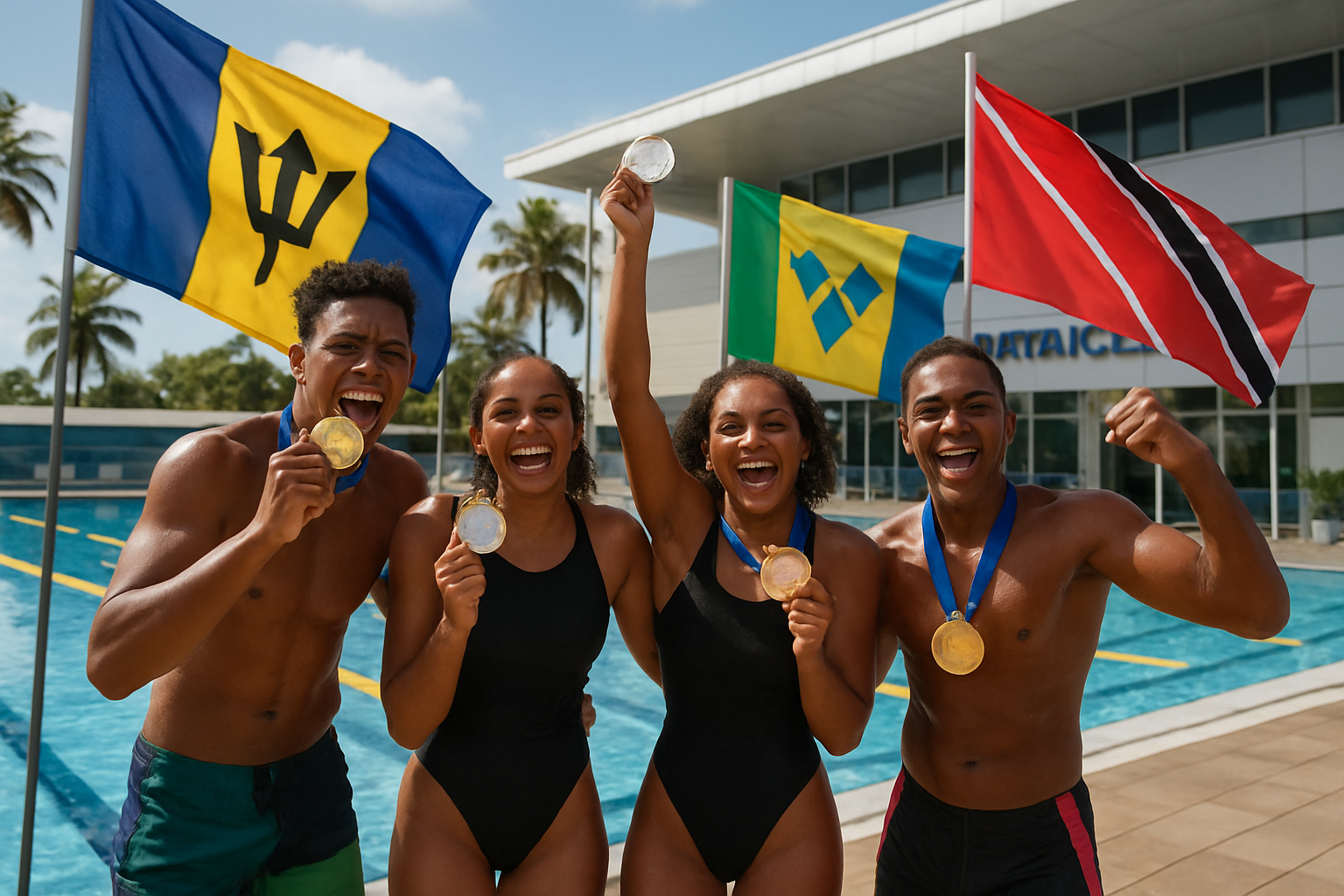
Caribbean swimming reached new heights at the 39th CARIFTA Aquatic Championships in Martinique, with Barbados setting a new national record with their largest-ever medal haul while Saint Vincent and the Grenadines and Trinidad and Tobago celebrated breakthrough performances that signal the region's growing aquatic dominance.
The championships, held from April 3-8, 2026, at the Pierre Samot Community Aquatic Centre in Le Lamentin, Martinique, witnessed extraordinary achievements across multiple Caribbean nations, with performances that exceeded all expectations and established new benchmarks for regional swimming excellence.
Barbados Makes History
Barbados emerged as the standout nation, achieving what officials described as a "record medal haul" that surpassed all previous achievements at the regional championships. The team's return to Grantley Adams International Airport on April 9 was met with jubilant celebrations, as the largest-ever Barbados contingent of 70 athletes and coaches delivered performances that exceeded the nation's 2025 tally of 14 medals.
The success built on a foundation of systematic investment and preparation, including the launch of a junior national training squad in February 2025 and a significant $50 million sports infrastructure investment announced by Minister Charles Griffith. Under the guidance of head coach Desiree Gamble, a former national high jump record holder, the team demonstrated the effectiveness of sustained coaching development and strategic planning.
"This achievement represents years of dedicated preparation and investment in our young athletes. The results we've seen in Martinique demonstrate that systematic development and proper coaching support can elevate Caribbean swimming to world-class levels."
— Head Coach Desiree Gamble
Saint Vincent and the Grenadines Breakthrough
Saint Vincent and the Grenadines celebrated a historic achievement with swimmer Kione Deshong capturing two medals at the championships. Deshong secured silver in the 200-meter breaststroke and bronze in the 100-meter breaststroke, marking significant milestones for the nation's aquatic program.
According to a press release from the St. Vincent and the Grenadines Swimming Federation (SVGSF), Deshong's performances represented breakthrough achievements that position the nation as an emerging force in Caribbean swimming. The medals come as part of a broader regional renaissance in aquatic sports, with smaller Caribbean nations increasingly challenging traditional powerhouses through strategic development programs.
Trinidad and Tobago's Strategic Approach
Trinidad and Tobago's performance at the championships reflected a systematic approach to ending a 16-year title drought in certain age categories. The nation sent a 31-member swimming team under head coach Deron 'Rocky' Samlalsingh, with assistant coaches Hazely Haynes, Sharntelle McClean, and Mark Riva providing comprehensive technical support.
Shawn Pouchet, President of the Aquatics Sports Association of Trinidad and Tobago (ASATT), emphasized the organization's commitment to working directly with the swimmers to identify development opportunities and continued support pathways. The team secured third place overall with 59 medals, representing a substantial improvement from previous years.
"We will be engaging directly with the swimmers who were part of the CARIFTA Aquatics team to see what can help to help them develop further. This championship has shown the potential our athletes have when given proper support and preparation."
— Shawn Pouchet, ASATT President
Regional Impact and Significance
The 39th CARIFTA Aquatic Championships demonstrated the continuing evolution of Caribbean athletics beyond traditional sprint dominance into comprehensive aquatic excellence. The success of multiple Caribbean nations reflects broader trends in regional sports development, including increased infrastructure investment, enhanced coaching education, and systematic youth development programs.
The championships served as a crucial pathway for young Caribbean athletes seeking senior international competition opportunities while maintaining cultural connections and regional sporting excellence. The performances position athletes favorably for future Commonwealth Games and potential Olympic development programs.
Infrastructure and Investment Success
The exceptional results across Caribbean nations highlighted the effectiveness of strategic infrastructure investments and coaching development. Barbados's success, in particular, demonstrated how sustained investment in facilities, coaching education, and athlete development programs can yield transformational results at the regional level.
The championships occurred within a broader context of Caribbean athletic renaissance, supported by organizations like Afreximbank, which increased its investment in regional development to $5 billion. This financial backing, combined with systematic coaching approaches that blend modern training methodologies with Caribbean athletic traditions, provides a sustainable foundation for continued international competitiveness.
Looking Ahead
The unprecedented success at the 39th CARIFTA Aquatic Championships positions Caribbean swimming for continued growth and international recognition. Athletes who excelled in Martinique are now positioned to compete at senior international levels, including upcoming Commonwealth Games and potential Olympic development pathways.
The systematic approach demonstrated by participating nations—combining modern training methodologies, enhanced sports science support, and comprehensive athlete development—provides a template for sustainable athletic excellence that other Caribbean nations can adapt and implement.
As Caribbean swimming continues its evolution from regional competition to international recognition, the 39th CARIFTA Aquatic Championships will be remembered as a watershed moment when multiple nations achieved breakthrough performances that established new standards for aquatic excellence in the region.
The championships concluded on April 8, but their impact resonates far beyond the pool deck in Martinique, inspiring a new generation of Caribbean swimmers and establishing the foundation for continued success at the highest levels of international competition.