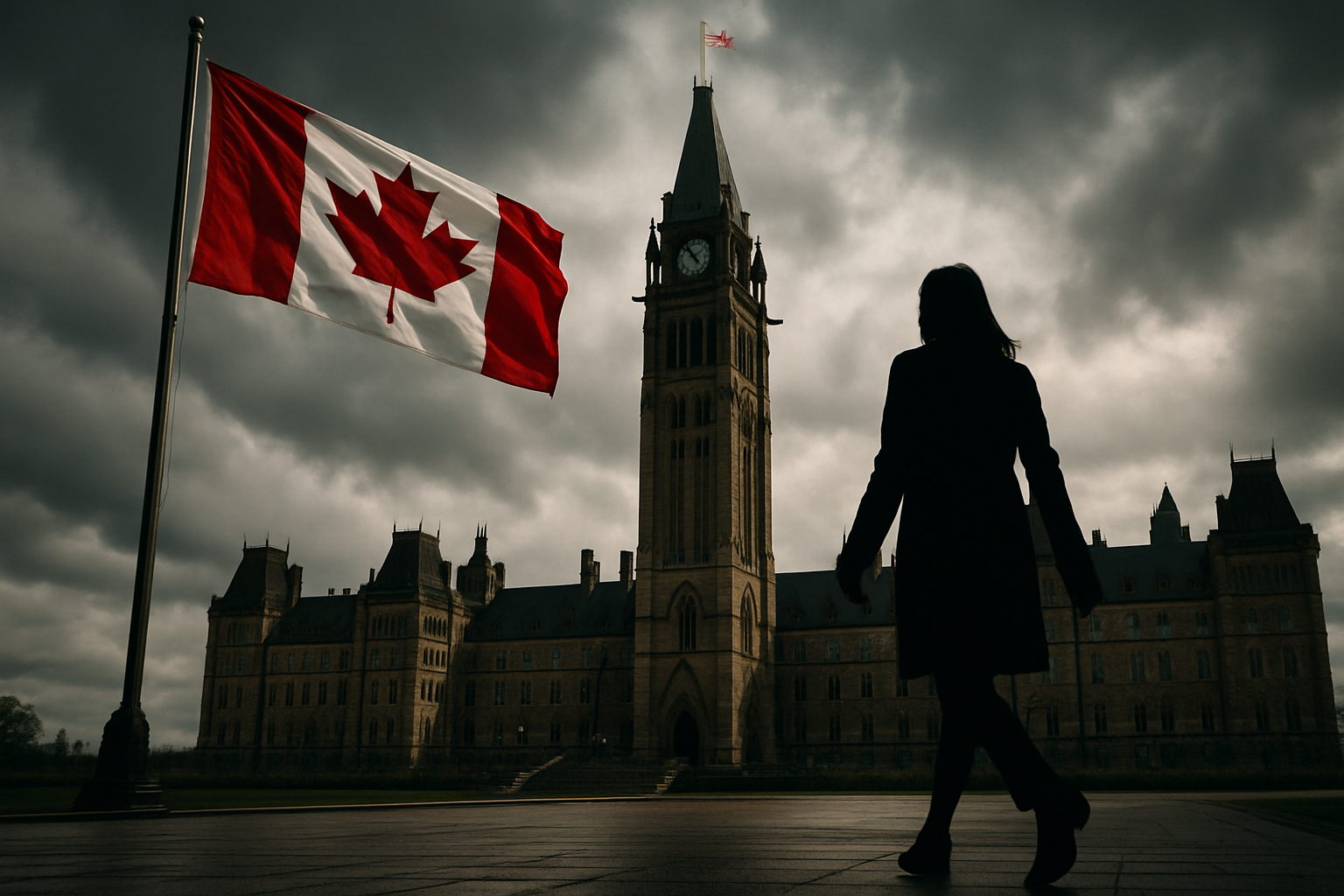
Ontario MP Marilyn Gladu crossed the floor to join the Liberal Party on Wednesday, becoming the fifth parliamentarian and fourth Conservative to defect since October, significantly strengthening Prime Minister Mark Carney's position as he approaches a potential majority government.
The strategic floor-crossing was formalized during a ceremony where Gladu was welcomed into the Liberal caucus by Prime Minister Carney and Artificial Intelligence Minister Evan Solomon, marking another pivotal moment in Canada's evolving parliamentary arithmetic. The defection leaves the Liberals just two seats short of a majority government, fundamentally altering the political landscape ahead of anticipated legislative battles.
Historical Pattern of Political Migration
Gladu's defection continues an unprecedented pattern of floor-crossings that has characterized Canadian federal politics since the April 2025 election. Most notably, Nunavut NDP MP Lori Idlout crossed to the Liberals in March 2026, citing Arctic sovereignty, Indigenous rights, and climate change as driving factors. This systematic migration of opposition MPs to the governing party represents one of the most significant parliamentary realignments in recent Canadian history.
The timing of these defections has proven strategically advantageous for Carney's government, which has faced mounting pressure to demonstrate strong leadership amid complex international challenges, including ongoing tensions with the United States under President Donald Trump's second term and the need to respond decisively to territorial sovereignty assertions.
Strategic Implications for Carney's Agenda
According to international observers, Carney has positioned the need for parliamentary stability as essential for dealing with what he characterizes as unprecedented external pressures, particularly regarding U.S. trade measures and Arctic sovereignty challenges. The Prime Minister has consistently argued that effective governance of Canada's international relationships requires a stable parliamentary majority.
"A Canadian opposition legislator defected to the ruling Liberal Party on Wednesday, leaving Prime Minister Mark Carney on the verge of a parliamentary majority that would make it easier to push through his agenda."
— South China Morning Post Analysis
The approaching majority would eliminate the Liberals' dependence on opposition support for key legislation, providing Carney with unprecedented authority to advance his government's priorities. This includes significant initiatives such as the historic $35 billion Arctic defense investment announced in March 2026, comprehensive immigration reform following the Auditor General's damning report on international student program fraud, and ambitious climate adaptation measures.
Opposition Response and Political Dynamics
The Conservative opposition, under leader Pierre Poilievre, faces mounting challenges as its parliamentary influence diminishes with each defection. Poilievre's party has maintained strong polling leads in public opinion surveys, emphasizing "common sense conservatism" and focusing on kitchen table issues like housing costs, inflation, and taxation. However, the systematic loss of sitting MPs to the governing party raises questions about internal party unity and message discipline.
The defections occur during a period when Canadian political institutions are navigating complex federal-provincial tensions, including Alberta's demands for constitutional reform regarding judicial appointments and ongoing separatist pressures that emerged following controversial federal policies. These internal divisions have created opportunities for the Liberal government to present itself as the party of national unity and institutional stability.
International Context and Sovereignty Challenges
Gladu's floor-crossing takes place against the backdrop of intensifying international pressures that have dominated Canadian political discourse throughout 2026. The Trump administration's provocative comments about Canadian sovereignty, including references to Canada as a potential "51st state," have created a political environment where demonstrates of national unity carry heightened significance.
Carney's government has responded to these challenges through what officials describe as "middle power diplomacy" and "pragmatic engagement," including historic initiatives such as the Prime Minister's address to the Australian Parliament in March 2026 and coordinated responses to Arctic geopolitical pressures from both traditional adversaries and allies.
Parliamentary Arithmetic and Democratic Process
The mathematical reality of Canadian parliamentary democracy means that Gladu's defection brings the Liberals to within two seats of the 170 needed for a majority in the 338-seat House of Commons. This proximity to majority status provides the government with enhanced negotiating power even before reaching the threshold, as remaining opposition MPs must consider the diminishing influence of their parties in parliamentary affairs.
Democratic theorists note that Canada's Westminster system, with its emphasis on party discipline and confidence votes, makes floor-crossings particularly consequential. Unlike proportional representation systems where individual defections have minimal impact, the Westminster model amplifies the significance of parliamentary arithmetic changes, potentially altering government stability and policy implementation capacity.
Historical Precedent and Future Implications
Political historians observe that systematic floor-crossings of this magnitude are relatively rare in Canadian federal politics, making the current period particularly noteworthy for understanding democratic institutions under pressure. Previous examples of significant parliamentary realignments, such as the formation of the Bloc Québécois or the Reform Party's emergence, typically involved new party formations rather than migration to existing governing parties.
The pattern established since October 2025 suggests that individual MPs are making calculated decisions based on constituency interests, policy alignment, and assessment of where they can most effectively represent their voters. This trend reflects broader changes in Canadian political culture, where traditional party loyalty increasingly competes with other considerations in parliamentary decision-making.
Regional and Demographic Considerations
Gladu's decision as an Ontario MP reflects broader regional dynamics in Canadian federal politics, where the Liberal Party has maintained strong representation in Canada's most populous province despite facing challenges in Western provinces. The concentration of Liberal floor-crossing gains in Central Canada and the Arctic reinforces existing regional political patterns while highlighting the party's appeal in areas where federal spending and international cooperation are viewed favorably.
The demographic profile of MPs choosing to join the Liberal caucus also suggests strategic calculations about policy priorities and government effectiveness. Many of the defecting parliamentarians have cited specific policy areas—Arctic sovereignty, Indigenous rights, climate action, international cooperation—where they view the Liberal government as better positioned to deliver results.
As Canada continues to navigate complex domestic and international challenges, Gladu's floor-crossing represents both a tactical victory for the Carney government and a broader indicator of shifting political loyalties in Canadian federal politics. The approaching majority threshold promises to reshape parliamentary dynamics significantly, potentially defining the remainder of the current parliamentary session and influencing strategies ahead of the next federal election.