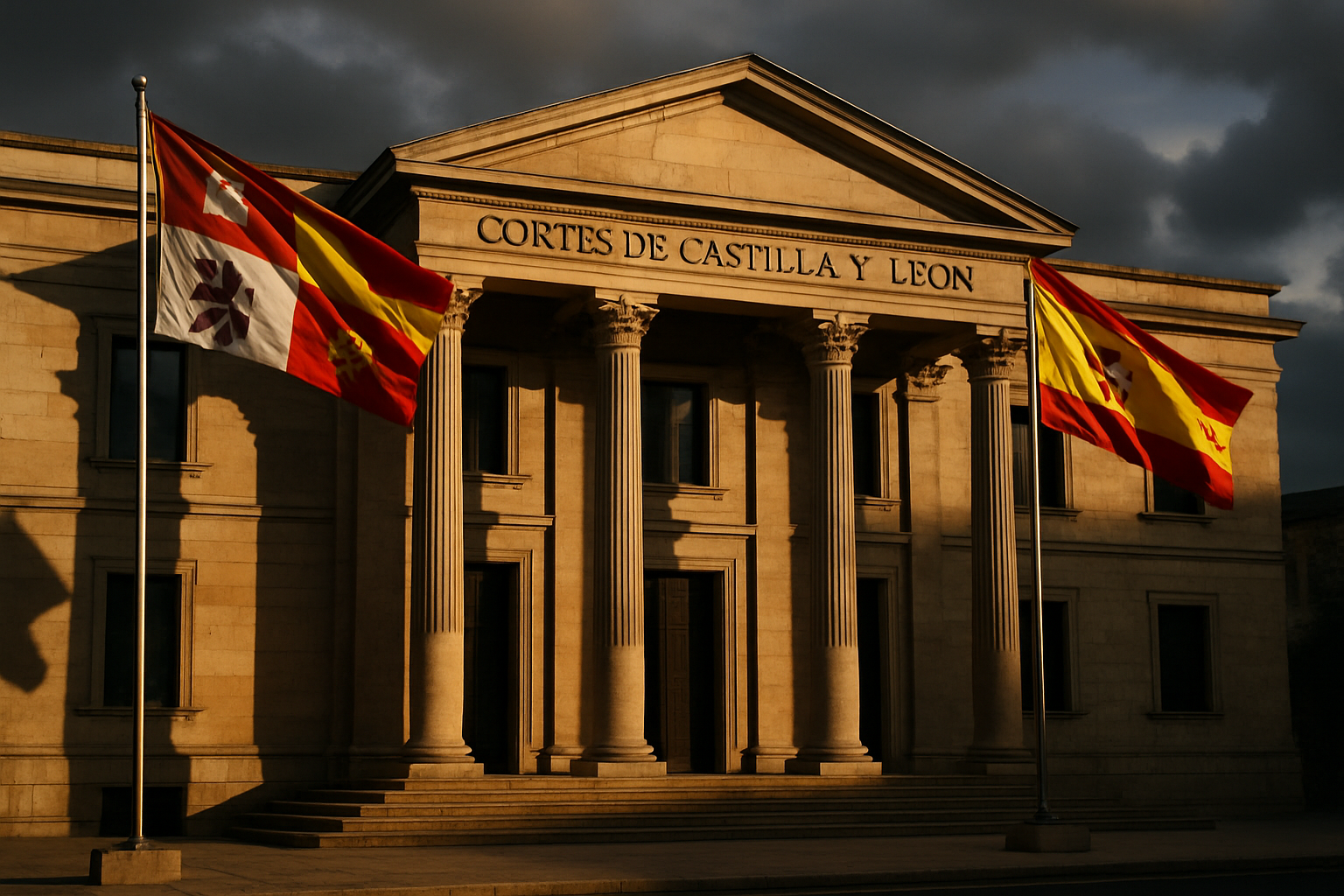
The Popular Party (PP) has won the Castilla y León regional elections held on March 15, 2026, but remains dependent on far-right Vox to form a governing coalition, highlighting the continued challenges facing Spanish conservative politics in managing extremist partners.
Alfonso Fernández Mañueco's PP secured 33 seats in the regional parliament, gaining two more than in the previous 2022 elections. However, this falls short of the absolute majority needed to govern alone in the 81-seat Cortes de Castilla y León, requiring continued collaboration with Vox, which secured 14 seats after gaining one additional representative.
Electoral Results and Coalition Mathematics
The election results demonstrate a slight consolidation of right-wing power in Spain's largest autonomous community by land area. The PP-Vox coalition now commands 47 seats, providing a comfortable governing majority. However, the narrow gains expose the limitations of President Mañueco's strategy to reduce dependence on the far-right party.
The Socialist Party (PSOE) improved its position significantly, gaining two seats to reach 30 representatives, marking their best performance in recent years despite remaining in opposition. This represents a notable recovery for the socialists after devastating defeats in other autonomous communities, including Extremadura and Aragón.
"The socialists have managed to stop their collapse by capturing two seats from Soria Ya in the province where [socialist mayor] Martínez governs,"
— Election Analysis, El Español
Other parties experienced mixed fortunes. Unión del Pueblo Leonés (UPL) maintained its three parliamentary seats, while Soria Ya suffered losses, dropping from three to just one seat. The regionalist party Por Ávila retained its single representative.
Vox's Enhanced Position
Despite not meeting pre-election expectations that suggested significant gains, Vox has strengthened its negotiating position within the conservative coalition. The party's growth from 13 to 14 seats, while modest, comes at a crucial time when similar far-right movements across Europe are experiencing unprecedented success.
The result mirrors broader patterns seen in other Spanish regions, where Vox has emerged as an essential coalition partner for the PP. This dependence has created persistent tensions, particularly visible in the stalled negotiations in Extremadura and Aragón, where PP-Vox coalition talks have faced significant obstacles.
National Political Implications
The Castilla y León results carry significant implications for national Spanish politics and PP leader Alberto Núñez Feijóo's strategy. The election was seen as a test of whether the PP could reduce its reliance on Vox by expanding its own voter base – a strategy that has shown limited success.
Political tensions between the conservative allies have escalated in recent months, with Vox leader Santiago Abascal openly criticizing PP national leadership over governance failures in other regions. These disagreements have highlighted the challenges of managing coalition relationships with far-right parties that maintain fundamentally different approaches to key policy areas.
The continued PP-Vox dependence reflects a broader European trend where traditional conservative parties find themselves reliant on far-right support to maintain power, often at the cost of ideological compromise and political stability.
Regional Governance Challenges
For President Mañueco, the election results present both opportunities and constraints. While maintaining power for another term, he faces the challenge of managing an enhanced Vox presence that will likely demand greater influence over regional policy.
The PP's victory ensures continuity in regional governance, potentially extending conservative rule in Castilla y León to four decades if the coalition proves durable. However, the persistent dependence on Vox support limits Mañueco's autonomy and could complicate efforts to appeal to more moderate voters.
Key policy areas likely to see continued coalition tensions include immigration, cultural policies, and EU relations – all areas where Vox maintains positions significantly to the right of the PP mainstream.
Socialist Recovery and Opposition Strategy
The PSOE's improved performance in Castilla y León provides some relief for the party after a series of regional electoral defeats. The two-seat gain demonstrates the party's ability to remain competitive in traditionally conservative regions, particularly in areas where local Socialist mayors have maintained strong support.
The Socialist improvement came primarily at the expense of Soria Ya, the regionalist party that has seen its support base eroded by the larger parties. This suggests that voters may be consolidating around the main political forces rather than supporting smaller regional movements.
Broader European Context
The Castilla y León results reflect broader patterns affecting European conservative politics, where traditional center-right parties increasingly rely on far-right coalition partners to maintain power. This phenomenon has been observed across multiple European Union member states, raising questions about the long-term stability of democratic governance.
The election's timing coincides with a period of significant political volatility across Europe, where far-right parties have achieved breakthrough results in traditionally stable democratic systems. Spain's experience with managing these coalition relationships is being closely watched by international observers as a potential model for other democracies facing similar challenges.
Looking Ahead
The election results set the stage for continued political tension within the Spanish right as both the PP and Vox attempt to balance their coalition partnership with their distinct political identities. For Mañueco, the challenge will be maintaining effective governance while managing the expectations of a strengthened junior partner.
The success or failure of the renewed PP-Vox coalition in Castilla y León will likely influence similar negotiations in other Spanish regions and could serve as a template for conservative coalition-building strategies in the run-up to national elections.
As Spain's largest autonomous community by territory, Castilla y León's political dynamics carry weight beyond regional boundaries, potentially influencing national political discourse and coalition strategies across the country's complex multi-party system.