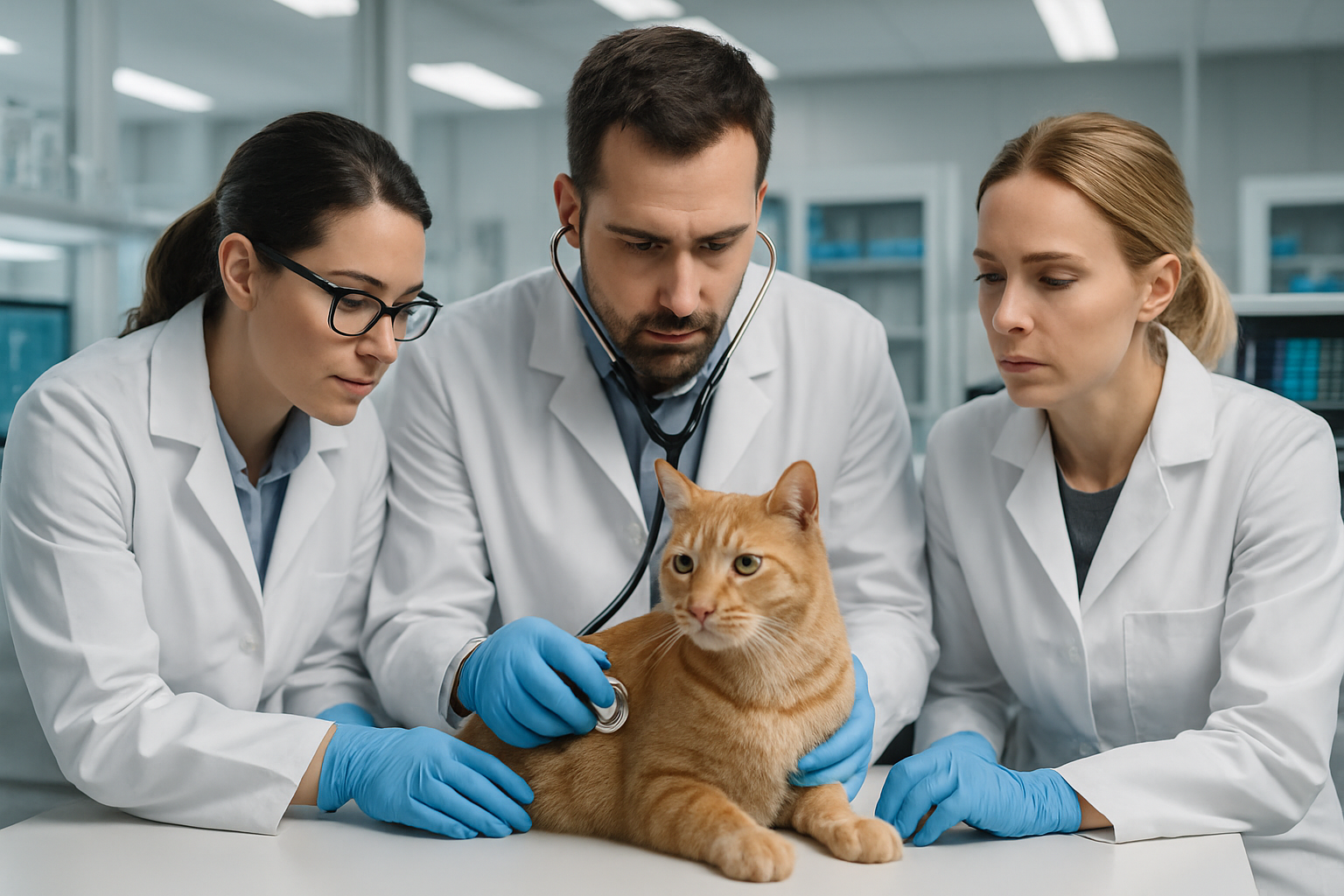
A landmark international study has revealed that cats may hold crucial genetic keys to advancing cancer treatment for both animals and humans, according to research conducted by teams from the University of Guelph in Ontario, Canada, and the Wellcome Sanger Institute near Cambridge, UK.
The world's first comprehensive large-scale investigation into various cancer types affecting domestic cats has led to the discovery of genetic changes that could significantly enhance treatment approaches across species lines. This breakthrough, reported by leading British and Canadian scientists, represents a transformative moment in the field of comparative oncology.
Pioneering Comparative Cancer Research
The collaborative study, conducted between the University of Guelph in Ontario Province and the Wellcome Sanger Institute - a leading global genomic research center - analyzed cancer patterns in felines to identify genetic mutations that parallel those found in human malignancies. This research builds upon previous findings from Austrian researchers who in February 2026 discovered a critical gene mutation present in over 50% of cat tumors that also appears in aggressive human breast cancer cases with poor prognosis.
The study demonstrates the remarkable genetic similarities between feline and human cancer pathways, making cats ideal natural models for cancer research. Unlike laboratory mice with artificially induced cancers, cats develop cancer naturally in ways that mirror human disease progression, providing researchers with authentic real-world cancer models.
"This breakthrough demonstrates the potential of comparative oncology where feline cancer research directly benefits human medicine development," said researchers involved in the international collaboration.
— International Research Team, University of Guelph and Wellcome Sanger Institute
The Promise of Cross-Species Treatment
The research reveals that genetic similarities between cats and humans in cancer development allow for cross-species treatment testing, potentially accelerating therapeutic advances for multiple cancer types affecting both species. This approach represents a significant shift toward ethical cancer research where veterinary patients benefit from experimental treatments while simultaneously contributing to human medical knowledge advancement.
The findings suggest that treatments developed for feline cancers could be rapidly adapted for human use, and vice versa, creating a dual-benefit research model that addresses the medical needs of both companion animals and their human families.
Building on Recent Breakthrough Discoveries
This latest research complements a series of remarkable cancer research advances documented throughout February 2026. Previous studies have shown that cats naturally develop cancer through mechanisms closely resembling human disease processes, making them invaluable partners in understanding tumor biology and treatment resistance.
The research occurs within the broader context of what experts are calling the "therapeutic revolution of 2026," which has seen unprecedented international cooperation in healthcare innovation despite funding challenges facing traditional global health organizations.
Recent breakthroughs in comparative oncology have included Costa Rican veterinary oncology advances where animals now receive radiation therapy and chemotherapy previously reserved for human medicine. Dr. Manuela Mora at the Center for Veterinary Oncology and Radiotherapy noted that "cancer is no longer an immediate death sentence for animals," with significant life prolongation and quality improvements being achieved.
Implications for Treatment Development
The comparative oncology approach demonstrated by this research could dramatically accelerate treatment development timelines. Traditional cancer drug development often takes decades from laboratory to clinic, but insights gained from naturally occurring feline cancers may help researchers identify promising therapeutic targets more rapidly.
The study's findings are particularly significant because they address one of cancer medicine's greatest challenges: treatment resistance. By observing how cancers develop and respond to treatments in cats, researchers can gain insights into preventing the development of drug-resistant tumor types that have historically limited treatment success rates.
International Cooperation in Medical Research
The collaboration between Canadian and British institutions exemplifies the growing trend of international partnerships driving medical innovation through peer-to-peer knowledge sharing. This distributed cooperation model is proving particularly effective as it allows for flexible, culturally responsive approaches while maintaining evidence-based medical standards.
The research represents a convergence of advanced genetic analysis techniques, international scientific collaboration, and ethical research practices that benefit multiple species simultaneously. The Wellcome Sanger Institute's expertise in genomic analysis combined with the University of Guelph's veterinary research capabilities has created a powerful partnership for advancing cancer understanding.
Looking Toward Clinical Applications
While the research represents a significant scientific breakthrough, translation into clinical practice will require continued collaboration between veterinary and human medical communities. The findings provide a foundation for developing new treatment protocols that could benefit millions of cancer patients across species.
The study contributes to a broader shift in medical research toward prevention-first healthcare strategies, precision medicine approaches, and international cooperation models that are transforming healthcare delivery globally. Economic analyses suggest that such collaborative approaches offer substantial cost reductions through shared research investments while achieving superior outcomes for both animal and human patients.
As research continues, the partnership between the University of Guelph and Wellcome Sanger Institute serves as a model for future international collaboration in comparative medicine, demonstrating that breakthrough discoveries often emerge from bridging traditional academic and species boundaries.