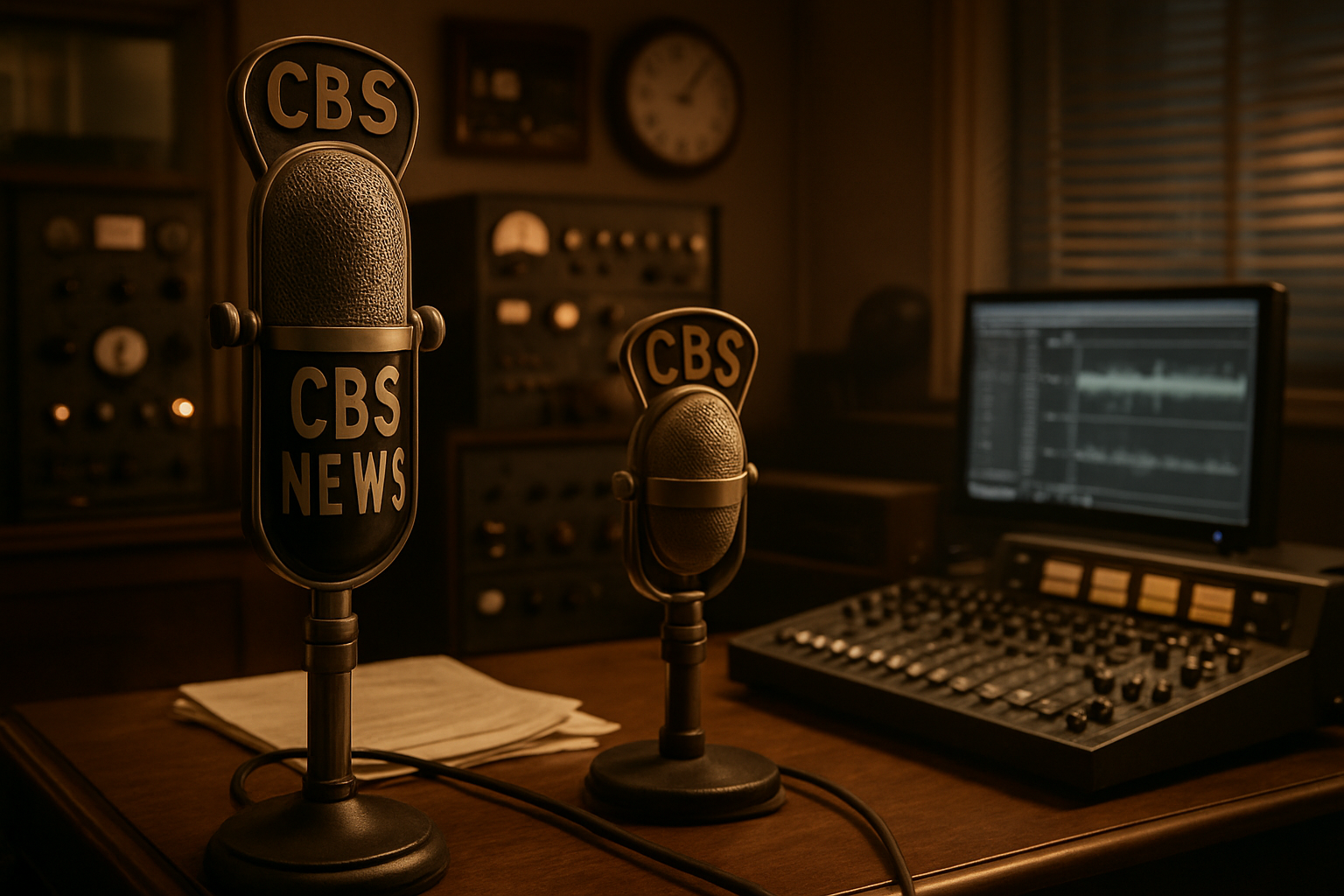
CBS News Radio, one of America's most storied broadcasting institutions, will officially cease operations on May 22, 2026, ending nearly a century of delivering news to hundreds of radio stations across the United States.
The closure, announced Friday by CBS News Editor-in-Chief Bari Weiss and President Tom Cibrowski, affects over 700 affiliated stations that have relied on the service's top-of-the-hour news roundups for decades. The decision comes as part of a broader round of layoffs at CBS News, marking the end of what began as a precursor to the entire CBS network itself.
A Century-Long Journey Comes to an End
When CBS News Radio began operations in September 1927, it represented the dawn of broadcast journalism in America. The service predated the CBS television network and served as the foundation upon which one of America's major broadcasting empires was built. For nearly 100 years, it has been the reliable voice providing Americans with breaking news, weather updates, and information during some of the nation's most pivotal moments.
According to multiple sources, the Greek media outlet Naftemporiki described it as "another casualty" in the ongoing transformation of the media landscape, while Romanian broadcaster Digi24 emphasized that the closure affects "over 700 affiliated stations" that have depended on CBS's hourly news services.
Historical Significance and Cultural Impact
The closure represents more than just the end of a business unit – it marks the conclusion of an era when radio served as America's primary source of immediate news. CBS News Radio's top-of-the-hour updates became a fixture of American life, providing consistency and reliability across nearly ten decades of dramatic social, political, and technological change.
NPR's coverage of the announcement noted the service's remarkable longevity, highlighting how it served as "a precursor to the entire CBS network" when it launched in September 1927. The service weathered the Great Depression, World War II, the Civil Rights Movement, the Cold War, and the digital revolution, adapting its format while maintaining its essential mission of delivering concise, authoritative news updates.
"This represents the end of an institution that has been part of the American media landscape for nearly a century."
— Media Industry Observer
Industry-Wide Transformation
The decision to close CBS News Radio reflects broader challenges facing traditional broadcasting in the digital age. The media industry has experienced unprecedented consolidation and cost-cutting measures as audiences increasingly turn to digital platforms and streaming services for news consumption. Local radio stations, once heavily dependent on network-provided news services, now face the challenge of either producing their own content or finding alternative sources for news programming.
The closure particularly impacts smaller market radio stations that may lack the resources to maintain full-scale news operations. These stations have relied on CBS News Radio's professional, network-quality programming to provide their listeners with comprehensive news coverage without the significant investment required for independent news gathering and production.
Global Perspective on American Broadcasting Changes
International media outlets have taken note of this significant development in American broadcasting. Greek news sources characterized the closure as part of a continuing trend affecting traditional media institutions, while Romanian coverage emphasized the scale of the impact on affiliated stations nationwide.
The decision comes at a time when media organizations worldwide are grappling with similar challenges, as digital transformation reshapes how news is produced, distributed, and consumed. The closure of such a long-standing institution serves as a stark reminder of the rapid pace of change in the global media landscape.
Impact on Local Communities
The ripple effects of CBS News Radio's closure will be felt most acutely in smaller markets and rural communities where local radio stations serve as primary sources of news and information. Many of these stations built their programming schedules around the reliable delivery of CBS's hourly news updates, creating a rhythm of information that listeners have come to expect over generations.
Station managers across the country now face the challenge of filling programming gaps while potentially increasing operational costs. Some may turn to other news services, while others might attempt to develop local news capabilities or reduce their news programming altogether.
The End of an Era
As CBS News Radio prepares for its final broadcast on May 22, 2026, it leaves behind a legacy that spans nearly the entire history of American broadcasting. From the early days of radio when families gathered around their sets to hear the latest news, through the golden age of broadcast journalism, to the digital era that ultimately led to its closure, CBS News Radio has been a constant presence in American life.
The service's closure represents more than just a corporate decision – it symbolizes the end of a particular model of journalism and information distribution that helped define American media for nearly a century. As the broadcasting industry continues to evolve in the digital age, the end of CBS News Radio marks a significant milestone in the ongoing transformation of how Americans receive their news.
The final broadcasts on May 22 will conclude a remarkable chapter in American broadcasting history, leaving behind decades of trusted journalism and a legacy that helped shape the nation's understanding of the world around them.