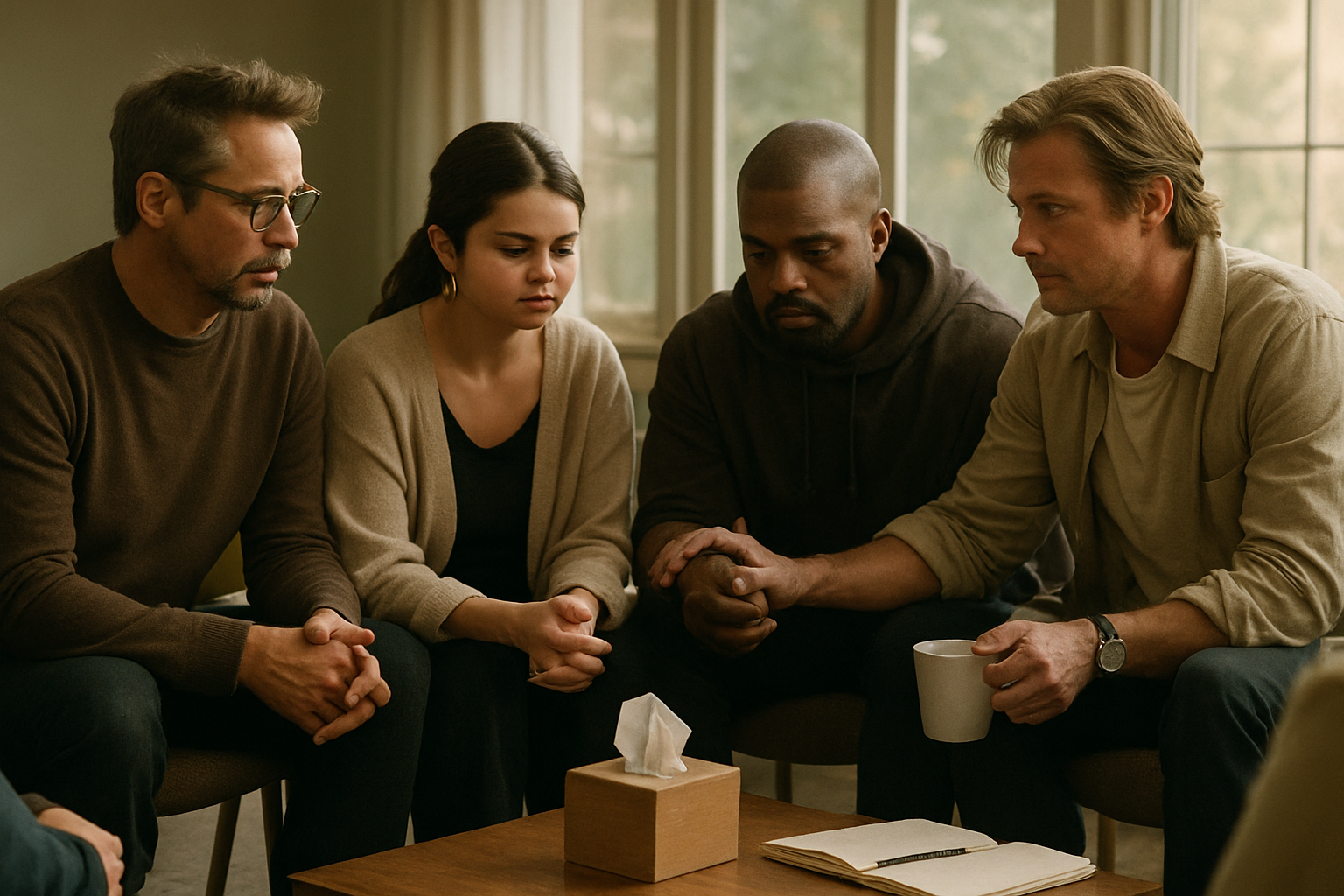
In an era where social media scrutiny and public pressure have intensified, celebrities are breaking traditional barriers of silence around personal struggles, transforming their darkest moments into beacons of hope for millions facing similar challenges.
March 2026 has emerged as a watershed moment for celebrity transparency about mental health, addiction, and family crises. From pop superstars to business leaders, public figures are demonstrating that recovery is not only possible but can become a powerful force for positive change in both their own lives and society at large.
The Spears Saga: Legal Battles and Recovery Journey
Britney Spears' ongoing struggles continue to capture global attention, with her recent legal issues serving as a stark reminder of the complex challenges facing celebrities in recovery. The 44-year-old pop icon was arrested in California on March 6, 2026, for allegedly driving under the influence of alcohol and drugs.
The arrest, which occurred just weeks after Spears completed a major $200 million music catalog sale to Primary Wave, highlights the ongoing difficulties she faces in navigating life after her controversial 13-year conservatorship ended in 2021. California Highway Patrol officers reported erratic driving behavior before conducting field sobriety tests that showed signs of impairment.
"This incident challenges the post-conservatorship independence narrative and raises important questions about support systems following court-appointed supervision."
— Legal Expert Analysis
Spears' case illustrates a broader pattern affecting celebrities: the transition from structured support to independent recovery management. Her temporary disappearance from Instagram following the arrest news demonstrates how public figures often retreat from digital spaces when facing personal crises, yet these platforms remain crucial for maintaining connection with supportive fan communities.
Nordic Honesty: Breaking Addiction Stigma
Norwegian artist and millionaire heiress Viktoria Reitan, 25, has emerged as an unexpected voice in addiction recovery, publicly sharing her six-month sobriety journey. Reitan's openness about her struggles represents a growing trend among Scandinavian celebrities who are normalizing conversations about substance abuse and mental health.
"I find it scary to share," Reitan admitted in a recent interview, highlighting the vulnerability required for public figures to discuss their personal battles. Her candor reflects the broader "Therapeutic Revolution of 2026" – a global shift toward prevention-first mental healthcare approaches that emphasize community support over crisis intervention.
This Nordic model of celebrity transparency contrasts sharply with traditional Hollywood approaches to addiction, where publicity teams historically managed such revelations as damage control rather than healing opportunities.
Business Leadership Under Pressure
The corporate world has also witnessed remarkable stories of personal resilience, exemplified by Rebecca Yazbek's journey in the Australian hospitality industry. When her husband, restaurant baron Alan, was arrested at a pro-Palestine rally, Yazbek found herself thrust into crisis management on multiple fronts.
Now taking control as one of Australia's few female CEOs in hospitality, Yazbek's story demonstrates how personal adversity can catalyze professional transformation. Her experience managing both family scandal and business survival offers a template for other leaders facing similar dual pressures.
"Your husband's been arrested" – those four words changed everything, but they also revealed inner strength I never knew I possessed."
— Rebecca Yazbek, CEO
The Digital Age Challenge
Celebrity struggles in 2026 cannot be separated from the broader context of digital wellness and social media pressure. Research shows that 96% of children aged 10-15 use social media platforms, with 70% experiencing harmful content exposure and over 50% facing cyberbullying.
For celebrities, these statistics are magnified exponentially. The constant scrutiny, viral criticism, and invasive commentary create unprecedented mental health challenges. As Olympic figure skater Ilia Malinin demonstrated during his Milano-Cortina 2026 gala performance, even elite athletes are using their platforms to highlight the "unforgiving glare of the spotlight" and its impact on youth mental health.
Recovery as Advocacy
What distinguishes the current wave of celebrity openness is its evolution from confession to advocacy. Nicole "Snooki" Polizzi's February 2026 cervical cancer diagnosis revelation exemplifies this shift. Rather than simply sharing her struggle, she transformed her platform into a public health campaign.
"I have to keep fighting," Polizzi declared while emphasizing her diagnosis as an "urgent call not to postpone the Pap smear." Her approach demonstrates how celebrities are increasingly viewing their personal battles as opportunities to serve broader social causes.
This advocacy model extends beyond health issues to encompass social justice, environmental concerns, and mental health awareness. Celebrities are recognizing that their influence comes with responsibility – not just to entertain, but to contribute meaningfully to societal conversations about difficult topics.
The Support System Revolution
Behind many celebrity recovery stories lies a fundamental shift in how support systems operate. The traditional model of crisis management – characterized by publicity teams, legal intervention, and media silence – is giving way to more holistic approaches that prioritize genuine healing over reputation management.
Mental health professionals working with celebrities report increased demand for authentic therapeutic relationships rather than quick fixes. This aligns with the broader "wellness paradox" recognition: constant self-improvement pursuit can create psychological exhaustion rather than genuine healing.
The most successful celebrity recovery stories now emphasize community connection, professional support, and authentic expression over performative wellness or toxic positivity. This approach mirrors successful prevention-first healthcare strategies being implemented globally.
International Perspectives on Celebrity Mental Health
Different cultural contexts are producing varied approaches to celebrity mental health support. Nordic countries lead in transparency and community-based care, while Mediterranean cultures emphasize family integration in recovery processes. Asian societies are increasingly balancing traditional privacy expectations with modern mental health advocacy.
These cultural variations provide valuable insights into what works across different social contexts. The most effective approaches combine evidence-based therapeutic practices with local cultural wisdom, avoiding one-size-fits-all solutions that may not resonate with diverse populations.
The Economic Impact of Celebrity Recovery
Celebrity recovery stories are also reshaping entertainment economics. Audiences increasingly value authenticity over perfection, creating market incentives for genuine rather than manufactured public personas. This shift is reflected in entertainment content, brand partnerships, and fan engagement strategies.
Recovery narratives can actually enhance rather than damage celebrity brands when handled authentically. Fans report feeling more connected to public figures who demonstrate vulnerability and growth, challenging traditional assumptions about celebrity image management.
Future Implications
The celebrity recovery movement of 2026 represents more than individual healing journeys – it signals a broader cultural evolution toward mental health acceptance and support system innovation. As public figures continue to normalize conversations about addiction, family crises, and personal struggles, they create permission for millions of others to seek help.
This trend aligns with international healthcare developments emphasizing prevention over crisis response, community support over individual pathology, and authentic connection over performative wellness. The celebrities leading this charge are not just healing themselves; they're helping heal a culture that has long stigmatized mental health challenges.
The stories emerging from this movement demonstrate that recovery is not about returning to a previous state, but about transformation into something stronger, more authentic, and more connected to both personal values and community wellbeing. In an age of increasing social isolation and digital pressure, celebrity recovery narratives offer roadmaps for resilience that extend far beyond entertainment industry boundaries.
As we continue to witness these stories unfold, one thing becomes clear: the celebrities who emerge strongest from their struggles are those who transform personal adversity into collective healing, using their platforms not just to entertain, but to inspire genuine human connection and growth.