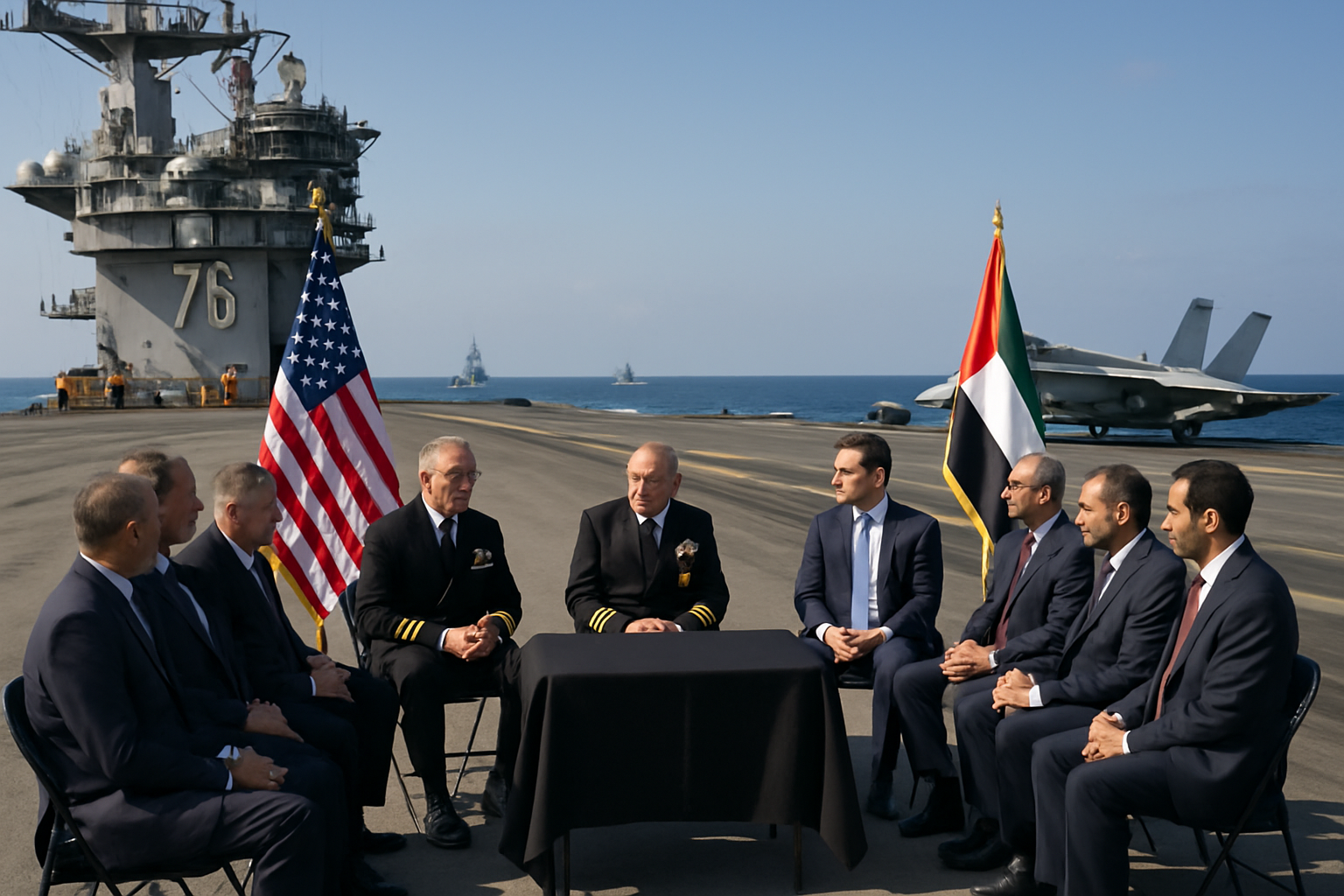
Admiral Brad Cooper, commander of US Central Command, visited the aircraft carrier USS Abraham Lincoln on Saturday during its strategic deployment in the Arabian Sea, meeting with crew members alongside senior US diplomatic officials as regional tensions continue to shape naval operations in critical international waters.
The high-profile visit brought together Cooper with US Special Envoy Steve Witkoff and Jared Kushner aboard the nuclear-powered carrier, underscoring the intersection of military readiness and diplomatic engagement in one of the world's most strategically important maritime regions. According to a CENTCOM statement, the meeting demonstrated "U.S. military readiness and strength" during a period of heightened regional tensions.
Military Leadership and Diplomatic Coordination
"I join the American people in expressing our incredible pride in the Sailors and Marines of the Abraham Lincoln Carrier Strike Group," Cooper stated during the visit. "Their dedication to the mission and professionalism are on full display here in the Middle East as they demonstrate U.S. military readiness and strength."
The gathering aboard the carrier represented a convergence of military command authority and diplomatic initiatives, with Witkoff serving as a key figure in ongoing regional diplomatic efforts. The presence of both military and civilian leadership aboard the USS Abraham Lincoln highlighted the coordinated approach to addressing complex security challenges in the Middle East.
During the visit, Witkoff spoke with the pilot who shot down an Iranian drone earlier in the week after it approached the carrier without clear intent. This incident, which occurred in the Arabian Sea approximately 800 kilometers from Iran's coast, exemplifies the ongoing maritime tensions that define current naval operations in the region.
Strategic Maritime Positioning
The USS Abraham Lincoln's deployment in the Arabian Sea represents a critical component of U.S. naval strategy in the Middle East. The carrier strike group's presence serves multiple functions, including deterrence operations, freedom of navigation missions, and support for diplomatic initiatives throughout the region.
The timing of Cooper's visit coincides with significant diplomatic developments, including ongoing nuclear negotiations between the United States and Iran. These talks, mediated through neutral parties, represent some of the most consequential diplomatic engagement in the region since the collapse of the Joint Comprehensive Plan of Action in 2018.
Naval operations in the Arabian Sea have taken on increased significance as regional powers navigate complex political and security challenges. The carrier's position allows for rapid response capabilities while maintaining a stabilizing presence in international waters critical to global energy supplies and trade routes.
Regional Security Dynamics
The visit occurred against the backdrop of evolving security dynamics throughout the Middle East. Recent incidents involving Iranian military assets and U.S. naval forces have highlighted the delicate balance required to maintain maritime security while avoiding escalation.
The Arabian Sea serves as a crucial corridor for international shipping, with approximately 40% of global oil transit passing through regional waterways including the Strait of Hormuz. The presence of major naval assets like the USS Abraham Lincoln ensures continued freedom of navigation for commercial vessels while providing security guarantees for regional partners.
Cooper's engagement with carrier personnel also emphasized the human element of naval operations, recognizing the service members who maintain readiness during extended deployments in challenging operational environments. The admiral's comments reflected appreciation for the sustained commitment required for maritime security operations.
Diplomatic Integration
The inclusion of diplomatic officials in the carrier visit demonstrates the integrated approach to regional challenges that combines military capabilities with diplomatic solutions. Witkoff's presence aboard the Abraham Lincoln signaled the coordination between defense and diplomatic establishments in addressing regional security concerns.
This type of high-level coordination reflects broader strategic objectives that seek to balance deterrence with engagement, ensuring that military readiness supports rather than undermines diplomatic initiatives. The meeting aboard the carrier provided an opportunity for real-time coordination between military commanders and diplomatic representatives.
Regional observers note that such visits serve multiple audiences, communicating U.S. commitment to allies while signaling resolve to potential adversaries. The visible demonstration of military-diplomatic cooperation aboard a nuclear-powered aircraft carrier sends clear messages about American capabilities and intentions in the region.
Operational Significance
The USS Abraham Lincoln Carrier Strike Group's deployment represents one of the most significant U.S. naval presence operations in recent months. The nuclear-powered carrier provides unmatched operational flexibility, enabling sustained operations far from home ports while maintaining full combat readiness.
The carrier's air wing includes advanced F-35C Lightning II fighters, which have already demonstrated their capabilities in regional operations, including the recent intercept of Iranian unmanned aircraft systems. These incidents highlight both the technological superiority of U.S. naval aviation and the ongoing challenges of operating in contested maritime environments.
Naval operations in the Arabian Sea require constant vigilance and professional competence, as demonstrated by the crew's performance during recent security incidents. The carrier strike group maintains 24/7 readiness while supporting broader regional stability objectives through its visible presence and operational capabilities.
International Maritime Law
The operations of the USS Abraham Lincoln in the Arabian Sea occur within the framework of international maritime law, emphasizing freedom of navigation and the right of passage through international waters. These principles remain fundamental to global commerce and security, particularly in regions where multiple powers compete for influence.
The carrier's operations serve as a practical demonstration of commitment to maintaining open sea lanes and international legal frameworks that govern maritime activities. This commitment takes on particular importance in regions where some actors challenge established international norms regarding territorial waters and exclusive economic zones.
Professional naval operations, conducted in accordance with international law, provide stability and predictability for commercial shipping while maintaining the rights of all nations to navigate freely through international waters. The USS Abraham Lincoln's presence reinforces these principles through its operational conduct and adherence to established maritime protocols.
Future Implications
The convergence of military and diplomatic leadership aboard the USS Abraham Lincoln reflects evolving approaches to regional security challenges that require both deterrence and engagement. As diplomatic initiatives continue to develop, naval forces provide the security framework within which negotiations can proceed.
The success of integrated military-diplomatic approaches will depend on sustained coordination between defense and diplomatic establishments, ensuring that military capabilities support rather than complicate political solutions to regional challenges. The carrier visit demonstrated the practical implementation of such coordination at the highest levels of leadership.
Regional maritime security will continue to require sophisticated approaches that balance multiple objectives, including deterrence, alliance reassurance, and support for diplomatic initiatives. The USS Abraham Lincoln's deployment represents a model for how naval forces can contribute to comprehensive security strategies that address both military and political dimensions of regional challenges.