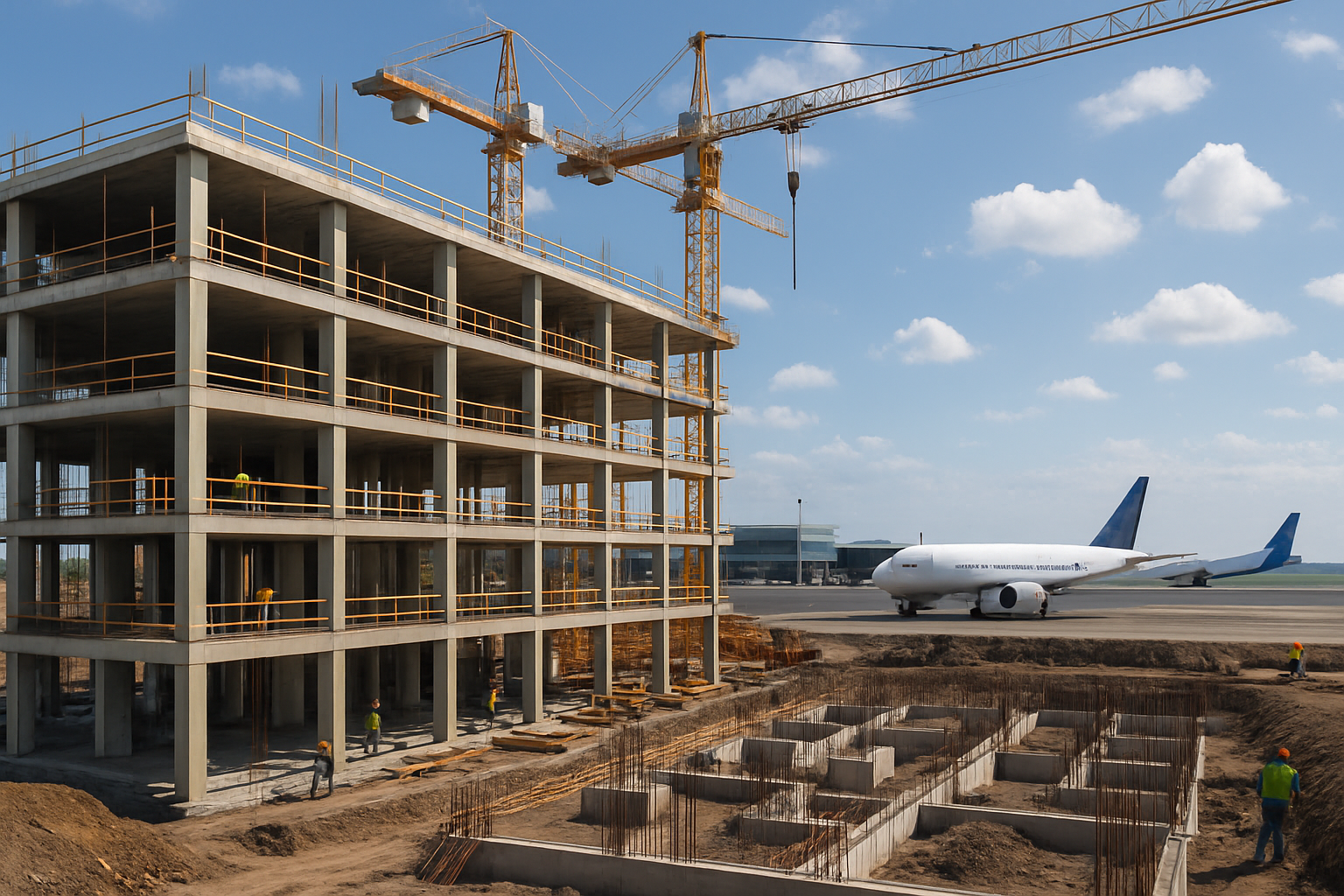
Central America is experiencing an unprecedented infrastructure renaissance, with El Salvador leading the charge by breaking ground on its first airport hotel at Monseñor Romero International Airport, while regional aviation networks expand dramatically to connect previously isolated markets.
The ceremonial first stone placement for the 150-room hotel facility represents more than symbolic progress—it embodies a region-wide transformation that extends from tourism infrastructure to transportation networks, fundamentally reshaping Central America's economic landscape in 2026.
El Salvador's Strategic Tourism Investment
The airport hotel project at El Salvador's main international gateway marks a pivotal moment in the country's tourism development strategy. The 150-room facility is designed to strengthen the nation's tourism infrastructure while serving both international visitors and business travelers entering through the country's primary air portal.
This investment aligns directly with President Nayib Bukele's broader economic vision, which has already encompassed major projects in Surf City and other tourism zones. The hotel development represents part of coordinated efforts to enhance service quality for visitors entering through the nation's principal aviation hub, creating a more seamless travel experience from arrival to accommodation.
"This project is designed to enhance the quality of services for visitors entering through our main air terminal, while improving hotel offerings for both tourists and business travelers."
— Ministry of Tourism, El Salvador
Regional Aviation Network Expansion
Simultaneously, the broader Central American region is witnessing a remarkable expansion in aviation connectivity. Sky High Dominicana's announcement of direct flights between Santo Domingo and Paramaribo, Suriname, beginning April 16, 2026, exemplifies the growing regional integration that extends beyond traditional Central American boundaries to encompass the broader Caribbean and South American markets.
This new route represents more than simple point-to-point connectivity—it establishes Santo Domingo as an enhanced regional hub providing improved connections to destinations throughout the Caribbean basin and extending into Central and North America. The service will enable travelers to move seamlessly between the Dominican Republic and Suriname without requiring complex multi-stop itineraries.
The route's strategic significance extends to both tourism and commerce, creating new opportunities for business travelers while opening previously difficult-to-reach destinations for leisure tourism. Industry analysts project this connectivity will generate substantial economic benefits for both nations while strengthening overall Caribbean regional integration.
Infrastructure Investment Context
These developments occur within a broader global infrastructure surge valued at over $570 billion, with Central America positioned as a key beneficiary of this unprecedented investment wave. The region's strategic location as a bridge between North and South America, combined with growing political stability and economic reforms, has attracted significant international attention from investors and development partners.
Historical context from recent infrastructure developments demonstrates the region's capacity for major project execution. The successful completion of transportation networks across Latin America, including Mexico's El Insurgente train project and Paraguay's advancing Bioceanic Bridge, provides templates and confidence for Central American initiatives.
El Salvador's airport hotel project benefits from lessons learned during previous infrastructure development cycles, incorporating modern construction techniques, environmental sustainability measures, and technology integration from the initial design phase. This represents an evolution from traditional infrastructure approaches toward comprehensive development that addresses multiple economic sectors simultaneously.
Economic Multiplier Effects
The infrastructure developments create substantial economic multiplier effects extending well beyond the immediate construction and hospitality sectors. The airport hotel will generate permanent employment in hospitality services while creating demand for supporting industries including food service, maintenance, security, and ground transportation.
Regional aviation connectivity improvements offer even broader economic implications. Enhanced air service typically generates increased business investment, facilitates international trade relationships, and creates opportunities for specialized industries requiring reliable transportation networks. Tourism sectors benefit disproportionately from improved connectivity, as accessible destinations consistently outperform isolated markets in visitor attraction and retention.
Construction employment during the hotel development phase will provide immediate economic benefits to local communities, while operational employment creates long-term economic stability. The facility's proximity to the international airport positions it to serve multiple market segments simultaneously, maximizing economic impact through diversified revenue streams.
Technology Integration and Sustainability
Modern Central American infrastructure projects increasingly incorporate sophisticated technology systems and environmental sustainability measures from the planning stage. The airport hotel development reflects this evolution, integrating smart building technologies, energy efficiency systems, and digital guest services that meet international hospitality standards while minimizing environmental impact.
Aviation infrastructure improvements similarly benefit from technological advancement. New route developments incorporate modern flight management systems, enhanced weather monitoring, and digital passenger processing that improve operational efficiency while reducing environmental impact per passenger mile.
These technological integrations position Central American infrastructure as competitive with global standards, essential for attracting international investment and maintaining relevance in an increasingly connected global economy. The region's embrace of modern technology represents strategic positioning for long-term economic competitiveness.
Regional Cooperation Models
The coordinated infrastructure development across Central America demonstrates evolution toward regional cooperation rather than purely national competition. Countries are increasingly recognizing that connectivity improvements benefit entire regions through enhanced trade relationships, shared tourism marketing opportunities, and coordinated economic development strategies.
Aviation route expansion exemplifies this cooperative approach. New connections between previously unlinked destinations create network effects that benefit multiple countries simultaneously, generating passenger traffic and economic activity across broader geographic areas than individual national initiatives.
This cooperative model builds upon successful infrastructure coordination in other global regions, including European transportation integration and Asian economic corridor development. Central America's adoption of collaborative infrastructure planning represents strategic maturation recognizing that regional prosperity requires coordinated rather than isolated development efforts.
Future Development Trajectory
Current infrastructure developments establish foundations for additional major projects anticipated throughout 2026 and beyond. El Salvador's success with the airport hotel project positions the country for expanded hospitality infrastructure development, while demonstrated aviation connectivity improvements create confidence for additional route expansions.
The broader Central American region benefits from growing international recognition as an emerging infrastructure development destination. Successful project execution creates positive precedents that facilitate additional investment attraction, creating virtuous cycles of infrastructure improvement and economic development.
Strategic infrastructure development in Central America aligns with global trends toward quality-focused tourism, sustainable development practices, and technology-integrated transportation networks. The region's positioning at this intersection creates opportunities for continued infrastructure leadership within Latin America while attracting international partnerships and investment.
March 2026 infrastructure developments in Central America represent more than isolated projects—they embody a regional transformation toward modern, connected, and sustainable economic development that could define the region's prosperity trajectory for decades ahead.