Central America is experiencing a remarkable tourism renaissance as destinations across the region implement comprehensive strategies to welcome unprecedented visitor numbers during the critical Easter holiday season, with Santa Marta, Colombia leading the charge with preparations for over 100,000 tourists.
Santa Marta's Unprecedented Easter Preparation
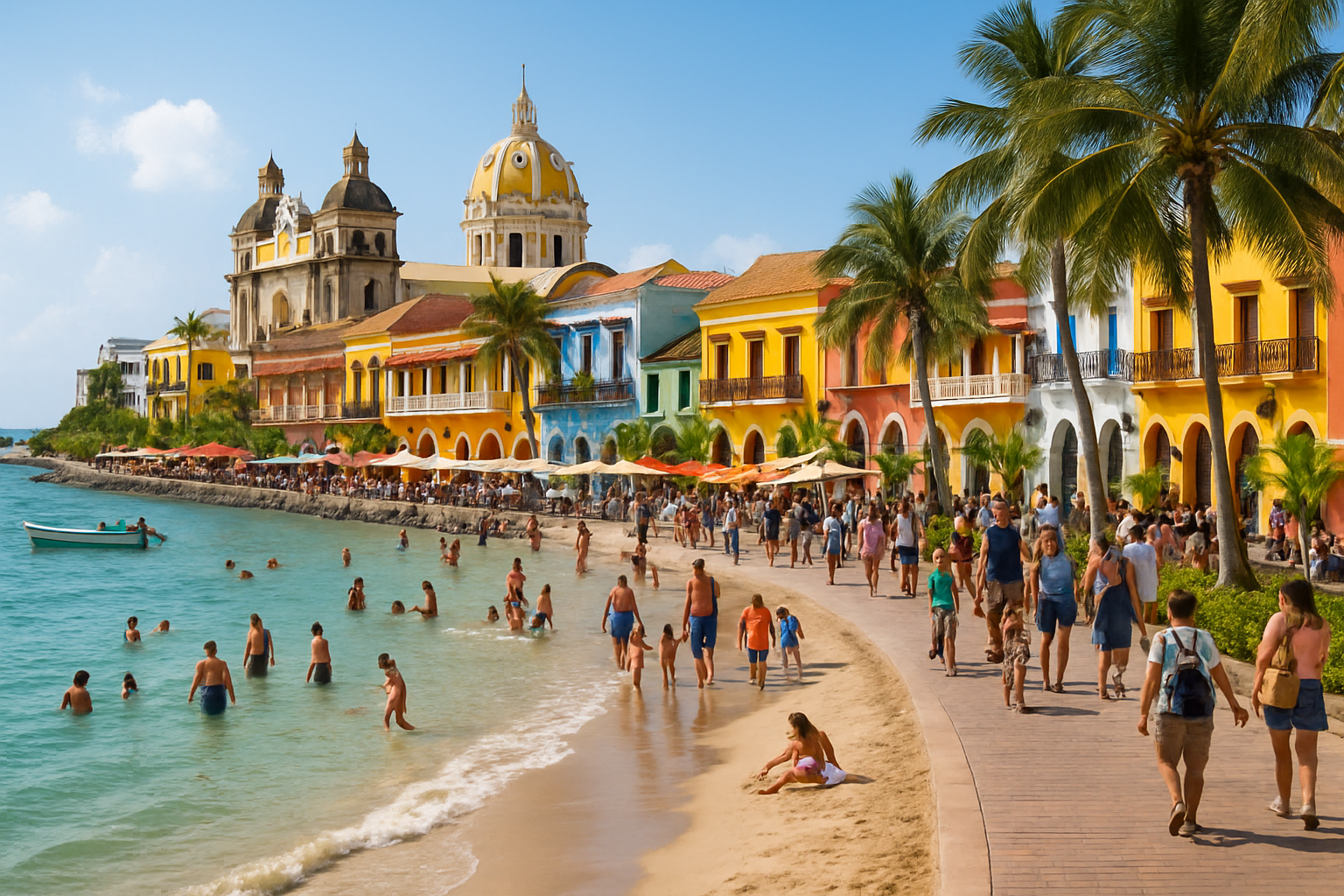
Colombia's historic coastal city of Santa Marta is mobilizing what officials describe as an "unprecedented deployment" in security, mobility, and tourist services as the destination prepares for its most ambitious holiday season yet. The city is expecting to host more than 100,000 tourists during Easter Week, representing a significant milestone for the Caribbean coastal region.
Local authorities have implemented a comprehensive operational framework encompassing enhanced security protocols, improved transportation infrastructure, and expanded tourist assistance services. This multifaceted approach reflects the broader transformation taking place across Central America, where destinations are shifting from volume-based to quality-focused tourism strategies.
"The city is activating an unprecedented deployment in security, mobility and tourist attention for Easter Week."
— Official statement from Santa Marta tourism authorities
El Salvador's Family-Friendly Tourism Leadership
El Salvador has achieved a significant milestone in regional tourism competitiveness with its Puerto de La Libertad Tourism Complex receiving the prestigious "Family Friendly" certification. The recognition was awarded by the Office of the First Lady, led by Gabriela de Bukele, and represents a strategic positioning of the destination as safe and suitable for families from both El Salvador and international markets.
The certification was presented by Marianna Montes, Head of International Affairs and Cooperation, and received by Eny Aguiñada, President of the Salvadoran Tourism Institute. This achievement builds on impressive tourism statistics, with El Salvador recording 4.1 million international tourists in 2025, of which 2.1 million visited the La Libertad complex specifically.
According to tourism projections, El Salvador expects to welcome 145,000 international visitors during Easter Week 2026, compared to 135,000 in 2025, representing a 7.4% increase driven by improved security conditions and strategic international promotion of attractions including #SurfCity and the Historic Center of San Salvador.
Costa Rica's Cultural Innovation Drive
Costa Rica is showcasing its commitment to cultural tourism innovation through the participation of visual artist Man Yu in Costa Rica Fashion Week 2026. As an ambassador for the COSTA RICA Essential Country Brand, Man Yu will present "Closet Humano Fashion Show," a groundbreaking stage production that transcends traditional runway presentations to become an artistic manifesto exploring themes of body, identity, and material transformation.
The project, part of the "20 años Man Yu" series, represents an interdisciplinary experience integrating contemporary performance and fashion design. Under the premise that "matter is not created, it is transformed into art," the work establishes itself as a space where art, fashion, and culture converge on a single stage, demonstrating Costa Rica's evolution beyond traditional eco-tourism into sophisticated cultural experiences.
Regional Tourism Recovery Context
These developments occur within the broader context of Central America's remarkable tourism recovery, which has outpaced global averages despite ongoing international challenges. The region has benefited from strategic positioning as a safe alternative to conflict-affected destinations, enhanced regional cooperation, and systematic infrastructure investment.
Recent data indicates that Central American destinations have implemented successful strategies combining cultural authenticity with modern infrastructure, community involvement with international marketing, and environmental sustainability with economic growth. This comprehensive approach has positioned the region as a template for quality-focused tourism development.
Technology and Quality Enhancement
The tourism transformation across Central America reflects broader industry trends toward technology integration and quality enhancement. Destinations are implementing sophisticated visitor management systems, digital marketing platforms, and real-time communication networks to ensure optimal visitor experiences while maintaining cultural authenticity.
El Salvador's systematic approach to tourism development includes comprehensive renovation programs, technological integration through platforms like SmartTicket.fun, and enhanced emergency response systems. This model demonstrates how smaller countries can achieve international competitiveness through strategic investment and systematic service quality improvement.
Economic Multiplier Effects
The tourism recovery is generating substantial economic multiplier effects extending beyond traditional hospitality services. Infrastructure improvements, cultural industry support, artisan networks, and year-round employment creation are benefiting entire communities across the region.
Costa Rica's integrated approach demonstrates how tourism can serve as a catalyst for broader economic development, supporting everything from marine conservation research to healthcare innovation and sustainable trade zone development. This comprehensive model positions tourism as a foundation for sustainable prosperity rather than merely a revenue source.
International Cooperation and Regional Integration
Central America's tourism success reflects enhanced regional cooperation, with destinations sharing best practices, coordinating marketing efforts, and developing multi-destination experiences that benefit the entire region. This collaborative approach contrasts with traditional competitive strategies and demonstrates the value of regional integration in building sustainable tourism economies.
The success factors consistently emerging across the region include cultural authenticity preservation, strategic infrastructure enhancement, meaningful community involvement, international cooperation, and adaptive management responding to evolving consumer preferences and global challenges.
Future Outlook
As Central America continues its tourism recovery, destinations are positioning themselves for long-term competitiveness through quality-focused development strategies. The emphasis on family-friendly services, cultural innovation, and community engagement represents a mature approach to tourism development that balances economic objectives with social responsibility and environmental sustainability.
The region's success during the current Easter season will serve as a crucial test for these new tourism management systems and establish precedents for future seasonal operations. With comprehensive preparation, international recognition, and strong visitor numbers projected, Central America appears well-positioned to maintain its momentum as a premier destination for authentic, safe, and culturally rich travel experiences.