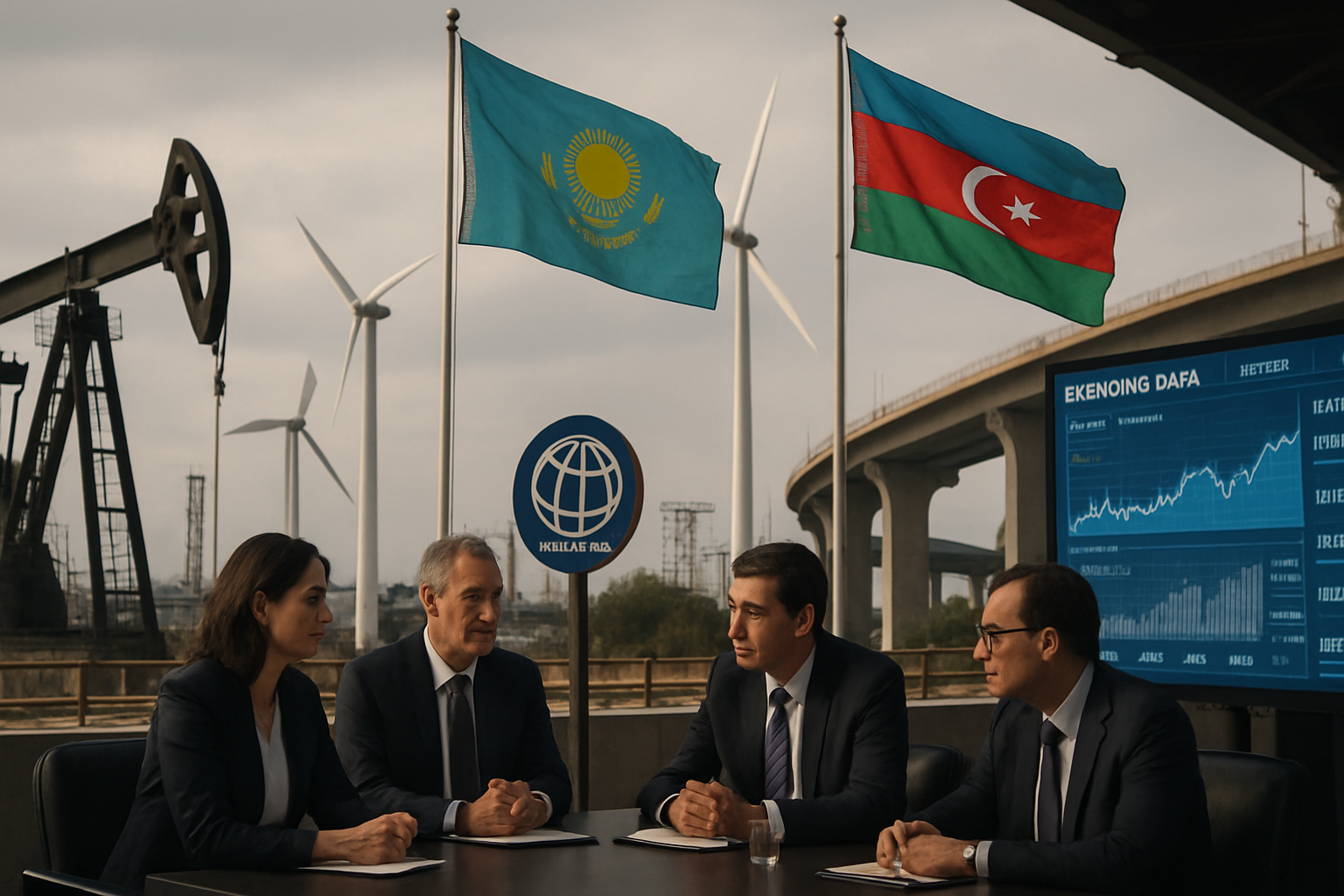
Central Asia is emerging as a beacon of economic diversification and strategic development, with Azerbaijan and Kazakhstan leading unprecedented transformation initiatives that signal a fundamental shift in regional economic architecture, moving beyond traditional resource-based models toward sustainable, technology-driven growth frameworks.
Azerbaijan's Economic Renaissance: Beyond Oil Dependency
Azerbaijan has achieved a remarkable milestone in its economic diversification strategy, with non-oil GDP reaching 52.7% of total economic output as of December 2025, according to BMI research. This represents an extraordinary 8.6% growth in non-oil sectors, even as overall production faced headwinds from a 7.3% decline in oil production amid global price pressures.
The transformation reflects years of strategic planning and investment in alternative economic sectors. Despite oil continuing to account for 47.4% of GDP, the country's ability to maintain economic growth while reducing petroleum dependency demonstrates the effectiveness of diversification policies implemented under President Ilham Aliyev's administration.
"The oil sector continues to face fiscal constraints and declining global prices, but diversification efforts are beginning to yield results."
— BMI Research Analysis
This economic rebalancing occurs within a broader context of regional positioning, with the US Chamber of Commerce identifying Azerbaijan as a key regional energy coordinator. Current US-Azerbaijan trade totals $74.9 million annually, including aluminum plating ($31.7M), petroleum resins ($6.51M), and ferroalloys ($6.79M), with significant expansion potential from Azerbaijan's $27.2 billion in global exports.
Kazakhstan's Historic World Bank Partnership Framework
Kazakhstan has secured one of Central Asia's most significant international development commitments through the World Bank Group's preparation of its 2026-2031 partnership strategy. The previous cooperation phase successfully delivered 14 projects worth $4.2 billion, establishing a foundation for the next phase of economic transformation.
World Bank Country Manager for Kazakhstan and Turkmenistan Andrei Mikhnev outlined the strategic vision in discussions with The Astana Times, emphasizing support for Kazakhstan's transition beyond a state-dominated, resource-driven growth model. The new framework aims to foster private sector development, infrastructure modernization, and institutional capacity building.
This partnership represents more than financial assistance—it embodies a comprehensive approach to economic restructuring that could serve as a template for other resource-rich nations seeking sustainable development pathways. The World Bank's commitment reflects international confidence in Kazakhstan's reform trajectory and strategic regional positioning.
Pharmaceutical Sector Investment Surge
Kazakhstan's economic diversification extends into high-value manufacturing sectors, with significant pharmaceutical industry expansion underway. The government has allocated 39.5 billion tenge for pharmaceutical production expansion, representing a strategic investment in domestic manufacturing capabilities and healthcare self-sufficiency.
This pharmaceutical initiative aligns with global trends toward supply chain resilience and domestic production capacity, particularly relevant given recent global disruptions that exposed vulnerabilities in international pharmaceutical supply networks. The investment demonstrates Kazakhstan's commitment to developing knowledge-intensive industries that can compete globally while serving regional markets.
Regional Integration and Strategic Partnerships
Both countries are leveraging their strategic positions as bridges between Europe, Asia, and the Middle East. Azerbaijan's role as an East-West energy hub continues to attract international investment, while Kazakhstan's positioning within Central Asian trade corridors provides access to multiple markets and development opportunities.
The timing of these developments is particularly significant, occurring amid global economic uncertainty and shifting geopolitical alignments. Central Asian nations are demonstrating sophisticated economic statecraft, balancing multiple international partnerships while maintaining strategic autonomy in their development choices.
Technology and Innovation Integration
Contemporary economic development in Central Asia increasingly emphasizes technology integration and innovation-driven growth. Historical memory from our analysis reveals Kazakhstan's recent quantum technology initiatives, including the establishment of the Kazakh-Singaporean Center for Quantum Technologies in Almaty, demonstrating the region's ambitions in cutting-edge technological sectors.
These technological investments complement traditional economic sectors while creating new growth opportunities. The emphasis on digital infrastructure, innovative financial systems, and advanced manufacturing represents a comprehensive approach to economic modernization that extends beyond simple diversification.
Infrastructure Development and Connectivity
Central Asia's economic transformation is underpinned by massive infrastructure investments that enhance regional connectivity and create multiplier effects throughout the economy. The region benefits from its strategic location along major trade routes, with infrastructure projects facilitating increased commerce and economic integration.
These connectivity improvements extend beyond physical infrastructure to include digital payment systems, technological platforms, and institutional frameworks that support modern economic activities. The combination creates an environment conducive to both domestic development and international investment.
Challenges and Strategic Considerations
Despite significant progress, Central Asian economies face ongoing challenges including commodity price volatility, regional security considerations, and the need for continued institutional development. However, the diversification strategies being implemented provide greater resilience against external shocks and create more sustainable growth foundations.
The success of these economic models will likely influence development strategies throughout the region and beyond. Other resource-dependent economies are closely observing Central Asia's experience as they seek their own pathways toward economic diversification and sustainable growth.
International Cooperation and Global Context
The economic developments in Azerbaijan and Kazakhstan occur within a broader context of international cooperation and strategic partnership building. The involvement of institutions like the World Bank, combined with bilateral partnerships spanning from the United States to European nations and Asian countries, demonstrates the global interest in Central Asia's economic success.
This international engagement provides access to capital, technology, and expertise while allowing Central Asian nations to maintain their strategic autonomy. The balanced approach to international relations creates opportunities for economic development while preserving national sovereignty and regional integration objectives.
Future Implications and Regional Leadership
Central Asia's economic transformation represents more than national development—it signals the emergence of new models for resource-rich developing economies seeking sustainable growth pathways. The success of diversification efforts in Azerbaijan and Kazakhstan could influence economic development strategies globally.
As these nations continue their transformation from resource-dependent economies toward diversified, technology-integrated models, they are establishing precedents for economic development that balance growth, sustainability, and strategic positioning. The implications extend well beyond Central Asia, potentially reshaping how developing economies approach modernization in an interconnected global environment.
The February 2026 developments represent a crucial inflection point in Central Asian economic development, with successful implementation of current initiatives likely to determine regional economic leadership for decades to come. The combination of strategic vision, international partnership, and domestic commitment creates conditions for sustained economic transformation that could serve as a model for similar economies worldwide.