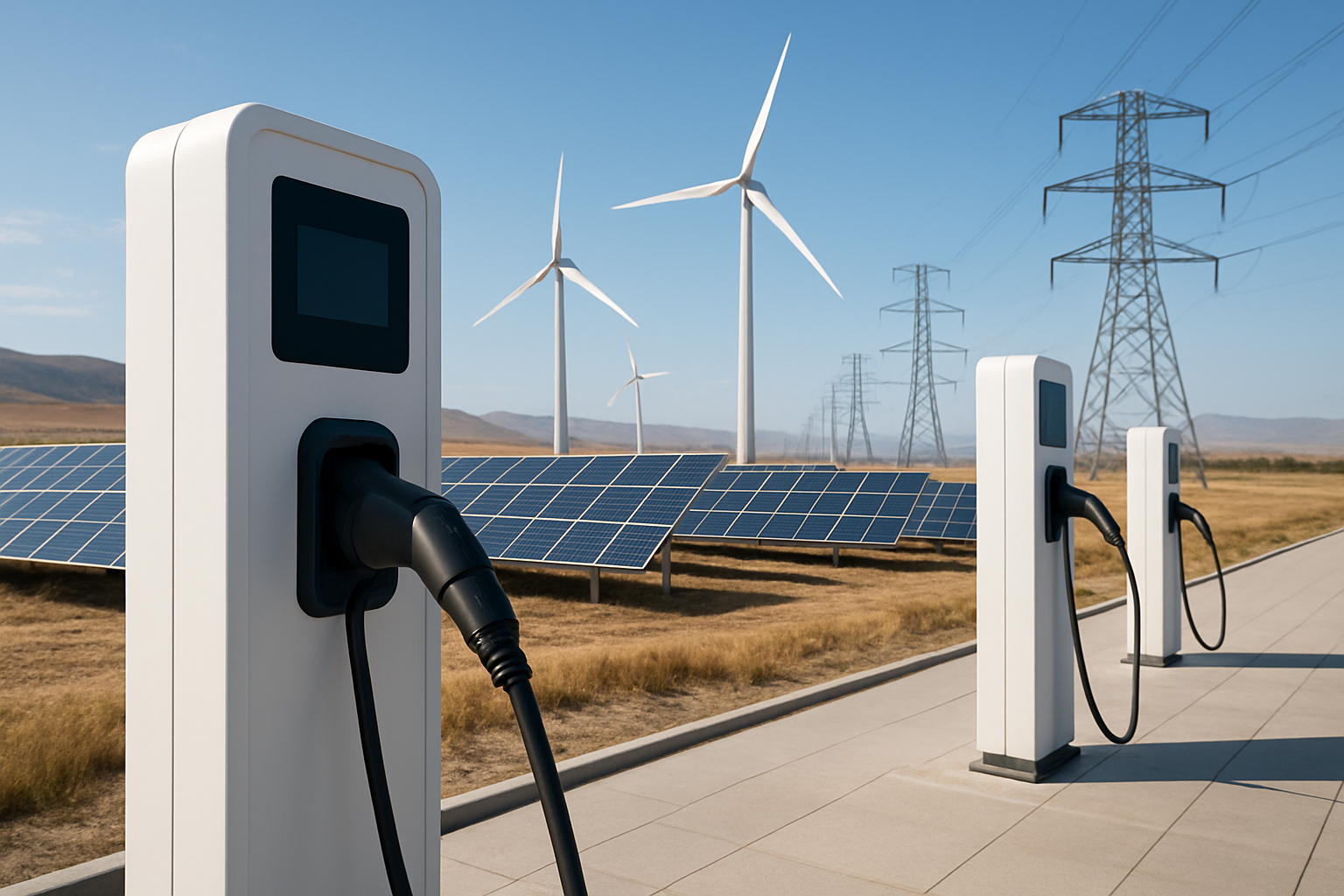
Central Asia is experiencing an unprecedented energy transformation as Azerbaijan's SOCAR launches the first fully electric vehicle charging station in the South Caucasus and Uzbekistan's ACWA Power solar plant receives international recognition, signaling the region's emergence as a clean energy powerhouse.
On February 20, 2026, two groundbreaking developments demonstrated Central Asia's accelerating energy transition. SOCAR's inauguration of the region's first fully electric charging station in Tbilisi, Georgia, combined with the recognition of ACWA Power's solar installation in Samarkand as "Central Asia Deal of the Year," illustrates the strategic importance of this rapidly evolving energy corridor.
SOCAR's Historic EV Infrastructure Milestone
The State Oil Company of the Azerbaijan Republic (SOCAR) made history by opening the South Caucasus' first fully electric vehicle charging station in Tbilisi, marking a pivotal shift toward sustainable transportation infrastructure in the region. This development represents more than technological advancement—it signals Azerbaijan's strategic positioning as a regional energy coordinator bridging Europe and Asia.
The timing of this infrastructure development coincides with Azerbaijan's broader energy diversification strategy. According to recent U.S. Chamber of Commerce assessments, Azerbaijan has emerged as a key East-West energy hub, with current U.S.-Azerbaijan trade totaling $74.9 million annually but holding massive expansion potential from Azerbaijan's $27.2 billion in global exports.
"This charging station represents the future of regional energy cooperation, demonstrating Azerbaijan's commitment to leading the South Caucasus toward sustainable transportation solutions."
— Regional Energy Analyst
Uzbekistan's Solar Excellence Recognized Internationally
The prestigious Project Finance International (PFI) Awards ceremony in London on February 19, 2026, recognized ACWA Power's solar plant in Samarkand with the "Central Asia Deal of the Year" award. Organized by the London Stock Exchange Group, this recognition places Uzbekistan at the forefront of renewable energy development in the region.
The award acknowledges not only the technical excellence of the solar installation but also its significance as a catalyst for Central Asian renewable energy development. The project demonstrates how international partnerships can drive sophisticated clean energy infrastructure in emerging markets, providing a template for similar developments across the region.
Regional Energy Security Context
These developments occur within a complex global energy landscape where Central Asia's strategic importance has grown exponentially. Recent analysis shows the region's positioning as crucial for energy security amid global supply chain challenges, particularly as China maintains 60% of critical materials production and 90% of refining capacity for lithium, cobalt, and rare earth elements essential for renewable infrastructure.
The U.S.-EU-Japan Critical Minerals Partnership, involving 55 countries, recognizes Central Asia's potential role in supply chain diversification. This geopolitical context makes developments like SOCAR's charging infrastructure and Uzbekistan's solar achievements strategically significant beyond their immediate environmental benefits.
Technology Integration and Innovation
Modern renewable energy facilities in Central Asia feature sophisticated digital monitoring, smart grid management, and automated efficiency systems that represent a quantum leap from traditional energy infrastructure. The integration of cutting-edge technology with traditional energy expertise creates unique opportunities for technological leapfrogging.
Estonia's experience with continental Europe's largest battery facility serving 90,000 households demonstrates the potential for Central Asian nations to adopt advanced energy storage solutions. Similarly, Hungary's Paks II nuclear construction project, backed by €39.1 billion in Russian investment and IAEA approval, shows how international cooperation can accelerate clean energy deployment.
Economic Development Multipliers
The economic implications of Central Asia's energy transformation extend far beyond immediate infrastructure investments. These projects create multiplier effects through job creation in specialized manufacturing, engineering, and infrastructure development sectors while positioning the region as an energy technology hub.
Romania's achievement of energy independence by 2028, transitioning from net importer to self-sufficient status, provides a roadmap for Central Asian nations. The integration of renewable energy with traditional energy resources creates opportunities for economic diversification while maintaining energy security.
International Cooperation Models
The success of both SOCAR's charging station and ACWA Power's solar project demonstrates the effectiveness of international cooperation models that leverage diverse expertise, financing sources, and technological capabilities. These multilateral approaches prove more effective than bilateral arrangements alone, creating sustainable frameworks for long-term development.
Recent diplomatic initiatives, including Azerbaijan's hosting of the "C6: One Region, One Shared Future" conference in Baku, establish institutional frameworks for sustained regional energy cooperation. Such initiatives reflect the evolution toward sophisticated partnership models that respect national sovereignty while promoting mutual benefits.
Climate Adaptation Urgency
The strategic timing of these energy developments cannot be understated. January 2026 marked the hottest month in recorded history—the 18th consecutive month exceeding 1.5°C above pre-industrial levels—demonstrating that human-induced climate change has overridden natural variability. This climate urgency makes Central Asia's clean energy transition not just economically advantageous but existentially necessary.
The region's energy transformation occurs amid broader environmental challenges, from European energy price concerns to supply chain vulnerabilities highlighted by the ongoing memory chip shortage affecting renewable energy control systems. Central Asia's proactive approach positions the region as a climate adaptation leader rather than a victim of global warming.
Future Trajectory and Strategic Implications
The convergence of SOCAR's EV infrastructure launch and Uzbekistan's international solar recognition represents a fundamental shift in Central Asia's global positioning. From being primarily known as a transit corridor for traditional energy exports, the region is emerging as a clean energy innovation hub with sophisticated technological capabilities.
Success in these initiatives could catalyze additional international investment, creating positive economic development cycles that attract further clean energy projects. The demonstration effect of successful renewable energy deployment in challenging geographic and economic conditions provides templates for similar projects across developing nations.
The integration of traditional energy expertise with cutting-edge renewable technology positions Central Asia uniquely in the global energy transition. Unlike regions that must choose between energy security and environmental sustainability, Central Asia's abundant renewable resources and existing energy infrastructure create opportunities for comprehensive energy transformation that maintains economic stability while addressing climate commitments.
As global energy geopolitics shift toward renewable resources and supply chain diversification, Central Asia's February 2026 energy developments mark the beginning of what may prove to be the region's most significant economic transformation since independence. The success of these pioneering projects will determine whether Central Asia emerges as a clean energy superpower or remains dependent on traditional energy exports in an increasingly carbon-constrained world.