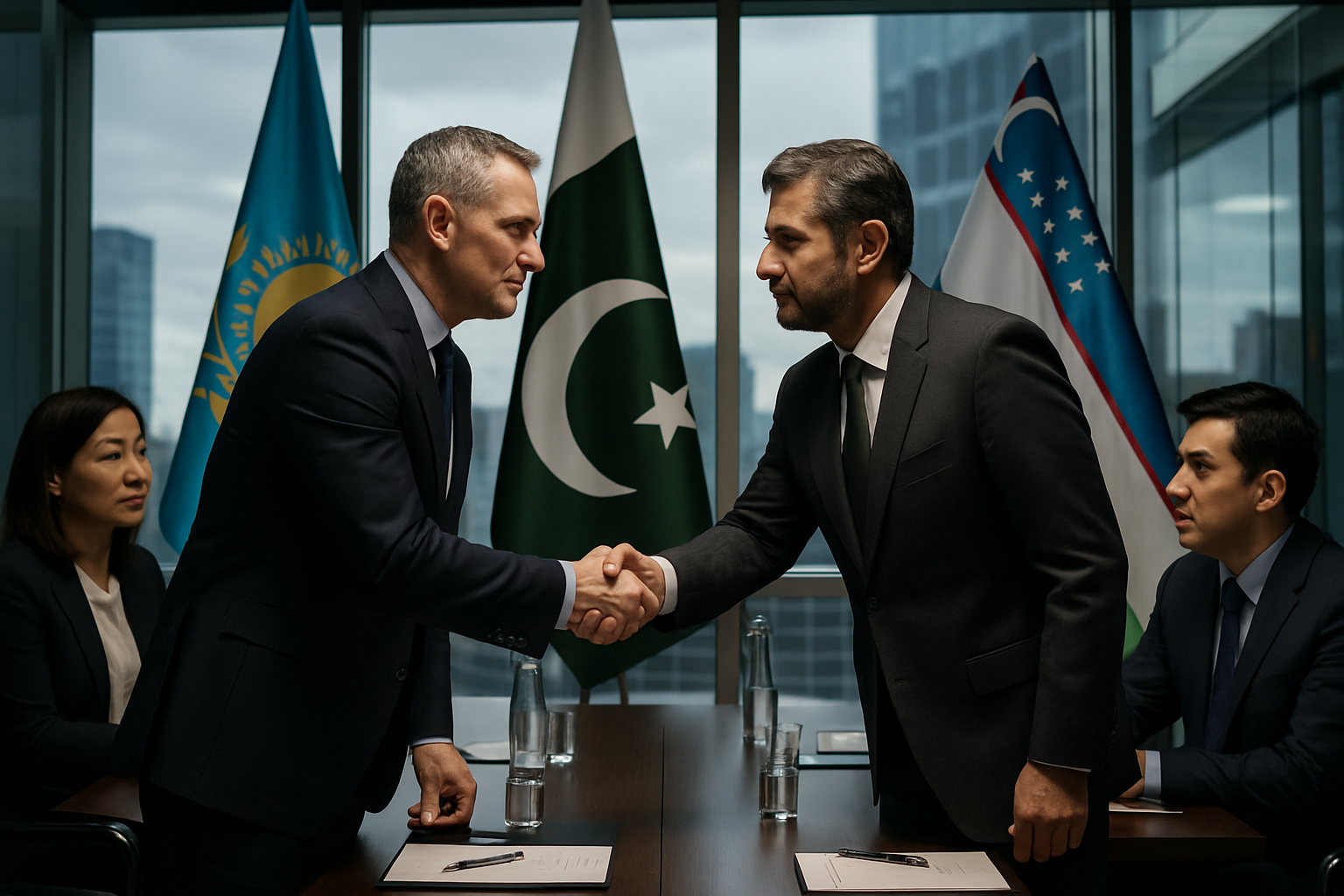
Central Asia experienced a dramatic surge in international investment and strategic partnerships in February 2026, with major corporations and governments announcing over $500 million in new commitments across multiple sectors, signaling a fundamental shift in regional economic dynamics.
The most significant development emerged from President Kassym-Jomart Tokayev's state visit to Pakistan, where Kazakhstan and Pakistan signed 32 comprehensive commercial agreements on February 4, 2026, during a business forum in Islamabad. The agreements span critical sectors including finance, logistics, industry, energy, the agro-industrial complex, digital services, and infrastructure development.
According to official sources, the bilateral cooperation framework represents the largest expansion of Kazakhstan-Pakistan economic ties in recent history, building upon the strategic partnership elevation announced earlier this year. The agreements aim to significantly boost bilateral trade volumes while establishing new industrial partnerships across both nations.
Egypt's Major Sugar Investment in Uzbekistan
Simultaneously, Uzbekistan secured a landmark $450 million investment commitment from Egyptian company Nile Sugar for a large-scale sugar production project in the Jizzakh region. Minister of Investments, Industry, and Trade Laziz Kudratov confirmed the development during an interview with Uzbekistan 24, describing it as a transformative initiative for the country's agricultural processing sector.
The Nile Sugar project represents one of the largest foreign direct investments in Uzbekistan's food processing industry, demonstrating growing international confidence in the Central Asian nation's economic reforms and investment climate. The facility is expected to significantly reduce Uzbekistan's sugar import dependency while creating substantial employment opportunities in the Jizzakh region.
Multilateral Cooperation Through B5+1 Forum
The investment announcements coincided with the second international B5+1 (Central Asia + United States) business forum in Bishkek on February 4, bringing together government officials and business leaders to strengthen practical cooperation in trade, investment, and technology across priority sectors.
The forum focused on economic cooperation in finance and banking, critical minerals, agriculture, transport and logistics, tourism, and green energy technologies. This multilateral platform has emerged as a crucial mechanism for facilitating cross-regional partnerships and attracting international investment to Central Asian markets.
"The scale and scope of these partnerships demonstrate Central Asia's growing attractiveness as an investment destination and strategic partner for major economies worldwide."
— Regional Economic Analysis, The Astana Times
Strategic Implications for Regional Development
The convergence of these major investment commitments reflects several key trends shaping Central Asia's economic landscape. First, the region is increasingly viewed as a stable and profitable destination for long-term industrial investments, particularly in sectors like energy, agriculture, and manufacturing.
The Kazakhstan-Pakistan agreements build upon previous cooperation frameworks while introducing enhanced institutional mechanisms for sustained collaboration. Both nations have committed to establishing regular high-level consultations, technical working groups, and joint investment committees to ensure effective implementation of the 32 agreements.
For Uzbekistan, the Egyptian sugar investment represents successful diversification of international partnerships beyond traditional regional allies. The project aligns with Uzbekistan's broader economic modernization strategy, which emphasizes agricultural value-added processing and reduced import dependency.
Broader Economic Context
These developments occur within a broader context of increased international investment flows to Central Asia. Recent memory indicates significant partnerships including Kazakhstan's $7+ billion gas field investment from Chinese company Geo-Jade Petroleum Corporation, demonstrating the region's capacity to attract major international capital.
The timing of these announcements also coincides with global supply chain diversification efforts, as multinational corporations seek stable, cost-effective production bases outside traditional manufacturing centers. Central Asia's strategic location, abundant natural resources, and improving business environments position the region advantageously for this trend.
Implementation Challenges and Opportunities
While the investment commitments represent significant achievements, successful implementation will require sustained coordination between governments and private sector partners. The Kazakhstan-Pakistan agreements include provisions for regular monitoring and evaluation mechanisms to ensure projects proceed according to established timelines.
Infrastructure development remains crucial for maximizing the impact of these investments. The agreements include specific provisions for transport and logistics cooperation, recognizing that efficient connectivity is essential for expanding bilateral trade and investment flows.
Currency stability and trade facilitation measures also feature prominently in the partnership frameworks. Both the Kazakhstan-Pakistan agreements and the broader B5+1 forum discussions emphasized the importance of reducing transaction costs and simplifying cross-border business procedures.
Future Prospects
The February 2026 investment surge establishes Central Asia as an increasingly important destination for international business partnerships. The combination of government-to-government strategic frameworks and major private sector commitments creates a foundation for sustained economic growth.
Regional observers note that the success of these initiatives could attract additional international investment, creating a positive cycle of economic development. The multilateral nature of the partnerships, involving countries from multiple continents, also demonstrates Central Asia's growing integration into global economic networks.
The $500+ million in combined commitments announced in February 2026 represents only the beginning of what analysts expect to be a sustained period of increased international investment in Central Asian markets, driven by the region's strategic advantages and improving business environments.