Central Asian nations are aligning ambitious biodiversity and forest restoration initiatives ahead of a major regional summit, while the European Union invests heavily in Moldova's waste management infrastructure, marking significant advances in environmental conservation during Earth's 19th consecutive month of record-breaking temperatures.
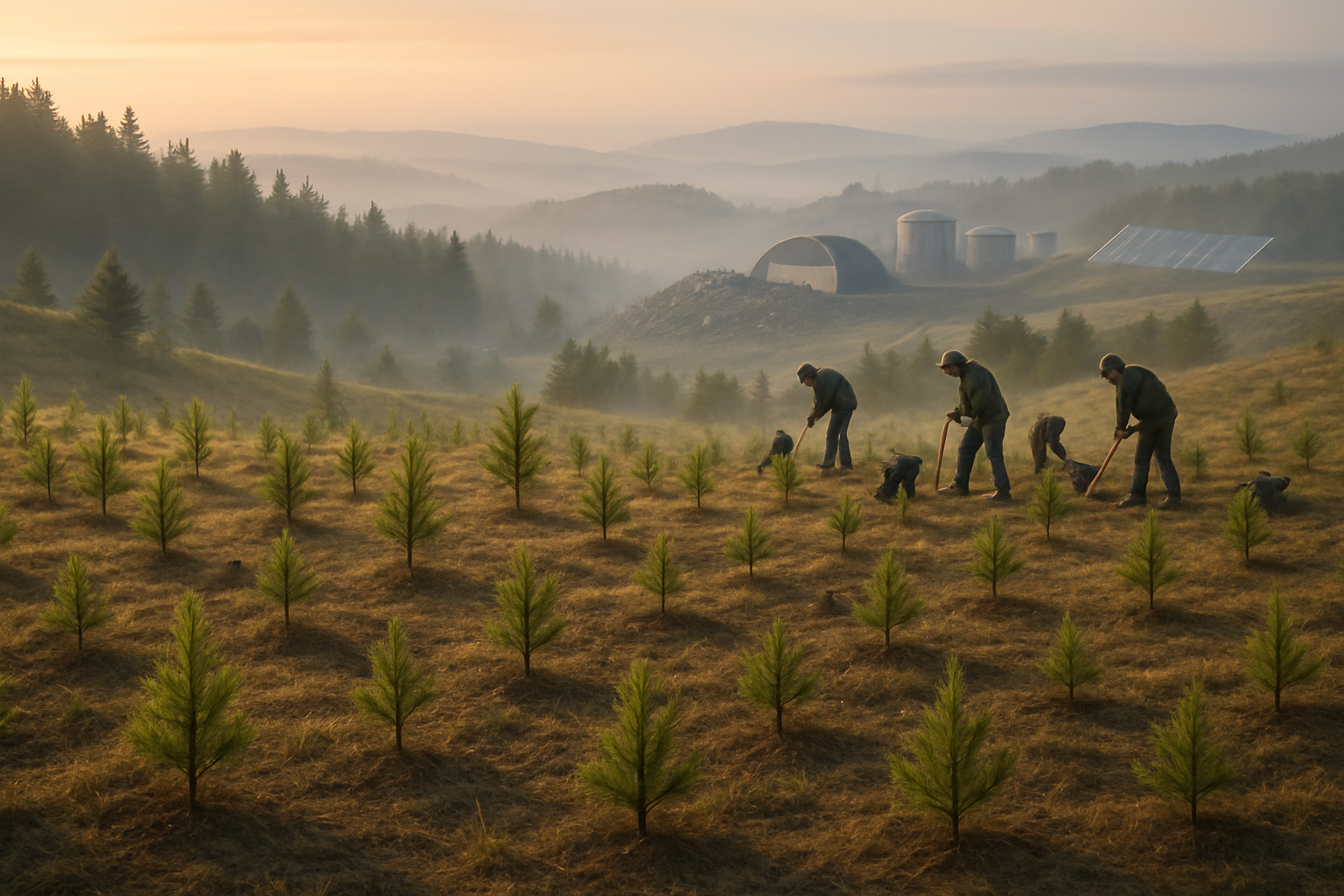
Kazakhstan hosted a preliminary preparatory meeting in Almaty from February 25-27 for the Regional Ecological Summit (RES) 2026, bringing together Central Asian countries to strengthen cooperation on biodiversity conservation, forest restoration, and transboundary environmental challenges. Organized by Kazakhstan's Ministry of Ecology and Natural Resources Committee on Forestry and Wildlife, the meeting represents a fundamental shift toward proactive ecosystem service management in a region traditionally focused on resource extraction.
Central Asia's Conservation Renaissance
The Almaty gathering demonstrates how Central Asian nations are positioning themselves as environmental solution providers rather than passive recipients of international aid. The regional approach acknowledges that atmospheric systems, wildlife migrations, and ecosystem services cross political boundaries, making coordinated action essential for effective conservation.
"Regional cooperation represents the only viable path forward for addressing environmental challenges that recognize no borders," emphasized Kazakhstan's forestry officials during the preparatory meetings.
— Ministry of Ecology and Natural Resources, Kazakhstan
This initiative builds on a broader conservation renaissance across the region. Kazakhstan has achieved remarkable success with Przewalski's horse reintroduction programs, while other Central Asian nations have implemented sophisticated spring inventory systems combining traditional knowledge with modern hydrogeological science to address water security challenges.
Moldova's Infrastructure Transformation
Simultaneously, the European Union announced a transformative €1.8 million investment in waste management systems across Moldova's Calarasi districts, representing a comprehensive approach to environmental infrastructure that extends far beyond traditional waste disposal.
The program addresses multiple environmental challenges simultaneously: reducing landfill pressure, creating alternative economic opportunities through circular economy approaches, and building climate resilience through improved waste processing systems. This investment reflects the EU's evolving understanding that environmental protection functions as essential economic infrastructure rather than regulatory burden.
Moldova's program incorporates advanced biological waste processing techniques, including innovative approaches similar to Indonesia's successful maggot cultivation programs that transform municipal waste into valuable protein sources and fertilizer while providing community employment opportunities.
Technology-Tradition Integration
Both initiatives demonstrate the sophisticated synthesis of cutting-edge technology with traditional ecological knowledge that characterizes successful 21st-century conservation. Central Asian forest restoration combines satellite monitoring and environmental DNA tracking with centuries of traditional forest stewardship practices developed by pastoral communities.
Similarly, Moldova's waste management program integrates modern circular economy principles with local community knowledge systems, ensuring that technological solutions remain culturally appropriate and economically viable for participating communities.
Global Climate Context
These developments occur during January 2026, confirmed as the hottest month in recorded history, extending an unprecedented 19-month streak of temperatures exceeding 1.5°C above pre-industrial levels. Human-induced climate change has fundamentally altered Earth's atmospheric systems, overriding natural climate variability including La Niña cooling effects.
The convergence of regional cooperation initiatives and infrastructure investment demonstrates how effective climate adaptation requires immediate environmental protection alongside long-term resilience building. Central Asian forest restoration provides carbon sequestration and biodiversity conservation while creating employment in sustainable forest management. Moldova's waste processing reduces methane emissions while generating renewable energy and creating circular economy business opportunities.
Economic Development Engine
Modern environmental protection increasingly functions as an economic development strategy rather than a regulatory constraint. Kazakhstan's Regional Ecological Summit positioning enhances the country's credentials for eco-tourism, research collaboration, and sustainable investment attraction. The initiative builds on Saudi Arabia's successful rewilding programs and other international conservation partnerships that demonstrate environmental leadership's economic benefits.
Moldova's EU-supported waste management transformation creates immediate employment in environmental services while positioning the country for participation in European circular economy networks worth billions annually. The program provides templates for other European nations seeking to transform waste challenges into economic opportunities.
Countries implementing comprehensive environmental protection consistently demonstrate greater economic resilience and attract sustainable development investment across sectors from green technology manufacturing to environmental services and climate-adapted agriculture.
International Cooperation Evolution
The Central Asia-Moldova developments reflect broader evolution in international environmental cooperation from traditional North-South aid relationships toward peer-to-peer knowledge sharing and regional integration. Central Asian nations contribute steppe management expertise and renewable energy innovations, while Moldova provides models for European integration of environmental infrastructure.
This approach builds on successful conservation partnerships worldwide, including the Galápagos giant tortoise reintroduction programs, Zimbabwe's groundbreaking DNA forensic wildlife protection, and Thailand's innovative elephant conservation technologies. Each initiative contributes specialized knowledge and approaches that enhance global conservation capacity.
Implementation Challenges and Opportunities
Successful environmental protection faces systematic challenges including funding sustainability for developing nations, technical capacity building requirements, and climate change disruption of traditional project timelines requiring adaptive management approaches.
However, the diversity of approaches provides resilience against single-solution dependencies. Central Asian regional cooperation offers templates for transboundary ecosystem management, while Moldova's EU partnership demonstrates how international financing can accelerate environmental infrastructure development.
Success factors consistently include community ownership and engagement, transparent governance frameworks, economic incentives that make protection financially viable, and integration of traditional ecological knowledge with modern environmental science.
Strategic Significance for Global Conservation
March 2026 represents a critical juncture for global environmental protection, with a choice between reactive crisis management and proactive ecosystem service management that may determine whether conservation efforts can keep pace with accelerating environmental change during the decisive climate action decade.
"We are witnessing the emergence of a new paradigm in environmental protection that combines immediate action with long-term planning, technological innovation with traditional wisdom, and local engagement with international cooperation."
— Environmental Policy Analysts, Regional Cooperation Institute
The environmental action window is narrowing as ecological systems approach critical thresholds that could trigger irreversible changes. However, the coordinated responses emerging across Central Asia, Europe, and globally demonstrate that tools, knowledge, and cooperation frameworks exist for comprehensive environmental protection if implemented with sufficient speed and coordination.
Future Implications
The Central Asian Regional Ecological Summit and Moldova's waste management transformation provide crucial templates for scaling environmental protection globally through direct conservation action, infrastructure development, community engagement, technological innovation, and international cooperation addressing challenges at the required speed and scale.
Success depends on sustained international cooperation, enhanced multi-sector coordination, and increased financial commitments that recognize environmental protection as essential infrastructure for human prosperity and planetary sustainability.
As climate impacts continue accelerating, the coordination demonstrated by Kazakhstan, Moldova, and their international partners offers hope that adaptive capacity can be developed rapidly enough to protect essential environmental systems during Earth's most challenging environmental period in human history.
The convergence of regional cooperation, technological innovation, and international investment in March 2026 may prove decisive for determining the trajectory of global environmental protection in the decades ahead, providing both urgent warnings about accelerating challenges and practical demonstrations that coordinated human response can achieve remarkable conservation results under the most demanding conditions.