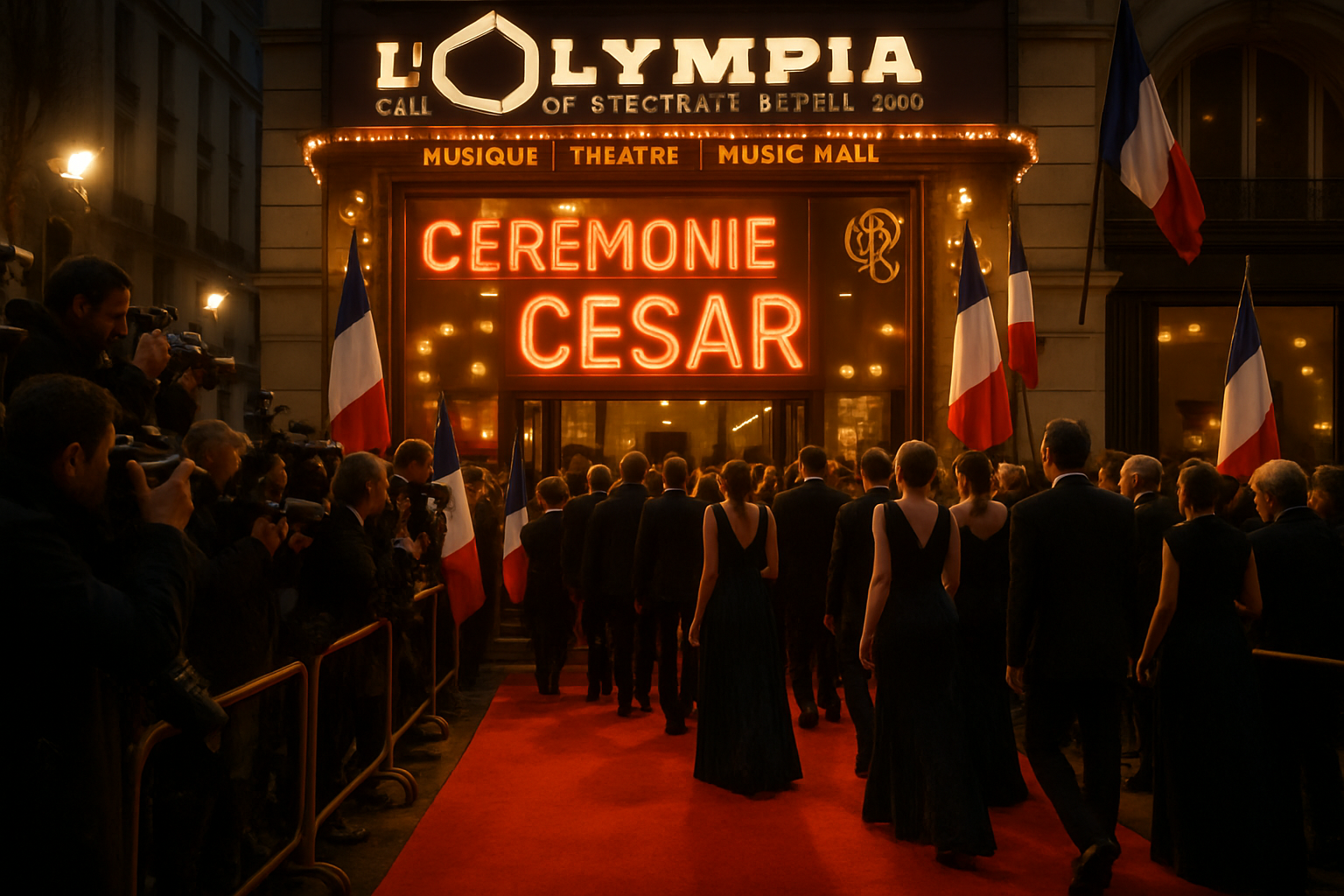
The 51st César Awards ceremony concluded Thursday evening at L'Olympia in Paris with "L'Attachement" claiming the coveted Best Film prize, while comedy legend Jim Carrey received an honorary César for his lifetime achievements, highlighting a remarkable night that celebrated both French cinematic excellence and international artistic collaboration.
The ceremony, hosted by Laurent Lafitte and attended by hundreds of France's most prominent film industry figures, represented a significant moment for French cinema as it continues to navigate the intersection of traditional storytelling and contemporary challenges. "L'Attachement," known internationally as "The Ties That Bind Us," directed by Carine Tardieu, emerged as the evening's biggest winner, capturing the industry's highest honor in a competitive field of exceptional French productions.
Jim Carrey's Emotional Honorary Recognition
The evening's most poignant moment came when 64-year-old Jim Carrey accepted his honorary César, delivering his acceptance speech entirely in French. The Canadian-American actor, who has stepped back from Hollywood in recent years, spoke movingly about his connection to French culture and his admiration for the artistic tradition represented by the César Awards.
"I am deeply honored to receive this recognition from the French film industry," Carrey said, joking about his language skills while expressing genuine emotion. "France has always held a special place in my heart, and to be honored by the country that gave us so many cinematic masters is truly humbling."
Carrey's recognition comes as the entertainment industry grapples with significant transformations, including the rise of artificial intelligence in content creation. Earlier this year, over 4,000 French actors and filmmakers condemned what they termed "systematic plundering" by AI tools that can reproduce voices and images, raising concerns about the future of authentic artistic expression—making Carrey's celebration of traditional performance craft particularly resonant.
"L'Attachement" and the Rise of Intimate French Cinema
Carine Tardieu's "L'Attachement" represents a significant achievement in contemporary French filmmaking, exploring themes of human connection and emotional resilience that have become increasingly relevant in our digitally connected yet often isolated world. The film's victory reflects the César Academy's recognition of authentic, character-driven storytelling that prioritizes emotional depth over spectacle.
The success of "L'Attachement" also highlights the continuing strength of French cinema's distinctive voice in global entertainment. While Hollywood grapples with franchise fatigue and the entertainment industry faces disruption from streaming platforms and artificial intelligence, French cinema has maintained its commitment to auteur-driven projects that prioritize artistic vision over commercial formulas.
Excellence Across Categories
Laurent Lafitte and Léa Drucker were honored with the Best Actor and Best Actress awards respectively, continuing their remarkable careers in French cinema. Lafitte's recognition underscores his versatility across both comedy and dramatic roles, while Drucker's award acknowledges her compelling performances in challenging, psychologically complex characters.
The ceremony also celebrated technical excellence across various categories, with cinematographers, editors, and sound designers receiving recognition for their contributions to the year's most accomplished French productions. These awards highlight the collaborative nature of filmmaking and the importance of technical craftsmanship in creating compelling cinematic experiences.
French Cinema in Global Context
The 2026 César Awards ceremony takes place against the backdrop of a remarkable year for French culture on the international stage. Following the success of French athletes at recent international competitions and the global recognition of French artistic achievements, the César Awards reinforce France's position as a major cultural force.
The ceremony's timing is particularly significant as the film industry confronts unprecedented challenges. The recent Berlin International Film Festival witnessed political controversy over institutional responses to global conflicts, while streaming platforms continue to reshape distribution and consumption patterns. In this context, the César Awards represent a celebration of traditional cinematic values and French cultural identity.
Industry Resilience and Adaptation
The success of this year's César ceremony demonstrates the resilience of French cinema institutions in adapting to contemporary challenges while maintaining their core mission of recognizing artistic excellence. The inclusion of Jim Carrey as an honorary recipient reflects the industry's international outlook and recognition that cinematic achievement transcends national boundaries.
French cinema's ability to maintain its distinctive character while engaging with global audiences positions it well for future challenges. As artificial intelligence and streaming platforms continue to transform entertainment, the César Awards' emphasis on authentic artistic expression and traditional craftsmanship provides a valuable counterbalance to purely technology-driven content creation.
Looking Forward
As the entertainment industry continues to evolve rapidly, the 2026 César Awards serve as both a celebration of achievement and a statement of values. The recognition of "L'Attachement" and Jim Carrey's honorary award demonstrate French cinema's commitment to artistic integrity, emotional authenticity, and the irreplaceable value of human creativity in storytelling.
The ceremony's success also reinforces the importance of cultural institutions in preserving and promoting artistic traditions while adapting to contemporary realities. As France continues to play a significant role in global culture, the César Awards remain a vital platform for recognizing and encouraging the artistic excellence that defines French cinema's unique contribution to world culture.
The 51st César Awards ceremony will be remembered not only for its recognition of outstanding artistic achievements but also for its affirmation of cinema's enduring power to connect audiences through authentic human storytelling—a message particularly relevant as the entertainment industry navigates an era of unprecedented technological and cultural transformation.