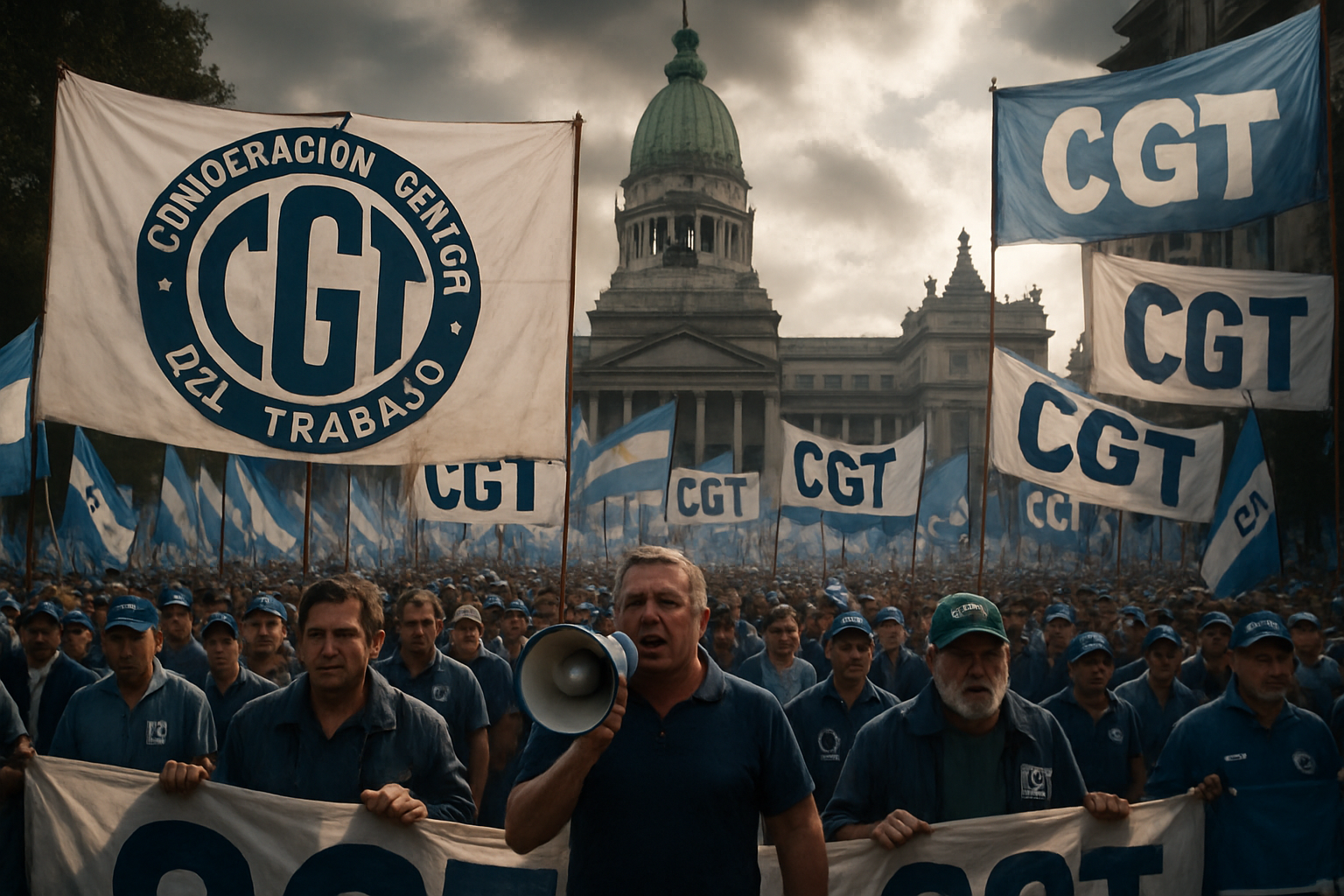
Argentina's powerful General Confederation of Labor (CGT) is finalizing plans for a nationwide general strike against President Javier Milei's controversial labor reform legislation, with union leadership announcing that "all conditions are in place" for the most significant labor action of the libertarian administration's tenure.
CGT co-secretary Cristian Jerónimo confirmed that the central labor organization will hold an urgent meeting Monday to formally announce the strike date, coinciding with the Chamber of Deputies' scheduled debate on the reform package. The decision comes after the Senate's dramatic 42-30 approval of the legislation earlier this month, following violent protests that resulted in over 50 arrests and millions of pesos in property damage.
Strike Timing Targets Legislative Process
"The date will be set for when the Chamber of Deputies sessions to consider the project, between Thursday and next Wednesday the 25th," Jerónimo stated, indicating the union confederation's strategy to maximize political pressure during the critical final legislative phase. The CGT leader emphasized that the decision reflects the gravity of proposed changes to Argentina's labor framework.
The timing represents a calculated escalation by Argentina's most powerful labor organization, which has maintained relative restraint despite fierce opposition to Milei's broader economic reforms. The CGT's decision signals recognition that the labor reform represents an existential challenge to organized labor's influence in Argentine politics.
Government Pushes Forward Despite Opposition
The Milei administration appears undeterred by union threats, with government sources expressing confidence about securing sufficient votes in the Chamber of Deputies. Interior Minister Patricia Bullrich's successful modification of over 30 articles in the reform package helped secure crucial support from the Radical Civic Union (UCR) and dialogue-oriented opposition blocs, effectively isolating traditional Peronist parties.
The reform introduces a controversial "bank of hours" overtime system that would allow employers greater scheduling flexibility, along with modifications to severance payment structures and union contribution requirements. Government officials argue these changes are essential for increasing labor market flexibility and attracting foreign investment, particularly to capitalize on the new US-Argentina trade agreement that eliminates over 1,600 tariffs.
"The reform maintains basic worker protections while introducing the flexibility needed for economic modernization,"
— Government spokesperson
Historical Context of Labor Confrontation
The looming general strike represents the culmination of months of escalating tension between the CGT and the Milei administration. The union confederation previously organized some of the most serious protests in recent Argentine history, including the February 12 demonstrations outside Congress that featured Molotov cocktails, systematic property destruction, and confrontations with federal police.
Buenos Aires Governor Axel Kicillof's participation in earlier protests highlighted the political dimensions of the labor dispute, with the Peronist leader positioning himself for a potential 2027 presidential campaign by championing worker rights against libertarian policies.
The CGT's resistance strategy has evolved from traditional peaceful demonstrations to more militant tactics, reflecting the organization's assessment that standard protest methods proved insufficient against Milei's reform momentum. The union confederation has successfully coordinated with other labor organizations, including both CTA branches and leftist political groups, creating the broadest opposition coalition of Milei's presidency.
Economic Context Complicates Labor Relations
The labor reform debate occurs within a complex economic environment that strengthens both government and union arguments. Economists project 22.4% annual inflation for 2026, more than double the government's 10.1% forecast, creating pressure on workers' purchasing power that unions cite as justification for protecting existing labor protections.
However, the Milei administration points to currency stability and improved investor confidence as evidence that structural reforms are working. The country risk indicator has declined to 504 points, while the new trade agreement with the United States is expected to generate $800 million in additional agricultural exports.
Employment data reveals the stakes of the confrontation, with 21,938 fewer companies operating under the Milei administration according to labor risk oversight data. The construction sector has been particularly affected, with negative profit margins from material cost increases highlighting the challenging business environment that the government argues necessitates labor market flexibility.
Fintech Industry Seeks Legislative Inclusion
Adding complexity to the legislative dynamics, Argentina's fintech sector is mounting a campaign to be included in labor reform provisions, specifically seeking authorization to manage salary payments traditionally controlled by traditional banks. The PRO party is supporting this initiative despite the sector's setback in the Senate, where the proposal was excluded from the reform package.
Fintech representatives argue that expanding payment alternatives would increase competition and reduce costs for employers, while traditional banks oppose measures that would challenge their control over the lucrative payroll management market. The debate reflects broader questions about financial modernization within Argentina's economic transformation.
Political Coalition Building Success
The Milei administration's success in building legislative coalitions represents a significant political achievement, demonstrating the president's capacity to work beyond his libertarian base. The strategic alliance with UCR, PRO, and dialoguing opposition sectors effectively isolated traditional Peronist strength while maintaining reform momentum.
Patricia Bullrich's negotiations proved crucial for legislative success, with her willingness to modify controversial provisions while preserving core flexibility objectives showing tactical sophistication often absent from ideological governments. This approach contrasts with previous reform attempts that failed due to inflexibility in addressing legitimate concerns.
International Implications and Investment Climate
The labor reform's success or failure carries implications far beyond Argentina's borders, with international investors viewing the outcome as a test of the country's commitment to structural modernization. The reform complements Argentina's positioning as a key Trump administration partner in South America, with the bilateral trade agreement requiring labor market flexibility to maximize new commercial opportunities.
Regional observers note that Argentina's experience could provide a template for other Latin American countries facing similar pressures to modernize labor markets while maintaining democratic governance. The balance between economic modernization and social stability represents a critical challenge for emerging market democracies.
Implementation Challenges Ahead
Even if the labor reform passes the Chamber of Deputies, implementation will face significant challenges from continued union resistance, potential legal challenges, and the need for extensive regulatory development. The CGT has indicated plans for court challenges that could create years of litigation over specific provisions.
Success requires more than legislative victory, demanding ongoing negotiation with business groups, unions, and provincial governments to ensure effective enforcement. The government must balance international investor expectations with domestic political sustainability, particularly given Argentina's history of policy reversals following electoral changes.
Looking Forward
The upcoming general strike represents a crucial test for both the CGT's organizational capacity and the Milei administration's political resilience. The outcome will likely determine whether Argentina can successfully modernize its labor market through democratic processes or whether reform attempts will face indefinite resistance from organized labor.
The broader implications extend to questions about democratic governance under economic pressure, the role of traditional institutions in times of rapid change, and the capacity of democratic societies to implement necessary but unpopular reforms while maintaining social cohesion.
As Argentina approaches this critical confrontation between organized labor and government reform agenda, the outcome will likely influence not only the country's economic trajectory but also serve as a regional case study for managing structural change within democratic frameworks.