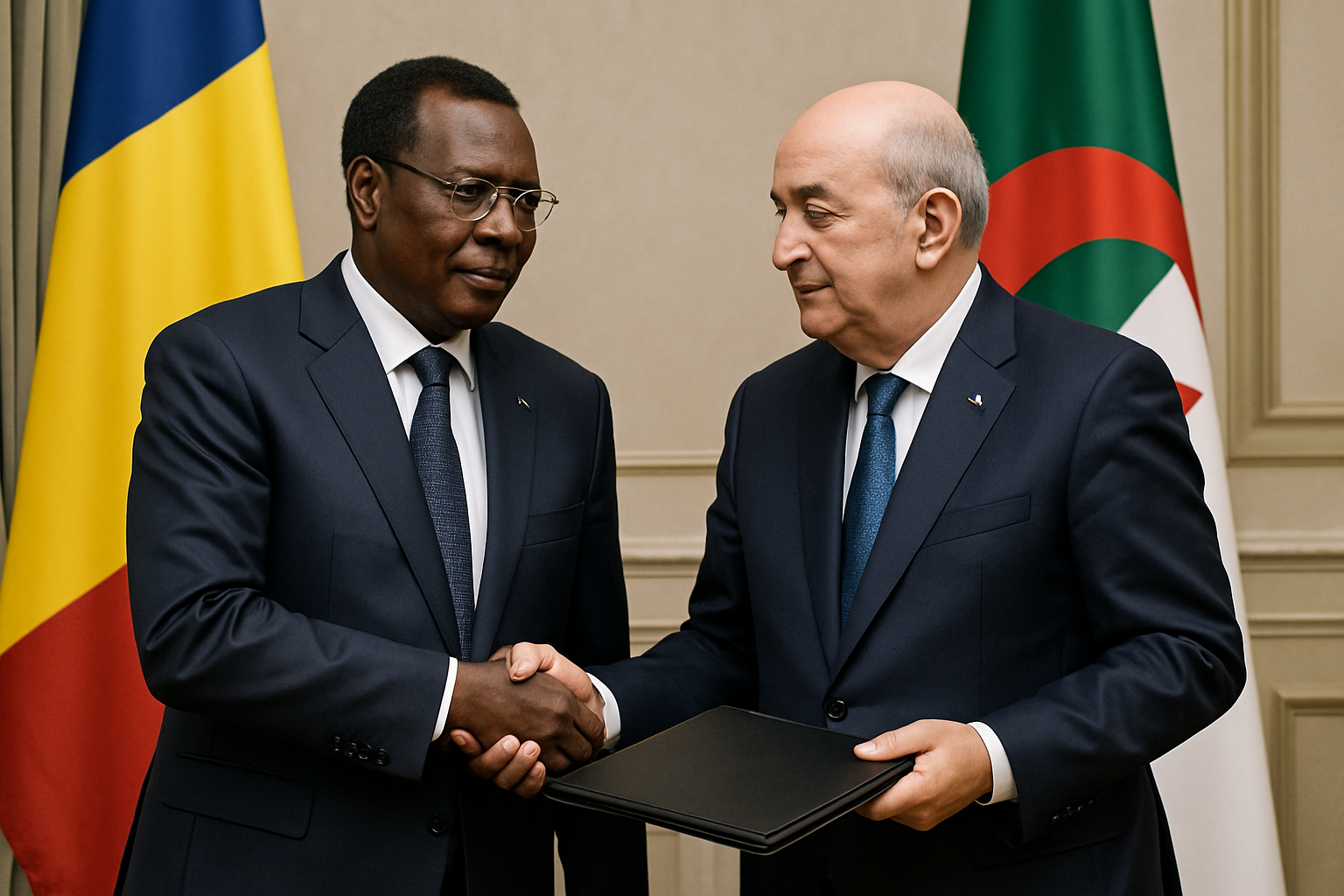
Chad President Mahamat Idriss Déby Itno successfully concluded a historic three-day official visit to Algeria from April 22-24, 2026, signing 28 comprehensive bilateral cooperation agreements with President Abdelmadjid Tebboune that mark the most extensive Chad-Algeria partnership framework in recent history.
The landmark visit, conducted at the invitation of President Tebboune, represents what Chad's leader characterized as a transition "from a traditional friendship to a new-generation strategic partnership" between the two African nations. The agreements, signed during the fourth session of the Joint Algeria-Chad Commission, span critical sectors including energy infrastructure, public works, communications, youth development, animal health, pharmaceutical industry, aviation services, higher education, scientific research, industry, and commerce.
Energy Cooperation Takes Center Stage
At the heart of the partnership lies an ambitious energy cooperation framework, with particular emphasis on what sources describe as over 30 agreements focusing heavily on energy sector collaboration. The centerpiece includes a framework agreement for petroleum refinery construction in Chad, positioning Algeria as a key partner in Chad's energy infrastructure development.
This energy partnership addresses Chad's strategic position as a landlocked nation, leveraging Algeria's Mediterranean access and established energy expertise. The collaboration comes at a critical time when global energy markets face unprecedented volatility, with natural gas prices surging 24% in Europe and 78% in the United States during recent months.
Cultural and Religious Dimensions
Beyond economic cooperation, President Déby's visit included significant cultural and religious elements. The Chad leader toured the religious and cultural facilities of the Grand Mosque of Algeria, including the Great Prayer Hall. He received briefings on the mosque's role as a "scientific beacon and approach to tolerance, moderation, and centrism" serving as a "cohesive reference for the peoples of the region."
During the mosque visit, President Déby signed the golden book of the Algerian mosque and received a symbolic gift consisting of a copy of the Holy Quran, highlighting the shared Islamic heritage that strengthens bilateral ties between the two nations.
High-Level Diplomatic Framework
The visit featured intensive diplomatic engagement, with Presidents Tebboune and Déby conducting private consultations followed by expanded working sessions involving both countries' delegations. Key Algerian officials participating included Boualam Boualam, Director of the Presidential Office, while the Chad delegation featured Mohamed Saleh Aziz, Director of the Chad Presidential Office, and Taher Hamid Nquilin, Chad's Finance Minister.
According to a joint statement released by the Algerian Presidency, both leaders emphasized their political will to elevate the relationship beyond traditional cooperation toward comprehensive strategic partnership. The framework establishes regular consultation mechanisms and working-level institutions to ensure sustained implementation across political cycles.
Strategic Regional Context
The Chad-Algeria partnership occurs within a broader context of African continental integration and strategic autonomy. Chad's approach reflects sophisticated diplomatic balancing, as the nation participates in various international frameworks while pursuing relationships that serve its national development priorities.
This partnership aligns with broader African development trends, including the African Continental Free Trade Agreement (AfCFTA) framework, which enables enhanced regional cooperation and cross-border ventures. The timing is particularly significant as African nations increasingly position themselves as strategic global partners rather than aid recipients.
Mutual Visa Exemption and Aviation Cooperation
Among the practical measures enhancing bilateral relations, the countries agreed on mutual visa exemption for holders of diplomatic and service passports, facilitating high-level governmental cooperation and business exchanges. Additionally, the aviation services agreement establishes direct air links between the two countries, potentially transforming connectivity between Chad and North African markets.
The aviation agreement holds particular strategic importance for Chad as a landlocked nation, providing enhanced access to global markets through Algeria's established international air transport networks. This connectivity could significantly impact Chad's trade capacity and economic integration with Mediterranean and European partners.
South-South Cooperation Model
The comprehensive partnership represents what analysts describe as an exemplary South-South cooperation model, with two African nations leveraging complementary strengths to address mutual development challenges. Algeria brings energy expertise, Mediterranean market access, and established industrial capacity, while Chad offers strategic positioning in Central Africa and potential for expanded bilateral trade.
This approach reflects Africa's growing capacity for intra-continental partnerships that bypass traditional North-South aid dependencies. The partnership creates a template for comprehensive African bilateral relationships addressing multiple development priorities while strengthening continental integration.
Implementation and Future Prospects
The success of this historic partnership will depend on effective implementation of the 28 agreements through sustained political commitment and institutional mechanisms established during the visit. Both nations have committed to regular high-level consultations and technical cooperation to ensure the partnership delivers concrete benefits for both populations.
President Déby extended a formal invitation to President Tebboune to visit Chad, demonstrating the reciprocal nature of the enhanced relationship. The ongoing diplomatic engagement signals both countries' commitment to transforming signed agreements into practical cooperation that strengthens their strategic partnership.
As President Déby departed Algiers International Airport, escorted by Senate President Azzouz Nasseri, the visit concluded having established what may become a defining partnership for both nations' future development trajectories. The comprehensive framework created could serve as a model for enhanced African cooperation, demonstrating the continent's capacity for sophisticated bilateral partnerships that serve both national interests and broader continental integration objectives.