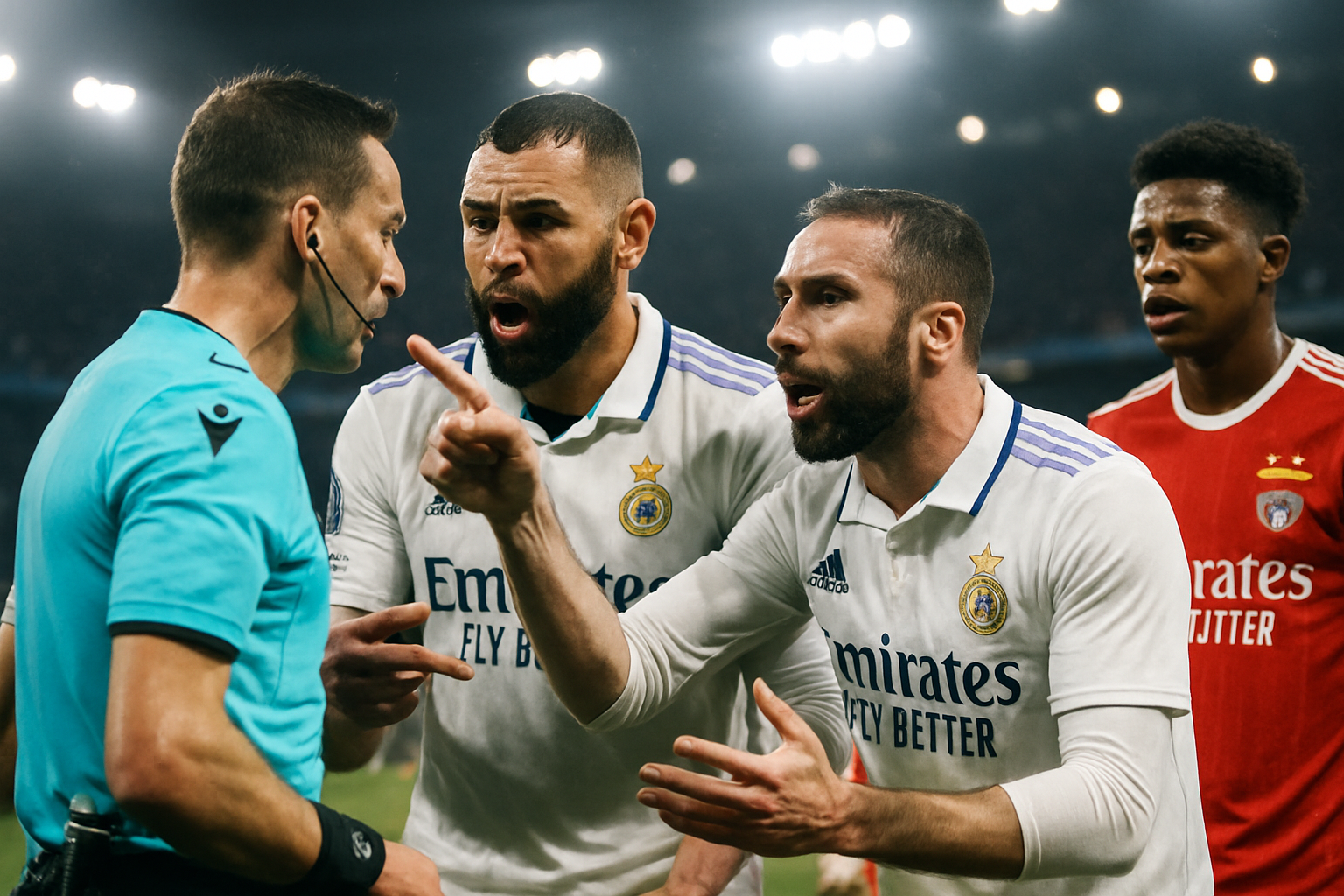
Real Madrid's 1-0 Champions League playoff victory over Benfica at Lisbon's Estádio da Luz was marred by serious racism allegations when Brazilian forward Vinicius Jr. accused Argentine defender Gianluca Prestianni of directing racist comments toward him during the match.
The incident occurred following Vinicius Jr.'s spectacular 50th-minute goal that secured Real Madrid's advantage in the first leg of their playoff tie. After celebrating with a dance in front of the home crowd, tensions escalated when the Brazilian star approached French referee François Letexier, pointing directly at Prestianni while making serious allegations.
The Controversial Incident
According to multiple sources from the match, Vinicius Jr. alleged that Prestianni called him "mono" (monkey) during the heated exchange that followed his goal celebration. Television cameras captured Prestianni covering his mouth with his jersey during the incident, though the exact words spoken could not be verified through broadcast footage.
The match was immediately halted for nearly 10 minutes as referee Letexier activated UEFA's racism protocol. The French official made clear hand signals indicating a potential racism incident, gathering players from both teams while consulting with his assistants and the fourth official.
"There was a clear indication from the referee that he was investigating potential discriminatory behavior,"
— UEFA Observer, speaking anonymously
Despite extensive review, including consultation with video assistant referee technology, officials were unable to definitively prove the allegations due to insufficient audio evidence. After the prolonged delay, the match resumed with Prestianni remaining on the field.
Post-Match Reactions and Escalation
The controversy intensified in the immediate aftermath of Real Madrid's victory. Vinicius Jr. took to social media with a pointed message clearly directed at his accuser: "Racists are cowards," the Brazilian posted, leaving no doubt about his feelings regarding the incident.
Real Madrid teammates rallied around their star player, with Federico Valverde confirming to media that "something ugly was said" during the match. The Uruguayan midfielder's comments provided crucial support for Vinicius Jr.'s version of events, suggesting multiple players witnessed inappropriate behavior.
Liverpool defender Trent Alexander-Arnold, who watched the match as a neutral observer, expressed outrage on social media, calling the alleged incident "a disgrace" and demanding stronger action from football authorities against discrimination.
Most significantly, Kylian Mbappé, Vinicius Jr.'s Real Madrid teammate, has reportedly called for Prestianni to face a competition ban over the alleged racist slur. The French superstar's intervention demonstrates the seriousness with which Real Madrid's squad views the incident.
Official Responses and Investigations
UEFA, which oversees Champions League competitions, has established comprehensive anti-racism protocols since 2009 specifically designed to combat discriminatory behavior in European football. The organization has not yet issued an official statement regarding the specific incident, though sources indicate a formal investigation is likely.
The Portuguese Football Federation and Benfica have remained largely silent on the controversy, with the club focusing public statements on the sporting aspects of their defeat. However, internal discussions are reportedly ongoing regarding the serious nature of the allegations.
Real Madrid, meanwhile, has provided full support to their player. The club has a documented history of backing Vinicius Jr. against racist abuse, having filed multiple formal complaints to Spanish authorities over similar incidents in domestic competition.
A Pattern of Targeted Abuse
This latest incident represents a troubling continuation of racist abuse directed at Vinicius Jr. throughout his career. The 24-year-old Brazilian has faced similar discrimination in Spanish stadiums, becoming an unfortunate symbol of persistent racism in European football despite numerous high-profile campaigns against such behavior.
The timing of this incident is particularly significant, occurring during Champions League competition - UEFA's flagship tournament watched by millions worldwide. The global spotlight intensifies pressure on football authorities to take decisive action against discrimination.
Broader Implications for European Football
The controversy raises serious questions about the effectiveness of current anti-racism measures in European football. Despite decades of campaigns and protocol development, incidents continue to occur at the highest levels of the game.
Football analysts note that the inability to definitively prove such incidents through broadcast technology highlights ongoing challenges in evidence gathering. Many argue that stronger preventive measures and more severe punishments are necessary to deter discriminatory behavior.
The incident also demonstrates the complex dynamics of international football, with players from different cultural backgrounds competing at the highest level while facing persistent discrimination based on race and nationality.
Looking Ahead to the Second Leg
Real Madrid holds a crucial 1-0 advantage heading into the second leg at the Santiago Bernabéu, where they will be heavily favored to advance to the Champions League Round of 16. However, the racism controversy has overshadowed the sporting achievement and threatens to dominate headlines leading up to the return fixture.
The Spanish giants face pressure to maintain focus on football while supporting their player through what has become a high-profile discrimination case. Meanwhile, Benfica must navigate the reputational challenges posed by the allegations against their player while attempting to overturn the deficit in Madrid.
As investigations continue, this incident serves as another stark reminder that football's fight against racism remains far from over, even at the sport's most prestigious level. The response from UEFA, clubs, and the broader football community will likely influence how similar situations are handled in the future, making this case a potential watershed moment for anti-discrimination efforts in European football.