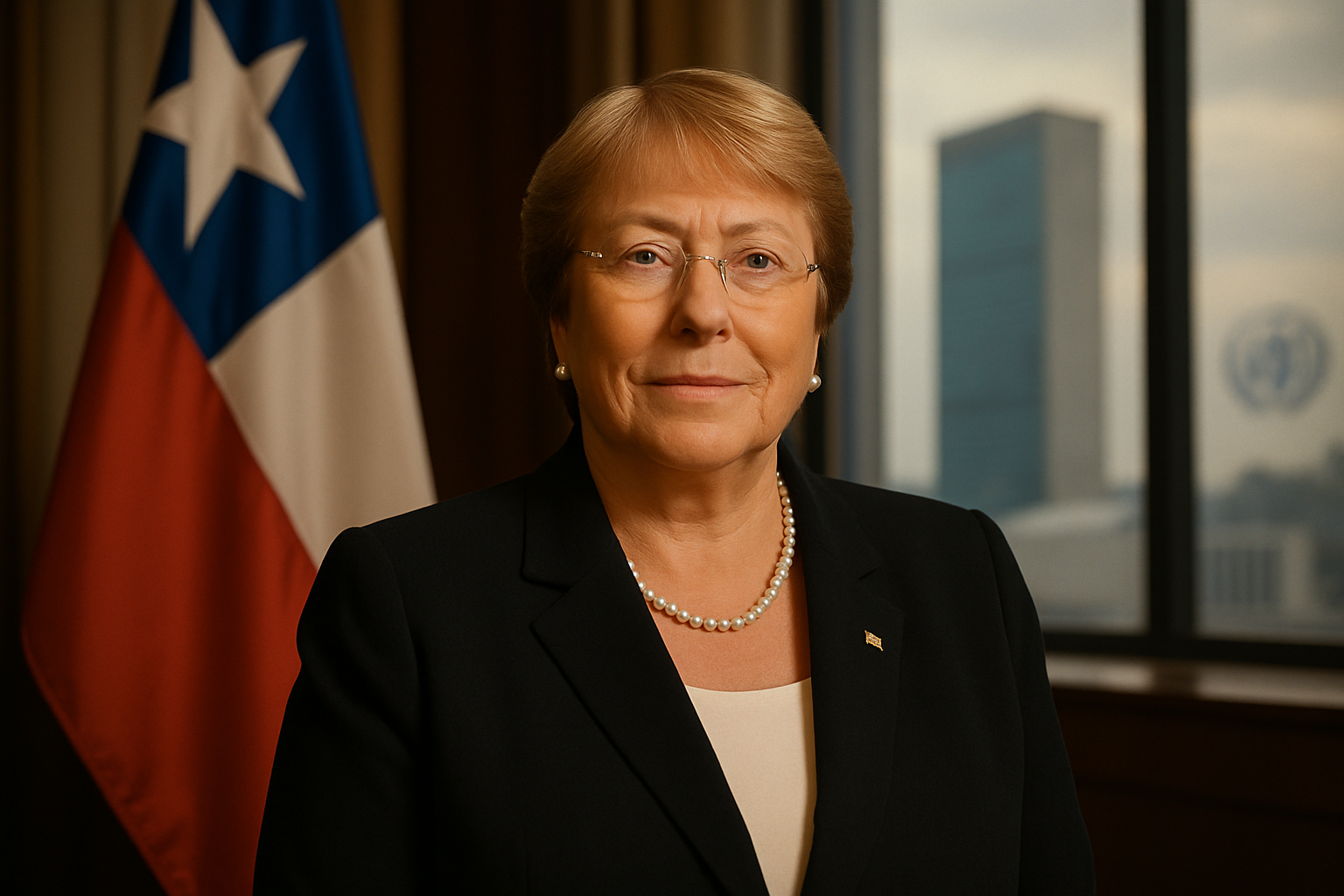
Chile has officially nominated former President Michelle Bachelet as its candidate for United Nations Secretary-General, securing crucial backing from Brazil and Mexico in a move that could make her the first woman and only the second Latin American to lead the international organization in its 81-year history.
The Chilean government formalized Bachelet's candidacy in New York on February 2, 2026, highlighting her extensive experience in human rights advocacy and multilateral diplomacy. The timing of the announcement comes just 37 days before president-elect José Antonio Kast, who won December's election on a far-right platform, takes office in Santiago.
Regional Unity Behind Historic Candidacy
The joint registration by Chile, Brazil, and Mexico represents a significant show of Latin American solidarity in the race for the UN's top position. At 74, Bachelet brings unprecedented credentials to the role, having served two non-consecutive terms as Chile's president (2006-2010 and 2014-2018) and later as UN High Commissioner for Human Rights from 2018 to 2022.
"This candidacy highlights Michelle Bachelet's distinguished trajectory in human rights and multilateralism," stated the Chilean government during the formal presentation in New York. The backing from regional powerhouses Brazil and Mexico strengthens Latin America's chances of securing this influential global position for the first time since Peru's Javier Pérez de Cuéllar served from 1982 to 1991.
Political Paradox in Chilean Transition
The nomination creates an intriguing political dynamic as Bachelet, a center-left politician and former Socialist Party member, receives official backing from a government soon to be led by her ideological opposite. José Antonio Kast, who campaigned on conservative social policies and market-oriented economic reforms, now finds himself in the position of potentially championing Bachelet's international ambitions.
This unusual situation underscores the complexities of Chilean politics during the presidential transition period. Despite their fundamental policy differences, both figures recognize the potential prestige and diplomatic advantages Chile could gain from having one of its former leaders at the helm of the United Nations.
Bachelet's Global Credentials
Bachelet's candidacy is built on her extensive international experience and advocacy for human rights, gender equality, and social justice. During her tenure as UN High Commissioner for Human Rights, she consistently spoke out against authoritarian regimes and championed marginalized communities worldwide.
Her presidential terms in Chile were marked by significant social reforms, including constitutional changes, educational improvements, and advances in women's rights. These achievements, combined with her medical background as a pediatrician and her personal history as a political prisoner during Chile's military dictatorship, provide her with unique perspectives on global governance challenges.
International Diplomatic Context
The UN Secretary-General position becomes vacant following the completion of António Guterres' term, and the selection process typically involves extensive diplomatic negotiations among the UN Security Council's permanent members. Bachelet's candidacy represents the first formal Latin American bid for the position, supported by a coordinated regional strategy.
The timing of the announcement, occurring during Chile's presidential transition and amid ongoing global challenges including climate change, conflict resolution, and post-pandemic recovery, positions Bachelet as a candidate with both regional support and international experience.
Challenges and Opposition
Despite regional backing, Bachelet faces significant challenges in her bid for the UN's top job. The selection process requires consensus among diverse global stakeholders, and her progressive political positions may face resistance from conservative governments worldwide.
Additionally, the upcoming change in Chilean leadership introduces uncertainties about the level of support she will receive from Kast's administration once he takes office in March. While the current government has formalized her nomination, the continuity of this backing under new leadership remains to be seen.
Regional Implications
The coordinated support from Brazil and Mexico signals a broader Latin American strategy to increase the region's influence in global governance institutions. This trilateral backing demonstrates diplomatic coordination that transcends individual national interests in favor of regional representation at the highest levels of international organizations.
The success or failure of Bachelet's candidacy could influence future Latin American diplomatic initiatives and the region's approach to multilateral engagement. A successful bid would mark a historic achievement for gender representation in global leadership and Latin American diplomatic influence.
Looking Forward
As Chile prepares for its presidential transition, the Bachelet nomination adds an international dimension to domestic political changes. President-elect Kast's upcoming administration will inherit not only domestic challenges but also the diplomatic responsibility of supporting a historic UN candidacy that could elevate Chile's global profile significantly.
The coming months will be crucial for Bachelet's campaign as diplomatic efforts intensify and international consultations begin. Her candidacy represents more than just a personal achievement; it symbolizes Latin America's growing aspirations for global leadership and the ongoing push for greater gender equality in international governance.
The intersection of Chile's political transition with this unprecedented UN bid creates a unique moment in the country's diplomatic history, one that will test the ability of competing political factions to unite behind shared national interests on the global stage.