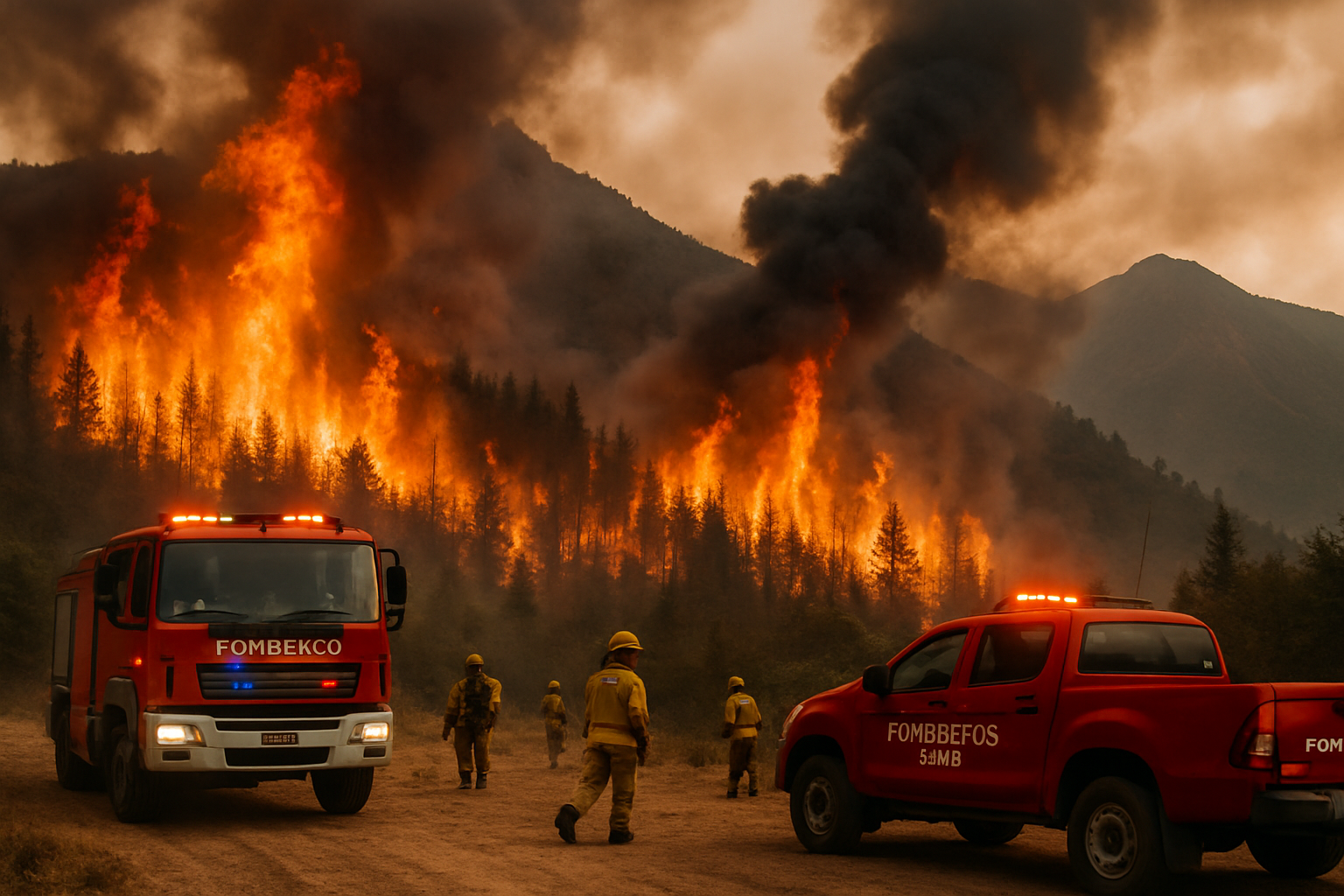
Wildfires raging across Chile's south-central regions have claimed at least 20 lives and destroyed hundreds of homes, forcing authorities to declare a state of catastrophe and impose emergency curfews as the country battles one of its most severe wildfire emergencies in recent years.
The deadly blazes, concentrated primarily in the Biobío and Ñuble regions, have evolved into a national crisis that has prompted President Gabriel Boric to mobilize emergency resources and accept international assistance. The fires have affected over 34,000 hectares of land and forced the evacuation of more than 50,000 residents from their homes.
Rising Death Toll and Widespread Destruction
Government assessments reveal the catastrophic scope of the disaster, with the confirmed death toll climbing from an initial 18 fatalities to 20 as rescue operations continue. Officials report that 536 homes have been completely destroyed by the flames, representing a devastating blow to affected communities.
The wildfires have been fueled by a dangerous combination of extreme heat and strong winds, creating conditions that have overwhelmed local firefighting capabilities. Authorities have maintained red alerts across the affected regions as crews continue to battle multiple active blazes simultaneously.
Government Response and Emergency Measures
President Boric has implemented comprehensive emergency measures to address the crisis, including the declaration of a state of catastrophe across the affected regions. This designation enables the deployment of additional resources and grants authorities expanded powers to coordinate the response effort.
Night-time curfews have been imposed in parts of both Biobío and Ñuble regions to facilitate emergency operations and ensure public safety. The curfews are designed to allow firefighting crews and emergency services to operate more effectively while reducing the risk to civilian populations.
The government response has been swift and comprehensive, with emergency services working around the clock to contain the blazes and protect vulnerable communities. Evacuation centers have been established to accommodate the thousands of displaced residents, many of whom have lost their homes and possessions to the flames.
International Assistance Arrives
The severity of the crisis has prompted international support, with Uruguay becoming the first country to offer concrete assistance. The Uruguayan government has committed to deploying a contingent of approximately 40 experienced firefighters to help battle the blazes.
This international cooperation demonstrates the regional solidarity in addressing natural disasters and highlights the specialized expertise required to combat large-scale wildfires. The Uruguayan firefighters bring additional resources and experience that will be crucial in the ongoing battle against the flames.
Suspect Arrested in Connection with Fires
In a significant development, Chilean authorities have arrested a suspect in connection with the wildfires, suggesting that at least some of the blazes may have been deliberately set. While details of the investigation remain limited, the arrest indicates that law enforcement is treating arson as a potential factor in the disaster.
The investigation into the origins of the fires continues as authorities work to determine whether criminal activity contributed to the severity of the situation. This development adds another layer of complexity to an already challenging emergency response.
Environmental and Climatic Factors
The current wildfire crisis occurs against a backdrop of challenging environmental conditions that have made Chile particularly vulnerable to such disasters. The combination of extreme heat, strong winds, and dry conditions has created a perfect storm for rapid fire spread.
Chile's geographic location and climate patterns make it naturally susceptible to wildfires, particularly during the summer months. The country's extensive forested areas and mountainous terrain can create conditions where fires spread rapidly and become difficult to control.
Community Impact and Humanitarian Crisis
The human cost of the wildfires extends far beyond the tragic loss of life. More than 50,000 residents have been forced to evacuate their homes, creating a massive displacement crisis that requires coordinated humanitarian response.
Emergency shelters and evacuation centers are operating at capacity as displaced families seek safety and basic necessities. The destruction of 536 homes represents not just property loss but the displacement of entire communities, many of whom may face long-term housing challenges.
Local infrastructure has been severely impacted, with roads, power lines, and communication networks affected by the blazes. This damage complicates both the emergency response and the eventual recovery efforts that will be needed once the fires are contained.
Ongoing Firefighting Efforts
Firefighting crews continue to work tirelessly against the multiple active blazes across the affected regions. The challenging terrain and weather conditions have made their task particularly difficult, requiring specialized equipment and techniques to establish firebreaks and protect vulnerable areas.
The arrival of Uruguayan firefighters will bolster these efforts, bringing additional expertise and manpower to the front lines. Coordination between local and international crews will be essential to maximize the effectiveness of the response.
Aerial firefighting operations have been deployed where conditions permit, with aircraft dropping water and fire retardant to slow the spread of flames. However, strong winds and poor visibility have limited the effectiveness of air operations at times.
Looking Ahead: Recovery and Prevention
As Chile continues to battle the immediate crisis, attention is already turning to the long-term challenges of recovery and future prevention. The scale of destruction will require significant resources for reconstruction and community support.
The current disaster serves as a stark reminder of the increasing frequency and severity of wildfire events, highlighting the need for enhanced prevention strategies, early warning systems, and emergency preparedness measures.
Government officials are likely to face questions about wildfire prevention and response capabilities as the country works to rebuild affected communities and strengthen its resilience against future fire threats.