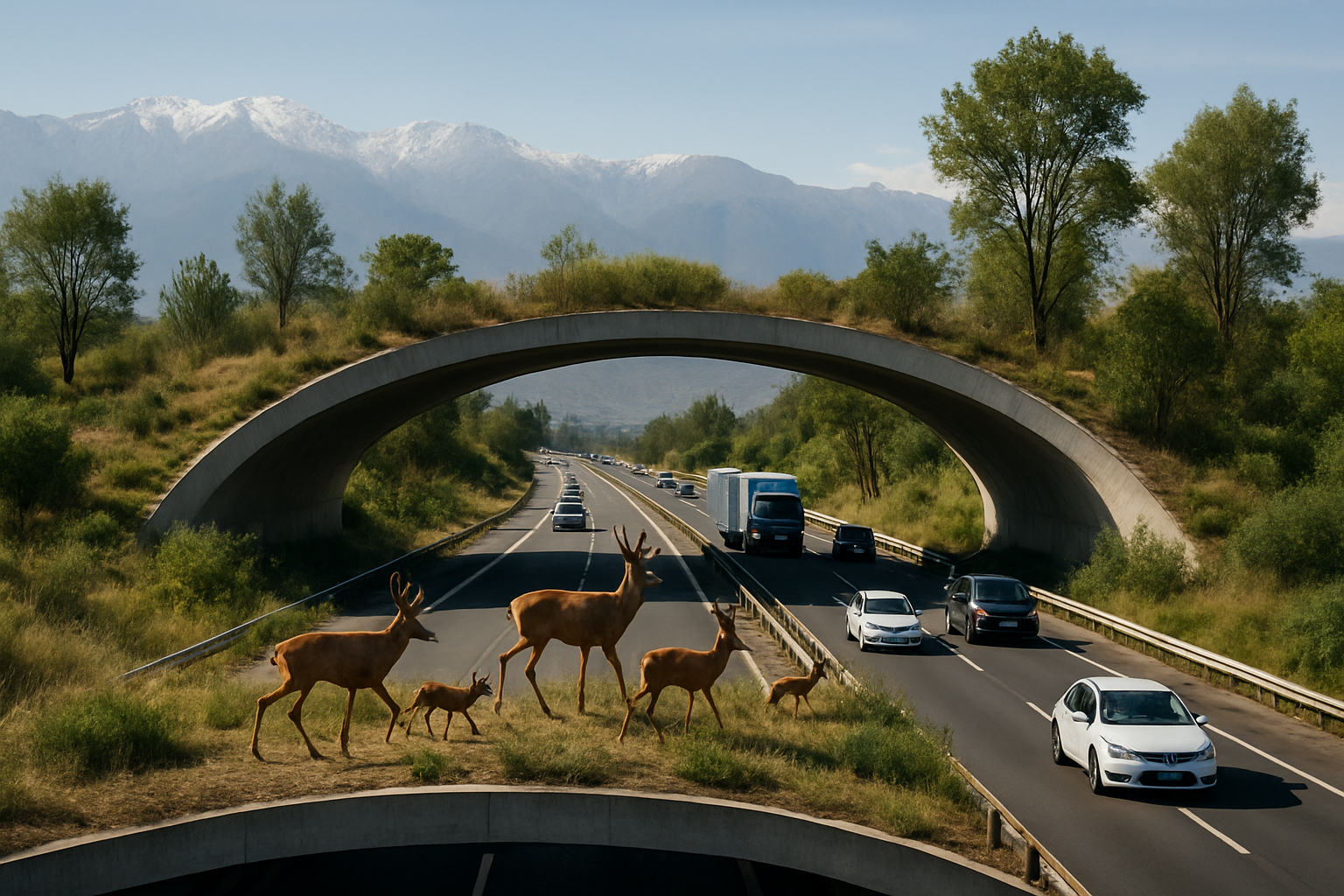
Chile is set to make conservation history with the construction of seven wildlife crossing bridges along the new Ruta 5 Chacao-Chonchi highway on Chiloé Island, representing the country's first-ever dedicated infrastructure designed to protect animals from vehicle traffic while maintaining crucial migration corridors.
The groundbreaking project, announced by Chile's Ministry of Public Works (MOP) as part of the recently awarded concession for the "Ruta 5 Tramo Chacao-Chonchi," will feature crossings spanning up to 25 meters in width. These structures represent a significant milestone in Chilean transportation planning, integrating wildlife conservation directly into major infrastructure development for the first time.
Revolutionary Infrastructure Design
The seven animal crossings, officially termed "atraviesos de fauna," will be strategically positioned along the highway route to create safe passage corridors for wildlife that traditionally traverse these areas. Each bridge will be designed to accommodate the specific fauna of Chiloé Island, including native deer species, smaller mammals, and various bird populations that depend on uninterrupted access to feeding and breeding grounds.
The project builds on decades of international research demonstrating the effectiveness of wildlife crossings in reducing animal-vehicle collisions while preserving essential ecological connectivity. Countries like Canada, the Netherlands, and Australia have successfully implemented similar structures, reporting significant reductions in wildlife mortality and improved ecosystem health.
Conservation Context and Environmental Significance
This initiative emerges during a critical period for global wildlife conservation, as countries worldwide grapple with the mounting pressures of climate change and habitat fragmentation. February 2026 has witnessed unprecedented environmental challenges, with January 2026 confirmed as the hottest month on record—marking the 18th consecutive month of global temperatures exceeding 1.5°C above pre-industrial levels.
The Chiloé wildlife bridges align with Chile's broader environmental leadership demonstrated through recent conservation successes, including the rediscovery of Darwin's frog (Rhinoderma darwinii) at Mocho Choshuenco National Reserve after three decades of absence. This discovery, achieved through collaboration between CONAF Los Ríos and Darwin's Frog NGO, underscores Chile's commitment to species protection and habitat restoration.
Dr. Claudio Soto-Azat from Universidad Andrés Bello emphasized how such conservation initiatives provide "renewed hope" for endangered species protection. The wildlife crossing project extends this philosophy by proactively preventing habitat fragmentation rather than merely responding to species decline.
Technological Innovation and International Cooperation
The Chilean project represents sophisticated integration of cutting-edge technology with traditional ecological knowledge and community-based wildlife management. Modern wildlife crossings incorporate environmental DNA monitoring, satellite tracking systems, and AI-powered traffic management to optimize both animal safety and vehicle flow.
International cooperation has been essential in developing these conservation technologies. Similar to successful programs across multiple countries, Chile's approach emphasizes community engagement, technological innovation, economic sustainability, and adaptive management capabilities responding to rapidly changing environmental conditions.
The memory of recent conservation successes across the region, including Thailand's innovative elephant contraception programs and Slovenia's wolf recovery initiatives, demonstrates how wildlife management has evolved from reactive crisis response to proactive ecosystem service management requiring sophisticated technology-tradition synthesis.
Economic and Social Benefits
Wildlife crossing infrastructure functions as an economic development strategy rather than merely a regulatory burden. The Chiloé project is expected to reduce vehicle-animal collision costs, decrease insurance claims, and enhance the island's appeal as a sustainable tourism destination. Environmental protection increasingly demonstrates economic returns through reduced healthcare expenses, infrastructure maintenance savings, and enhanced international investment attraction.
The bridges will also serve educational purposes, providing opportunities for research collaboration and environmental education programs that can strengthen Chiloé's reputation for environmental stewardship. This aligns with global trends where countries implementing comprehensive environmental protection demonstrate greater economic resilience and attract sustainable development investment.
Implementation Challenges and Opportunities
The success of Chile's wildlife crossing initiative will depend on several critical factors, including sustained political commitment, adequate funding mechanisms, community engagement, and adaptive management capabilities. Technical capacity building requires ongoing education, training, and institutional development to ensure long-term effectiveness.
Climate change presents additional challenges, as shifting weather patterns and temperature increases may alter animal migration routes developed over millennia. The crossing design must incorporate climate adaptation projections to remain effective under future environmental conditions.
However, the diversity of approaches provides resilience against single-solution dependencies. Chile's initiative benefits from international knowledge sharing, innovative financing mechanisms, and technology transfer opportunities that enable rapid scaling of successful conservation models.
Regional and Global Impact
The Chiloé wildlife crossings establish important precedents for Latin American infrastructure development, potentially influencing similar projects across the continent. The initiative demonstrates how developing nations can lead in environmental innovation while addressing essential transportation needs.
This project occurs within a broader context of global infrastructure investment exceeding $570 billion, with increasing emphasis on climate-resilient and environmentally sustainable design. Chile's integration of wildlife protection into major transportation projects could serve as a template for infrastructure development worldwide.
The timing is particularly significant as the international community grapples with accelerating environmental challenges. Success in Chile could demonstrate that effective environmental protection can be achieved through coordinated international response, innovative technology deployment, and sustained political commitment to ecosystem service management.
Future Implications
Chile's pioneering wildlife crossing project represents a fundamental shift in how transportation infrastructure addresses environmental protection. The bridges on Ruta 5 Chiloé may prove decisive in establishing new standards for integrating conservation directly into development planning rather than treating environmental protection as an afterthought.
As global temperatures continue rising and wildlife faces increasing pressure from habitat fragmentation, projects like Chile's demonstrate that effective conservation requires proactive ecosystem service management combining immediate protection measures with long-term sustainability strategies. The success of these crossings will likely influence environmental protection approaches for decades to come.
The window for effective environmental action continues narrowing as ecological systems approach critical thresholds. However, Chile's wildlife crossing initiative provides hope that coordinated responses combining community engagement, technological innovation, and international cooperation can deliver comprehensive environmental protection at the speed and scale required for planetary sustainability.