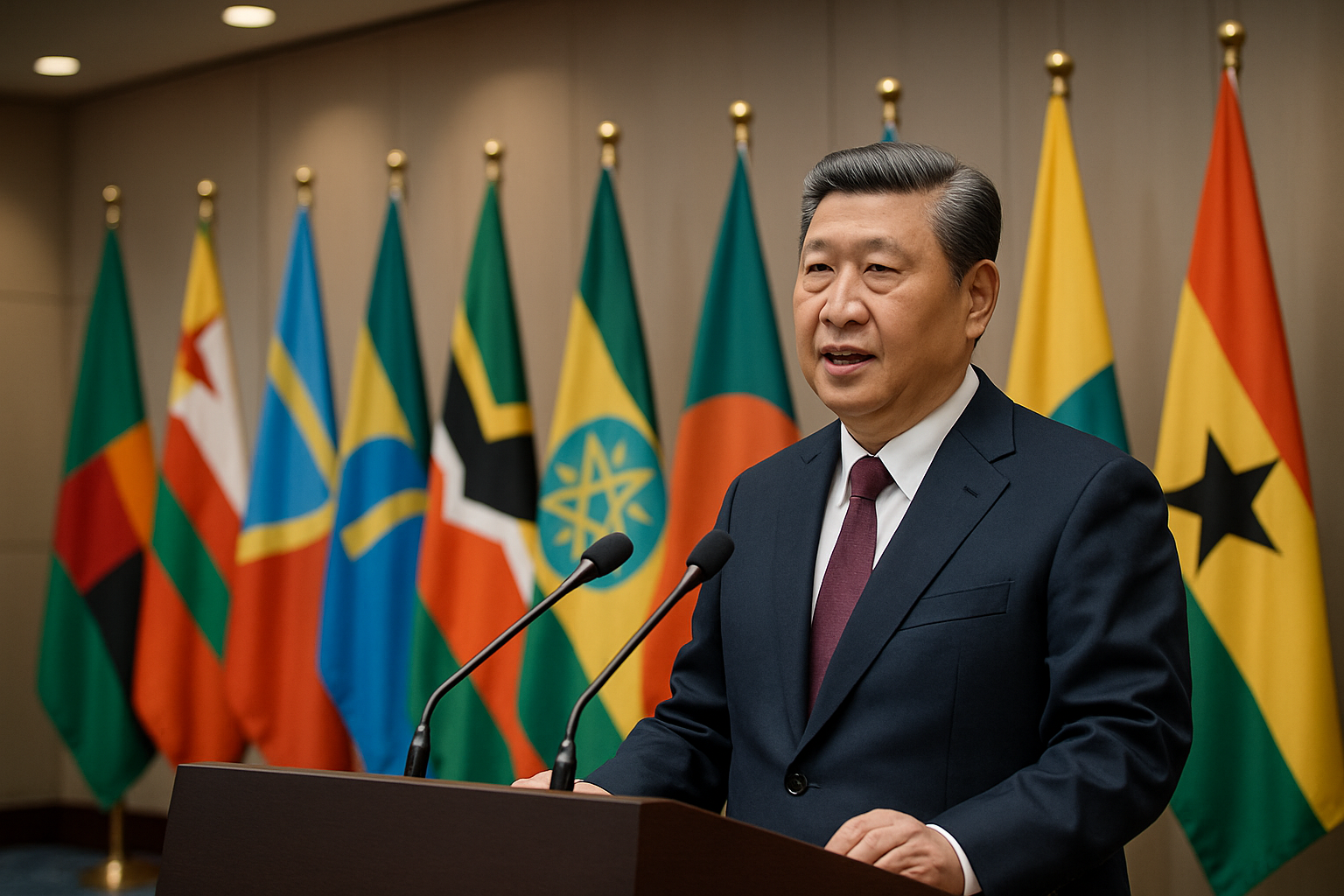
Chinese President Xi Jinping announced the elimination of import tariffs for 53 African countries starting May 1, 2026, representing the most comprehensive expansion of China-Africa trade relations in history, while China's central bank unveiled new financial mechanisms to prevent rural poverty and advance nationwide revitalization.
The groundbreaking tariff elimination policy extends zero-tariff access to all African nations maintaining diplomatic relations with Beijing, dramatically expanding from the previous 33 least-developed countries covered under existing agreements. The policy applies to imports from all 53 African countries with formal diplomatic ties to China, creating unprecedented market access for African exporters across agricultural products, minerals, manufactured goods, and textiles.
Historic Trade Expansion Builds on Belt and Road Success
The announcement, made during diplomatic engagement with African leaders, builds upon China's extensive Belt and Road Initiative infrastructure investments throughout the continent, including Angola's Lobito Corridor railway project. This creates an integrated framework combining physical connectivity with trade facilitation, potentially reshaping global trade patterns through strategic economic partnerships.
Zimbabwe has been confirmed as a key beneficiary of the new policy despite ongoing international sanctions, demonstrating China's commitment to comprehensive African engagement regardless of third-party restrictions. The policy timing coincides with the Trump administration's bilateral trade strategy, positioning China as a champion of multilateral economic cooperation in contrast to American bilateral approaches.
"This represents the most significant expansion of China-Africa economic cooperation, establishing precedents for economic partnerships prioritizing mutual benefit over conditional assistance."
— Chinese Foreign Ministry Official
Domestic Financial Mechanisms Support Rural Development
Simultaneously, China's People's Bank (PBOC) and three other government departments issued comprehensive guidelines to establish regular financial support mechanisms preventing rural poverty relapse. The initiative aims to advance all-around rural revitalization through coordinated financial policy, addressing domestic development challenges while expanding international economic partnerships.
The dual announcement reflects China's strategic approach to economic development, combining domestic poverty prevention with international trade expansion. The rural financial mechanisms represent a systematic approach to ensuring China's own development gains remain sustainable while extending economic opportunities to African partners.
Strategic Competition and Military Expansion Context
The economic initiatives emerge amid China's expanding strategic presence across West and Central Africa, where analysts identify a "military vacuum" created by France's declining influence and limited Russian weapons supply. China National Aero-Technology Import & Export Corporation has leveraged its reputation for "cost-effective technology and flexible financing" to expand military-commercial relationships throughout the region.
This economic expansion occurs following a series of military coups across West and Central Africa, with Chinese companies positioned to fill infrastructure and security gaps left by traditional Western partners. The combination of tariff elimination and military-commercial expansion demonstrates China's comprehensive strategy for African engagement.
Implementation Timeline and Global Implications
The May 2026 implementation timeline provides African governments and businesses crucial preparation time to develop export strategies, coordinate with Chinese customs authorities, and establish quality standards compliance systems. Success depends on African nations' ability to develop export capacity and logistics coordination to capitalize on unprecedented Chinese market access opportunities.
The policy reinforces China's position as Africa's largest trading partner while demonstrating the South-South cooperation model outside traditional North-South frameworks. This represents a competitive response to US bilateral agreements with countries like Argentina and India, as well as European Union African partnerships, by creating permanent preferential treatment for comprehensive African economic planning.
Regional Integration and AfCFTA Support
The tariff elimination announcement strategically supports African Continental Free Trade Area (AfCFTA) objectives by providing external market opportunities that complement internal African trade expansion. This timing enables African nations to leverage both continental integration and Chinese market access for comprehensive economic development.
African governments can now develop integrated strategies utilizing AfCFTA frameworks for intra-continental trade while accessing Chinese markets through the zero-tariff system. This dual approach potentially accelerates African industrialization by combining regional value chains with global market access.
Challenges and Implementation Requirements
Despite the historic opportunity, successful implementation faces significant challenges including African export capacity development, logistics infrastructure coordination, and quality standards compliance. Many African nations will need substantial investment in processing facilities, transport networks, and regulatory systems to maximize benefits from Chinese market access.
The financial mechanisms for rural poverty prevention in China demonstrate Beijing's recognition that sustainable international partnerships require domestic stability and development success. China's approach suggests that economic partnerships transcending traditional geopolitical alignments require comprehensive domestic and international coordination.
Historical Significance and Future Trajectory
The combined initiatives represent the most significant expansion of China-Africa economic cooperation in modern history, establishing two-thirds constitutional mandate-level changes that enable major structural reforms in international economic relationships. The policies potentially influence international development and trade policies globally, creating templates for economic partnerships that prioritize mutual benefit over conditional assistance arrangements.
The success of these initiatives will likely determine whether China's model of economic cooperation—combining infrastructure development, trade facilitation, and domestic development support—becomes a preferred framework for developing nations seeking alternatives to traditional Western development models. The May 2026 implementation represents a critical test of China's ability to translate economic promises into sustainable partnerships that benefit both Chinese and African populations.