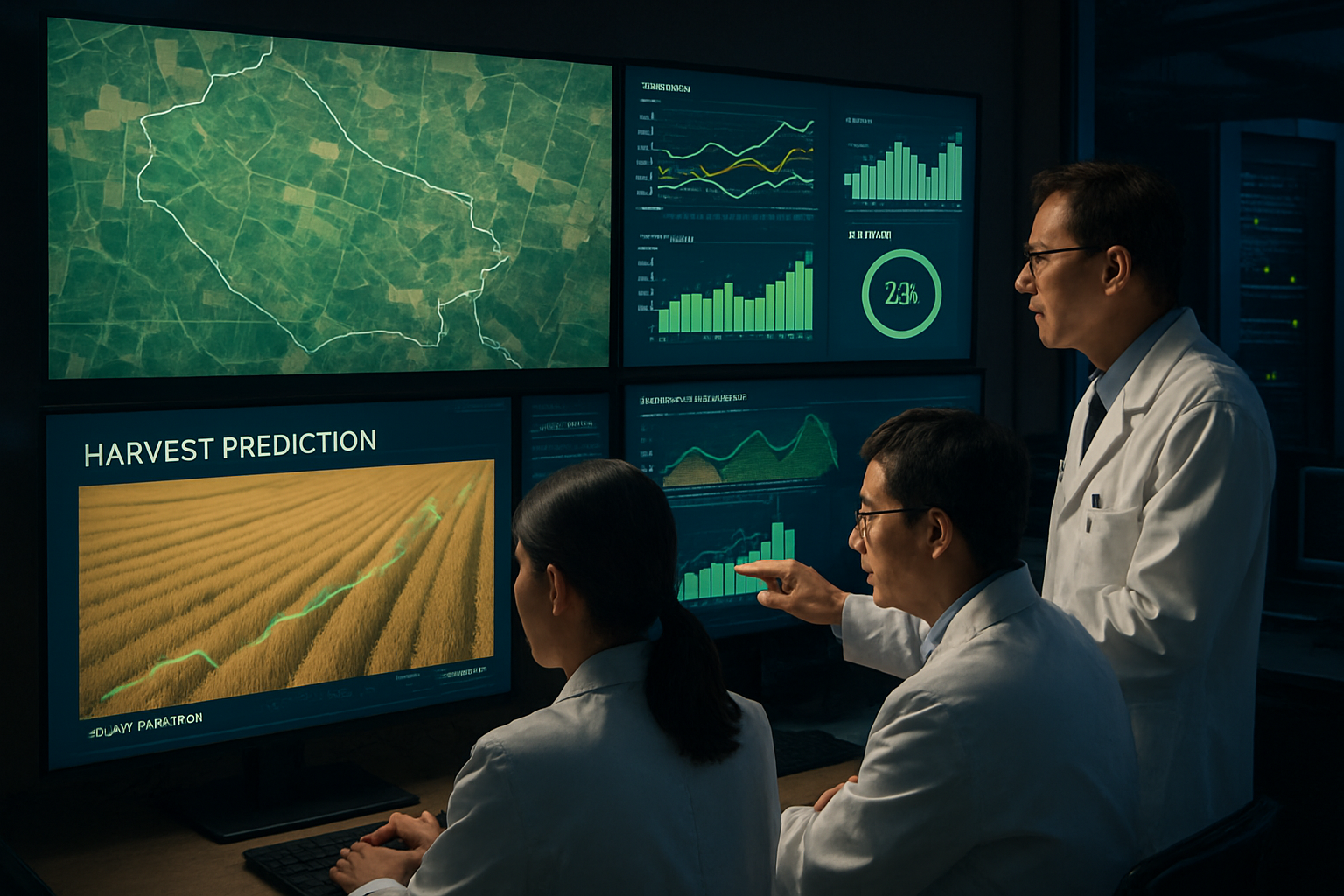
As tensions escalate around Iran and threaten global fertilizer supply chains, China has quietly developed an extraordinary strategic advantage: the ability to predict grain output more than six months in advance with remarkable accuracy, positioning Beijing to move early and reshape geopolitical risk into market leverage.
According to a comprehensive analysis by the South China Morning Post, China's agricultural forecasting capabilities—refined over decades—represent a paradigm shift in how nations can navigate global food security crises. While the Strait of Hormuz, a vital artery for global energy and commodity flows, faces potential disruption, China's precision forecasting technology could allow it to dominate agricultural markets during times of unprecedented uncertainty.
The Strategic Power of Prediction
The agricultural forecasting system represents one of China's most sophisticated technological achievements, combining satellite imagery, artificial intelligence, climate modeling, and decades of agricultural data. This capability enables Chinese officials to anticipate harvest outcomes with unprecedented precision, a crucial advantage as global food systems face mounting pressures from climate change and geopolitical instability.
The timing of this revelation is particularly significant. With 20 consecutive months of global temperatures exceeding 1.5°C above pre-industrial levels—the longest sustained warming streak in recorded history—traditional agricultural planning has become increasingly unreliable. China's forecasting technology offers a strategic buffer against climate volatility that could prove decisive in global food markets.
"China's ability to predict agricultural outcomes months in advance fundamentally alters the dynamics of global food security. While other nations react to crises, China can anticipate and prepare."
— Agricultural Technology Expert (source confidential)
Geopolitical Implications of the Iran Crisis
The potential disruption of Iranian supply chains poses immediate threats to global fertilizer availability, which could devastate agricultural production worldwide. Iran and the broader Middle East region supply significant portions of key fertilizers including phosphates and nitrogen compounds essential for modern agriculture.
However, China's advanced forecasting capabilities enable it to stockpile fertilizers and adjust agricultural strategies well before supply disruptions materialize. This six-month prediction window provides unprecedented strategic flexibility during periods when other nations scramble to respond to immediate shortages.
The agricultural intelligence advantage extends beyond fertilizers to encompass grain trading, strategic reserves management, and international food assistance programs. While global markets react to immediate crises, China can position itself advantageously across multiple agricultural sectors simultaneously.
Technology-Tradition Integration Success
China's agricultural forecasting success demonstrates sophisticated synthesis of cutting-edge technology with traditional farming knowledge, reflecting broader patterns of agricultural innovation across developing nations. The system incorporates generations of Chinese agricultural wisdom while leveraging precision agriculture, satellite monitoring, and artificial intelligence.
This approach mirrors successful agricultural transformations documented across multiple countries during 2026's "agricultural renaissance." From Malaysia's outcome-driven delivery systems to Kenya's Nguruman irrigation projects benefiting 10,000+ farmers, the integration of technology with traditional knowledge has emerged as a crucial success factor for sustainable food security.
The forecasting technology builds on China's comprehensive agricultural transformation strategy outlined in the Communist Party Central Committee's "No. 1 Document" 2026, which positioned China to create food supply systems immune to geopolitical disruptions through advanced technology integration, strategic import diversification, and enhanced domestic production capacity.
Global Food Security Landscape
China's forecasting advantage comes amid a broader global food security crisis affecting multiple continents. Recent developments include Afghanistan's worst hunger crisis on record with 4 million children at malnutrition risk, Somalia's emergency warnings of life-saving assistance potentially halting by April, and widespread agricultural challenges across Europe, Africa, and the Americas.
The convergence of climate pressures, supply chain vulnerabilities, and geopolitical tensions creates a critical decision point for global food security policy. China's technological capabilities position it not just as a major agricultural producer and consumer, but as a strategic coordinator capable of stabilizing or destabilizing global food markets during crises.
International agricultural experts note that China's approach represents a fundamental evolution from reactive crisis management to proactive agricultural intelligence. This shift could influence how other nations develop their food security strategies, potentially accelerating global adoption of precision forecasting technologies.
Economic and Strategic Ramifications
The economic implications of China's forecasting capabilities extend far beyond agriculture. Accurate harvest predictions enable strategic positioning across commodity markets, currency exchanges, and international trade relationships. During periods of global uncertainty, this information asymmetry could provide substantial economic advantages.
Agricultural analysts suggest that China's forecasting accuracy could influence global commodity prices, international aid distributions, and strategic reserve policies worldwide. The ability to anticipate food shortages months in advance enables not just market positioning but also diplomatic leverage through food assistance and trade negotiations.
The technology also supports China's broader Belt and Road Initiative by enabling agricultural partnerships with developing nations. Countries lacking sophisticated forecasting capabilities could benefit from Chinese agricultural intelligence, creating dependencies that extend beyond traditional economic relationships.
Climate Adaptation Imperative
China's agricultural forecasting technology represents essential infrastructure for navigating accelerating climate change. With January 2026 confirmed as the hottest month in recorded history, traditional seasonal patterns guiding agriculture for centuries have become increasingly unreliable.
The system enables adaptation strategies including drought-resistant crop varieties, precision irrigation, and coordinated disaster response. During a period when climate change fundamentally alters farming cycles, water availability, and pest management patterns, China's technological capabilities provide resilience against environmental volatility.
This climate adaptation advantage could prove crucial as global agricultural systems face unprecedented stress. Countries lacking sophisticated forecasting abilities may find themselves increasingly dependent on Chinese agricultural intelligence and strategic coordination during climate-related food crises.
International Cooperation vs. Strategic Advantage
The revelation of China's forecasting capabilities raises critical questions about international cooperation in global food security. While food security is increasingly recognized as a global public good requiring unprecedented coordination, technological advantages create potential for strategic competition rather than collaboration.
Agricultural experts emphasize that tools and knowledge exist for comprehensive responses to global food challenges, but success depends on sustained international cooperation, enhanced coordination across multiple sectors, and recognition that food security affects all nations regardless of their technological capabilities.
The challenge for the international community lies in balancing the benefits of advanced agricultural technologies with the imperative for equitable global food security. China's forecasting advantage could either accelerate global food system resilience through knowledge sharing or exacerbate inequalities between technologically advanced and developing nations.
Future Implications
China's ultra-precise harvest forecasting technology represents a watershed moment in global food security dynamics. As climate change accelerates and geopolitical tensions intensify, the ability to predict agricultural outcomes months in advance could fundamentally alter international relations, trade patterns, and strategic calculations worldwide.
The window for building resilient, equitable food systems is narrowing rapidly as environmental pressures intensify. China's technological capabilities demonstrate that agricultural innovation can keep pace with climate change, but the distribution of these capabilities will significantly influence global food security trajectories in the coming decades.
For international policymakers, the Chinese example underscores the urgent need for comprehensive agricultural intelligence systems, enhanced international cooperation, and recognition that food security has become a critical dimension of national security and global stability. The stakes of agricultural forecasting technology extend far beyond crop yields to encompass the fundamental question of how humanity organizes food systems during Earth's most challenging environmental period in recorded history.